Key facts
- Specialty
- Facial plastic surgery (ENT)
- Subspecialties
- Otolaryngology (Thai Board of Otolaryngology, วุฒิบัตรโสต ศอ นาสิกวิทยา), Head and neck tumours and cancer (เนื้องอก และมะเร็งของศีรษะและคอ), Salivary gland and thyroid tumours and cancer (เนื้องอก และมะเร็งต่อมน้ำลาย และไทรอยด์), Facial plastic and reconstructive surgery (ศัลยศาสตร์ตกแต่ง และเสริมสร้างใบหน้า), English profile clinical interest: 'Head Neck Surgery and Reconstruction'
- Academic title
- Assistant Professor
- City
- Bangkok, Thailand
- Practises at
- King Chulalongkorn Memorial Hospital
- Medical school
- Faculty of Medicine, Chiang Mai University (มหาวิทยาลัยเชียงใหม่)
- Fellowship
- King Chulalongkorn Memorial Hospital (English page); Thai page gives the issuer as the Medical Council of Thailand (แพทยสภา)
- Societies
- The Royal College of Otolaryngologists-Head and Neck Surgeons of Thailand (ราชวิทยาลัยโสต ศอ นาสิกแพทย์แห่งประเทศไทย) (RCOT)
- Special interests
- Head and neck tumours and cancer (เนื้องอก และมะเร็งของศีรษะและคอ); Salivary gland and thyroid tumours and cancer (เนื้องอก และมะเร็งต่อมน้ำลาย และไทรอยด์); Facial plastic and reconstructive surgery (ศัลยศาสตร์ตกแต่ง และเสริมสร้างใบหน้า); Head Neck Surgery and Reconstruction
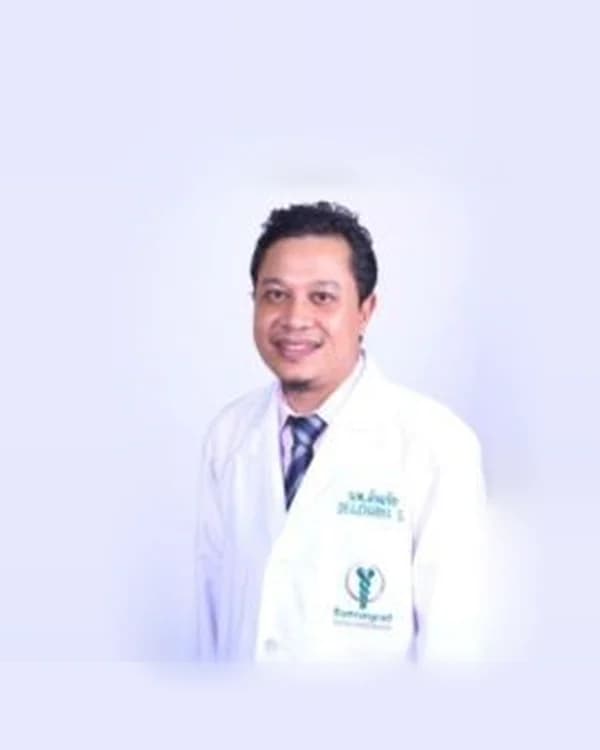
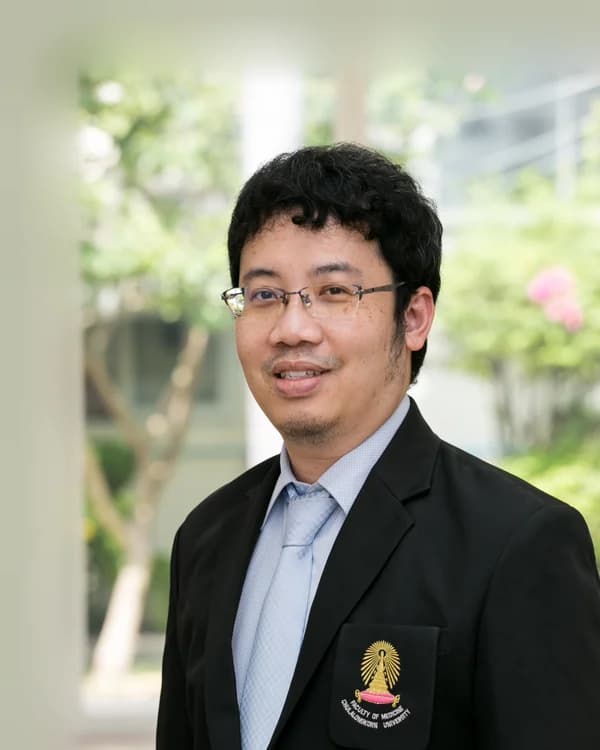
Asst. Prof. Wisarut Samuckkeethum: ENT head and neck and facial reconstructive surgeon in Bangkok
Asst. Prof. Wisarut Samuckkeethum (ผู้ช่วยศาสตราจารย์ นายแพทย์วิศรุต สามัคคีธรรม) is an otolaryngologist, or ENT surgeon, on the faculty of the Department of Otolaryngology at the Faculty of Medicine, Chulalongkorn University. He sees patients at King Chulalongkorn Memorial Hospital, the Thai Red Cross hospital in the Pathumwan district of Bangkok where the Faculty trains its students. His department's English profile, headed 'Assistant Professor Wisarut Samuckkeethum, M.D.', gives his clinical interest as head and neck surgery and reconstruction.
The Thai version of the same profile lists three areas of special expertise:
- head and neck tumours and cancer;
- salivary gland and thyroid tumours and cancer;
- facial plastic and reconstructive surgery.
The author affiliations on his recent journal papers describe him as a head and neck surgery consultant in the Department of Otolaryngology (2024) and place him in a Division of Head and Neck Surgery (2026).
What this profile covers, and what it does not. We file him under facial plastic surgery (ENT) because his published qualifications include facial plastic and reconstructive surgery. The work his university actually documents, though, is surgery for tumours of the head, neck, salivary glands and thyroid, and the reconstruction that follows it. No official page we read names a cosmetic operation, such as rhinoplasty, eyelid surgery or a facelift, that he performs, so this profile is deliberately not linked to any of our cosmetic procedure pages. Anyone hoping for a purely cosmetic change to the face should read the facial plastic surgery notes further down before sending a request.
Credentials at a glance (each is explained in the training section):
- Bachelor degree in Medicine from the Faculty of Medicine, Chiang Mai University, listed with first-class honours (the Thai page adds a gold medal);
- Thai Board of Otolaryngology (วุฒิบัตรโสต ศอ นาสิกวิทยา), 2015;
- a facial plastic and reconstructive surgery qualification, which his English profile links to King Chulalongkorn Memorial Hospital;
- membership of the Royal College of Otolaryngologists-Head and Neck Surgeons of Thailand (RCOT), confirmed on the college's public member search.
You can request a consultation with Asst. Prof. Wisarut through our patient team. We pass your request and records to his department and come back to you once the hospital has said whether, and when, he can see you. Nothing is booked instantly.
Education and training
- Medical degree
Bachelor degree in Medicine, as published on the English page (Thai page: แพทยศาสตรบัณฑิต), first-class honours with gold medal (Thai awards section: เกียรตินิยมอันดับ 1 เหรียญทอง; English awards section: '1 st Class Award, Bachelor degree in Medicine, GPA 3.87'). Year differs: Thai page 2553 BE (2010 CE), English page 2011
Faculty of Medicine, Chiang Mai University (มหาวิทยาลัยเชียงใหม่), Thailand
Source (ent.md.chula.ac.th) (opens in a new tab) - Fellowship
Facial plastic and reconstructive surgery. English page: 'Fellowship in Facial Plastic and Reconstrunction (2019)'; Thai page: 'วุฒิบัตร ศัลยศาสตร์ตกแต่ง และเสริมสร้างใบหน้า 2560' (2560 BE = 2017 CE). The two pages give different years
King Chulalongkorn Memorial Hospital (English page); Thai page gives the issuer as the Medical Council of Thailand (แพทยสภา), Thailand
Source (ent.md.chula.ac.th) (opens in a new tab) - Board certification2015
Thai Board of Otolaryngology (วุฒิบัตรโสต ศอ นาสิกวิทยา), 2558 BE on the Thai page and 2015 on the English page
The Medical Council of Thailand (แพทยสภา), Thailand
Source (ent.md.chula.ac.th) (opens in a new tab)
His education and qualifications come from two versions of his profile on the Chulalongkorn Department of Otolaryngology website, one in Thai and one in English (the English page was marked as last updated on 1 April 2026). Where the two disagree, we show both rather than pick one. Society and licence checks are our own, made on the dates given.
Medical degree, Chiang Mai University. Asst. Prof. Wisarut studied at the Faculty of Medicine, Chiang Mai University, and holds the Thai medical degree แพทยศาสตรบัณฑิต, which the English page renders as 'Bachelor degree in Medicine'. The awards section of the Thai page records the degree with first-class honours and a gold medal (เกียรตินิยมอันดับ 1 เหรียญทอง); the English awards section lists a first-class award for the degree with a grade point average of 3.87. The year is 2553 in the Buddhist calendar (2010 CE) on the Thai page and 2011 on the English page. The gap may simply be academic year versus calendar year, but neither page says so, and we have left the year open.
Thai Board of Otolaryngology, 2015. His specialist certificate is the Thai Board of Otolaryngology (วุฒิบัตรโสต ศอ นาสิกวิทยา), issued under the Medical Council of Thailand (แพทยสภา). On this point both pages agree: 2558 BE on the Thai page, 2015 on the English one. Otolaryngology covers the ear, nose and throat and the wider head and neck, including surgery for tumours in that region, which is the thread running through the rest of his profile. The profile does not say where he completed his specialist training.
Facial plastic and reconstructive surgery. The English page lists a 'Fellowship in Facial Plastic and Reconstruction' at King Chulalongkorn Memorial Hospital, dated 2019. The Thai page describes the same field as a วุฒิบัตร (certificate) in ศัลยศาสตร์ตกแต่ง และเสริมสร้างใบหน้า, facial plastic and reconstructive surgery, issued by the Medical Council of Thailand and dated 2560 BE (2017). So the two pages name the same field but differ on the year, on the type of qualification and on who awarded it. Should the exact date weigh on your decision, raise it with him directly.
Professional societies. On 27 September 2026 the public member search of the Royal College of Otolaryngologists-Head and Neck Surgeons of Thailand (ราชวิทยาลัยโสต ศอ นาสิกแพทย์แห่งประเทศไทย, RCOT) returned his name as 'นพ. วิศรุต สามัคคีธรรม'. Three plastic surgery checks came back without him: the membership roll of ThPRS, Thailand's national plastic surgery society, the archived ThSAPS directory of aesthetic plastic surgeons, and the name search of the American Academy of Facial Plastic and Reconstructive Surgery (AAFPRS). His profiles do not claim membership of any of these. RCOT is the ENT specialty's own college, so his listing there fits his training route; absence from the plastic surgery societies is information, not a judgement on his skill.
Licence check. We made a single try at the online doctor lookup that the Medical Council runs (checkmd.tmc.or.th) while researching him on 27 September 2026; a Cloudflare block page appeared before his name could be typed in. No licence number appears on any page we consulted either. His board certificate comes through the Medical Council, yet we have not seen his register entry with our own eyes. On request, our patient team will seek confirmation through his department. The licence can be looked up on the Medical Council of Thailand's public register at checkmd.tmc.or.th, and our patient team can help you confirm it before you travel.
Professional experience
- Current
Assistant Professor (ผู้ช่วยศาสตราจารย์), faculty member in the university-employee staff category (พนักงานมหาวิทยาลัย), Department of Otolaryngology (ภาควิชาโสต ศอ นาสิกวิทยา)
Faculty of Medicine, Chulalongkorn University (King Chulalongkorn Memorial Hospital)
Source (ent.md.chula.ac.th) (opens in a new tab)
Asst. Prof. Wisarut's documented position is academic and hospital-based. The department's staff list names him as ผู้ช่วยศาสตราจารย์ นายแพทย์ (Assistant Professor) in the university-employee category (พนักงานมหาวิทยาลัย) of the Department of Otolaryngology (ภาควิชาโสต ศอ นาสิกวิทยา), Faculty of Medicine, Chulalongkorn University. The hospital's own doctor list places him in its ENT section, ฝ่ายโสต ศอ นาสิกวิทยา. One caveat for the careful reader: the Faculty of Medicine's central staff directory has no entry for him in its otolaryngology list, and the clinic timetable and hospital list give only นายแพทย์ (male doctor) without an academic rank, so the title here rests on the department's own profile and staff pages.
Clinic sessions. The department's outpatient timetable, read on 27 September 2026, lists him for official-hours outpatient sessions on Tuesday morning and Wednesday morning, 09.00 to 12.00. He does not appear in the timetable's special-clinic, after-hours or operating tables. The department gives 02-256-5223 as its enquiry line. University timetables change between terms, so our team rechecks his current sessions when your request arrives.
Research. PubMed holds eight records under 'Samuckkeethum W'. Seven carry the Chulalongkorn Department of Otolaryngology affiliation, and he appears among the authors of:
- a Thai linear-scar version of the Patient and Observer Scar Assessment Scale 3.0, with its cross-cultural adaptation and validation (Plastic and Reconstructive Surgery Global Open, 2026);
- a comparison of flap reconstruction and primary closure for intermediate-volume glossectomy defects (OTO Open, 2026);
- treatment outcomes of total versus superficial parotidectomy with postoperative radiotherapy for high-grade parotid carcinoma confined to the superficial lobe (Clinical Otolaryngology, 2026);
- a review of HPV-6/HPV-11-targeted immunotherapy for recurrent respiratory papillomatosis (Asian Pacific Journal of Allergy and Immunology, 2025);
- short-term outcomes of surgical scars in head and neck surgery, comparing a surgical blade with electrocautery (European Archives of Oto-Rhino-Laryngology, 2024);
- pressure dressing compared with conventional dressing after parotidectomy (Journal of Oral and Maxillofacial Surgery, 2024);
- a 14-year multicentre study of parotidectomy outcomes in children (Laryngoscope Investigative Otolaryngology, 2022).
Read together, the titles follow the same lines as his listed expertise: parotid and other head and neck surgery, reconstruction after tumour removal, and the scars these operations leave. We have not summarised the papers' findings or his individual role in each. The eighth PubMed record, from 2020, gives a Chiang Mai University affiliation that does not match his current post, so it is left out.
Other hospitals and past roles. We found no official listing for him at a private hospital or clinic, and no former posts are documented. If he also practises elsewhere, we have not been able to confirm it.
Selected publications
- Cross-cultural Adaptation and Validation of the Patient and Observer Scar Assessment Scale 3.0: Thai Linear Scar Version. (opens in a new tab) · Plastic and Reconstructive Surgery Global Open, 2026
- Intermediate Volume Glossectomy Defects Reconstruction: Flap Versus Primary Closure. (opens in a new tab) · OTO Open, 2026
- Treatment Outcomes of Total Versus Superficial Parotidectomy With Postoperative Radiotherapy for High-Grade Parotid Carcinoma Confined to the Superficial Lobe: A Propensity Score-Adjusted Analysis. (opens in a new tab) · Clinical Otolaryngology, 2026
- Recurrent respiratory papillomatosis: Recent advances in HPV-6/HPV-11-targeted immunotherapy. (opens in a new tab) · Asian Pacific Journal of Allergy and Immunology, 2025
- The short-term outcomes of surgical scars in head and neck surgery comparing between surgical blade and geometric electron modulation electrocautery. (opens in a new tab) · European Archives of Oto-Rhino-Laryngology, 2024
- Utility of Applying Pressure Dressing Following Parotidectomy Compared to Conventional Dressing: A Benefit or Not? (opens in a new tab) · Journal of Oral and Maxillofacial Surgery, 2024
- Pediatric parotidectomy outcomes: A 14-year multicenter study. (opens in a new tab) · Laryngoscope Investigative Otolaryngology, 2022
Head and neck tumours, salivary gland and thyroid surgery, and facial reconstruction with Asst. Prof. Wisarut
These are the three fields his department lists for him. None corresponds to a procedure page on our site, and his profile does not break them down into named operations. Under each heading, what is documented about him comes first; what follows 'in general' describes how consultations in that field usually run and is not a description of his personal practice.
Head and neck tumours and cancer
Documented: head and neck tumours and cancer are the first item in his listed expertise, his English profile names 'Head Neck Surgery and Reconstruction' as his clinical interest, and his papers carry a head and neck surgery affiliation. His co-authored work includes reconstruction after partial removal of the tongue (glossectomy) and the combination of surgery with postoperative radiotherapy for parotid cancer.
In general, surgery for a head and neck tumour is planned only after the diagnosis is established, usually from a biopsy and imaging. When the tumour is a cancer, treatment may combine surgery with radiotherapy or other therapy, and the plan depends on the tumour's type, site and extent, so patients commonly meet more than one specialist. For an overseas patient, that means two things: bring every report you already have, and expect a first visit to be an assessment rather than a date for surgery. If you already have a cancer diagnosis and a treating team at home, talk to them before arranging treatment abroad, because follow-up after cancer surgery continues long after you fly home.
Salivary gland and thyroid tumours and cancer
Documented: salivary gland and thyroid tumours and cancer are the second item in his listed expertise. Three of the seven papers above concern parotidectomy, removal of all or part of the parotid, the largest salivary gland: outcomes in children, dressings after surgery, and how much of the gland to remove for high-grade parotid cancer. His profile lists thyroid tumours too, but none of the papers we list is about the thyroid.
In general, the parotid gland sits in front of and below the ear, and the facial nerve, which moves the muscles of facial expression, runs through it. That is why a parotid operation is usually discussed in terms of how much of the gland is removed and how the nerve is protected. Thyroid surgery has its own structures to talk through, including the nerves that serve the voice box and the small parathyroid glands that regulate calcium. Every operation in this area carries risks that the surgeon should explain for your case, and not every salivary or thyroid lump needs an operation at all; whether surgery suits you rests on examination and tests, which is why the records you send matter.
Facial plastic and reconstructive surgery
Documented: the facial plastic and reconstructive surgery entry on both of his profiles, his stated interest in reconstruction after head and neck surgery, and two papers on surgical scars, one adapting a scar assessment scale for Thai patients and one comparing scars after incisions made with a blade or with electrocautery. At department level, the hospital says its ENT Facial Plastic and Reconstructive Surgery Division offers repair of the head and neck after tumour removal, operations to restore movement to a paralysed face (facial reanimation) and cosmetic procedures, in cooperation with oculoplastic surgeons, plastic surgeons and dermatologists. That is a description of the division, not a list of what Asst. Prof. Wisarut personally performs.
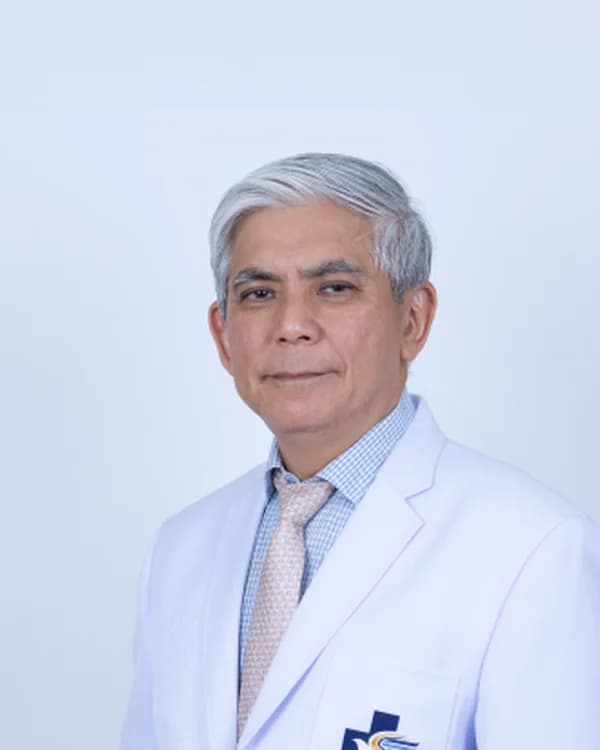
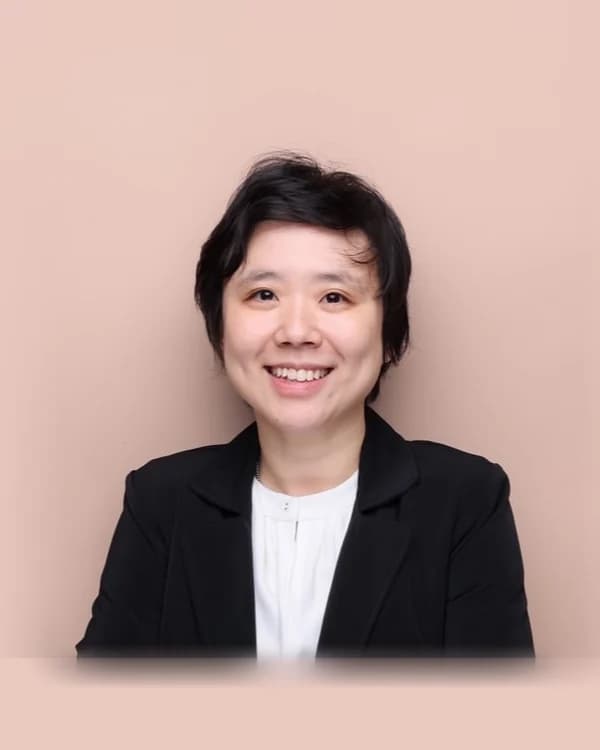
If your aim is cosmetic, for example a nose, eyelid or facelift operation, no official page connects Asst. Prof. Wisarut to that procedure. Spell out the change you want on the form; our team relays it to the ENT department and reports back on whether he would see you for it. Elsewhere in the same hospital, reduction rhinoplasty and endoscopic brow lifting appear in the listed expertise of Asst. Prof. Seree Iamphongsai and face lifting in that of Dr. Pasu Promniyom; both are plastic surgeons attached to Chulalongkorn's Department of Surgery rather than to ENT. Within the ENT department, Assoc. Prof. Tanom Bunaprasert and Asst. Prof. Kritsada Kowitwibool have facial plastic and reconstructive surgery on their profiles. The King Chulalongkorn Memorial Hospital profile lists every procedure we have documented there.
Consultation with Asst. Prof. Wisarut: questions to ask about head and neck and reconstructive surgery
A first appointment with an ENT head and neck surgeon is mostly about pinning down what the problem is and what the options are. The questions below follow the fields his department lists; not all of them will apply to you, and it helps to write your own list before the day.
About the diagnosis
- Do my existing scans and biopsy results give enough information, or will new tests be needed at King Chulalongkorn Memorial Hospital?
- What do the results so far suggest about whether this is benign or malignant, and how certain can anyone be before surgery?
- Is surgery the recommended first step, or are there other treatments, or a period of monitoring, to consider?
About the operation
- What exactly would be removed, and why that extent rather than more or less?
- Which nerves or other structures lie close to the area (for example the facial nerve in parotid surgery, or the voice nerves and parathyroid glands in thyroid surgery), and what is the plan for them?
- Will reconstruction be needed? If so, would the wound be closed directly or repaired with tissue moved from elsewhere (a flap), and why?
- Where will the incision and scar be, and how is the scar looked after in the months that follow?
About care in a teaching hospital
- Who will carry out each part of the operation, and how are surgeons in training involved? In general, university hospitals train residents and fellows, who take part in care under supervision.
- Will other specialists, such as radiation oncology, be part of the plan, and when would I meet them?
- How and when will I receive the final pathology result, and what happens if further treatment is advised?
About travel and follow-up
- Roughly how many days before and after the operation should I be in Bangkok, and at what point would flying home be reasonable?
- Which follow-up checks can be done by a doctor at home, and which documents (operation note, pathology report, imaging) should I take back with me?
About Asst. Prof. Wisarut himself
- In which languages does he hold consultations, and should I bring an interpreter?
- Does he see patients by video before travel? His department does not say. For a lump or suspected tumour, an online conversation can review reports but cannot replace an examination in person.
- Which of the two published years for his facial plastic qualification is the correct one?
Hospitals and clinics where Assistant Professor Wisarut Samuckkeethum practises
Pathumwan, Bangkok
King Chulalongkorn Memorial Hospital
โรงพยาบาลจุฬาลงกรณ์ สภากาชาดไทย
- University hospital
- Gender-affirming surgery
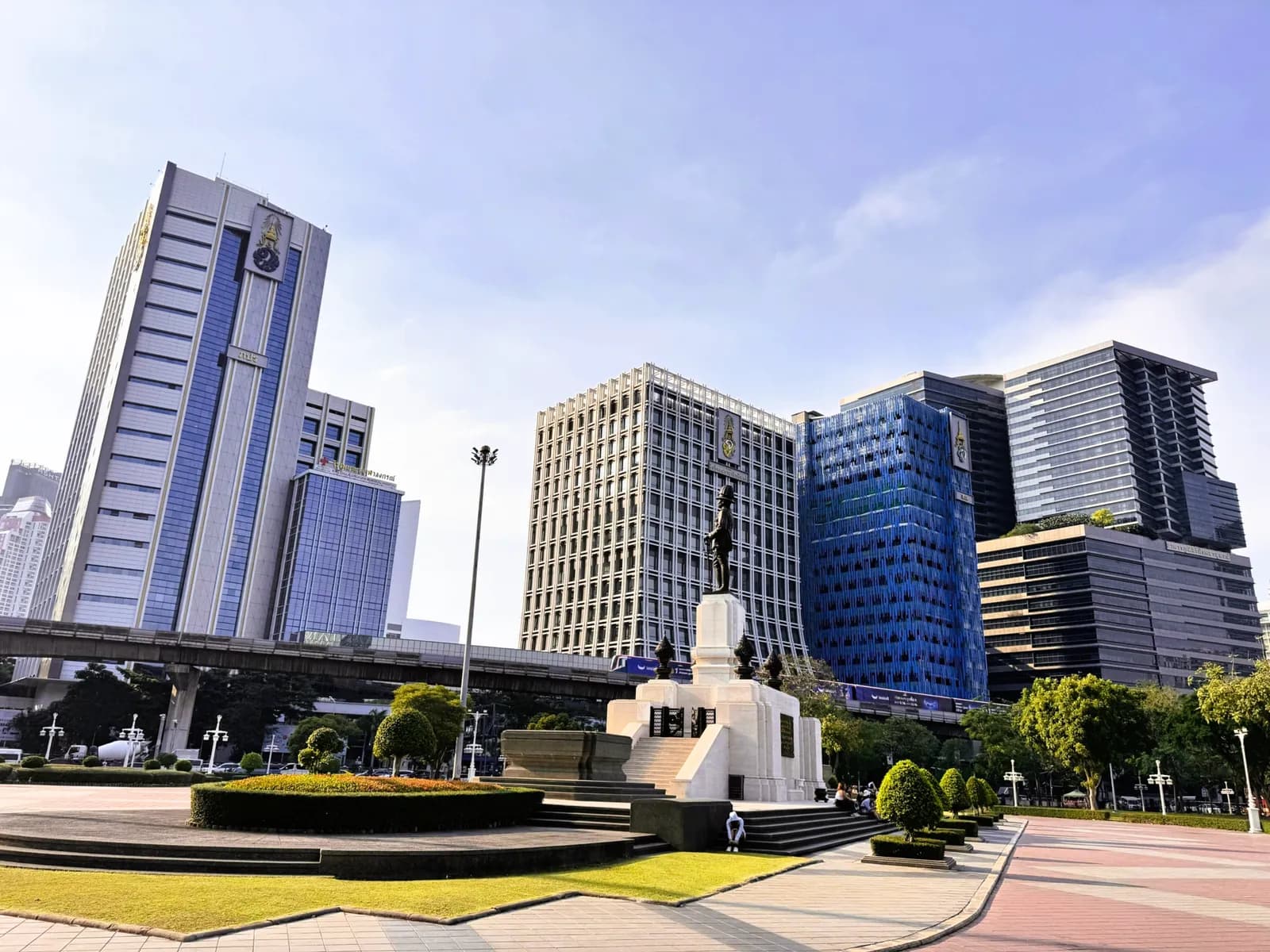
King Chulalongkorn Memorial Hospital (Chula Hospital, KCMH) is a Thai Red Cross Society university hospital on Rama 4 Road, Pathumwan, Bangkok, with plastic surgery, ENT facial plastic, oculoplastic and gender-affirming surgery teams.
Accreditation
- HA Thailand
- Surgeons
- 19
- Procedures
- 12
- Beds
- 1,500
- Established
- 1914
Surgeons here
International patients
The hospital. Owned by the Thai Red Cross Society, King Chulalongkorn Memorial Hospital (โรงพยาบาลจุฬาลงกรณ์ สภากาชาดไทย, also called Chulalongkorn Hospital or KCMH) doubles as the clinical campus of Chulalongkorn University's medical faculty. Its history page gives its opening date as 30 May 1914, and the Faculty's facts page describes a capacity of over 1,500 beds, a figure that may be dated. Taxi drivers and map apps will want the street address: 1873 Rama 4 Road, with 10330 as the Pathumwan postcode.
Accreditation. HA Thailand's accreditation database, consulted for this profile on 27 September 2026, showed Advanced Hospital Accreditation (re-accreditation) for the hospital, valid until 22 May 2029. A name search in the accredited-organisations list kept by Joint Commission International (JCI) returned no match for the hospital.
International services. The hospital's official pages say nothing we could find about a dedicated desk for overseas patients, interpreting, airport pick-up or the languages its staff speak. Its official website has an English version, and Asst. Prof. Wisarut's department publishes an English profile of him, but neither says which languages he consults in. If you need an interpreter, say so in your request so our team can raise it with the department.
Telephone numbers from official pages. The hospital's main line is 02-256-4000 (office hours on weekdays, with a 24-hour emergency service). The ENT department's clinic timetable gives 02-256-5223 for enquiries, the number an archived 2024 hospital page also gives for its Facial Plastic and Reconstructive Surgery Clinic (Bhor Por Ror Building, 12th floor, Monday to Friday 08.00 to 16.00). Callers abroad omit the first 0 and add Thailand's country code, so the ENT line becomes +66 2 256 5223.
Planning your dates. His published outpatient sessions fall on two weekday mornings, so a first appointment has to fit a Tuesday or a Wednesday. Tumour, salivary gland and thyroid problems may also need tests or visits to other clinics before a surgical plan is settled, so keep your dates flexible and hold off on non-refundable onward travel until the plan is clear. Hotels, getting around and the wider city are covered on our Bangkok page.
How our patient team helps
- We pass your request to the surgeon's hospital or clinic and confirm availability, usually within one working day.
- You receive a booking reference to track your request.
- We answer practical questions on WhatsApp and by email.
ThaiCosmeticSurgery.com does not provide medical care. Treatment, prices and patient services are the responsibility of the hospital or clinic.
How to request a consultation with Asst. Prof. Wisarut Samuckkeethum
Requests go through our patient team rather than straight into the hospital's diary. This is how it works:
- Open the request form. Use this link to request a consultation with Asst. Prof. Wisarut.
- Choose the type of consultation. Pick an online or an in-person consultation. Because head and neck, salivary gland and thyroid surgery are not on our cosmetic treatment list, choose 'Not sure yet, please advise' as the treatment and describe your situation in your own words.
- Give your dates. Add the dates you could be in Bangkok, bearing in mind his Tuesday and Wednesday morning sessions, and tell us which of the records in the next section you have.
- Wait for confirmation. Our team contacts the department to ask whether he is the right surgeon for your problem and when he can see you. A consultation is confirmed only once the hospital has agreed a time; until then, it is a request.
Requesting is free and carries no obligation. If the department suggests that a colleague is better placed to help, for instance a plastic surgeon in the Department of Surgery for a purely cosmetic request, we will tell you and you can decide how to proceed. Prefer to let the hospital choose the specialist? Use the hospital-level request form for King Chulalongkorn Memorial Hospital instead.
A request is not a confirmed appointment until our patient team confirms it with you.
Reports, scans and photographs worth gathering before you contact Asst. Prof. Wisarut
Good records can save a wasted trip. For head and neck, salivary gland and thyroid problems, the reports usually matter more than photographs; for reconstruction and scar questions, photographs matter more.
For a lump, tumour or cancer diagnosis
- a short description of the problem: where it is, when you first noticed it, and any change since, such as growth, pain, a change in your voice, difficulty swallowing or weakness of the face;
- biopsy, needle aspiration and pathology reports, in the original language plus any translation you have;
- imaging reports and, if possible, the images themselves (ultrasound, CT, MRI or PET), shared as a download link or disc files;
- relevant blood tests, such as thyroid function results for a thyroid problem;
- letters from the doctors treating you now, and details of any treatment already given, including radiotherapy or chemotherapy;
- operation notes and pathology reports from any earlier surgery in the head and neck.
For reconstruction or scar concerns
- clear photographs in even light, taken from the front, both sides and both three-quarter angles, without make-up or filters;
- close-ups of the scar, defect or area of concern;
- if facial movement is affected, a short video of your face at rest and while raising the eyebrows, closing the eyes tightly and smiling;
- operation notes explaining what was removed and how it was repaired.
For everyone
- your current medicines, including blood thinners and supplements, plus allergies and other medical conditions;
- whether you smoke, which matters for healing after surgery;
- your travel window and whether you want an online or an in-person first consultation;
- the language you would like to consult in, and whether you need an interpreter.
Send these through the consultation request form or to our patient team when they contact you, rather than through public channels.
Credential research
Every fact on this profile comes from a source we opened and dated. Where a source only states something, we say so.
- Medical Council of Thailand licence
- Check the Medical Council's public register (opens in a new tab)
- Profile last reviewed
Hospital and clinic affiliation
Education and training
Society memberships
Special interests
Medical information
This profile is for information only and is not medical advice. Whether a procedure is suitable for you can only be decided after an assessment by a qualified surgeon. Every operation carries risks, and results vary from person to person. Before you commit to treatment, check the surgeon's credentials yourself, for example on the Medical Council of Thailand register. We do not accept payment for placement or rankings.
Frequently asked questions
Who is Asst. Prof. Wisarut Samuckkeethum?
He is an otolaryngologist (ENT surgeon) and Assistant Professor in the Department of Otolaryngology, Faculty of Medicine, Chulalongkorn University, practising at King Chulalongkorn Memorial Hospital in Bangkok. His department lists his expertise as head and neck tumours and cancer, salivary gland and thyroid tumours and cancer, and facial plastic and reconstructive surgery.
Where does Asst. Prof. Wisarut practise, and when does he see patients?
At King Chulalongkorn Memorial Hospital, 1873 Rama 4 Road, Pathumwan, Bangkok. The ENT department's timetable, read on 27 September 2026, lists him for outpatient sessions on Tuesday and Wednesday mornings (09.00 to 12.00). We found no official listing for him at any other hospital or clinic.
Does Asst. Prof. Wisarut perform cosmetic surgery such as rhinoplasty, eyelid surgery or a facelift?
No official page we read says he does. He holds a facial plastic and reconstructive surgery qualification, but his documented work is head and neck tumour surgery and reconstruction. Our patient team can ask his department whether he accepts cosmetic consultations; at the same hospital, rhinoplasty, brow lifting and face lifting appear on the profiles of plastic surgeons in the Department of Surgery.
Does Asst. Prof. Wisarut treat parotid and other salivary gland tumours?
Salivary gland tumours and cancer are listed in his special expertise, and three of his co-authored papers concern parotidectomy: outcomes in children, dressings after surgery, and the extent of surgery for high-grade parotid cancer. Send your imaging and any biopsy results with your request so the department can judge whether surgery is the next step.
Does Asst. Prof. Wisarut see patients with thyroid lumps?
Thyroid tumours and cancer are listed alongside salivary gland tumours in his department's profile. None of the papers we list is about the thyroid. Attach your ultrasound report, any needle biopsy result and your thyroid blood tests to the request form.
Which qualifications does Asst. Prof. Wisarut hold?
His department's profiles list a Bachelor degree in Medicine (แพทยศาสตรบัณฑิต) from Chiang Mai University with first-class honours (the Thai page adds a gold medal), the Thai Board of Otolaryngology in 2015, and a facial plastic and reconstructive surgery qualification that his English profile links to King Chulalongkorn Memorial Hospital. He holds the academic rank of Assistant Professor at Chulalongkorn University.
Why do Asst. Prof. Wisarut's Thai and English profiles give different years?
His medical degree is dated 2553 BE (2010) on the Thai page and 2011 on the English page, and his facial plastic qualification is dated 2560 BE (2017) on the Thai page and 2019 on the English page. Neither page explains the difference, so we show both years and suggest raising the point at your appointment if the timing is important to you.
Is Asst. Prof. Wisarut a member of a professional society?
Yes. The Royal College of Otolaryngologists-Head and Neck Surgeons of Thailand (RCOT) returned his name on its public member search on 27 September 2026. He is not on the ThPRS plastic surgery member list, the archived ThSAPS directory or the AAFPRS surgeon search, and his profiles do not claim those memberships.
Can I check Asst. Prof. Wisarut's licence to practise medicine?
We could not confirm it ourselves. The licence can be looked up on the Medical Council of Thailand's public register at checkmd.tmc.or.th, and our patient team can help you confirm it before you travel. His Thai Board certificate comes through the Medical Council. You can ask our patient team to seek confirmation from his department, or try the register at checkmd.tmc.or.th yourself.
Is there an international patient desk or interpreter service at King Chulalongkorn Memorial Hospital?
Not that we could find. Its official pages mention no desk for overseas patients, interpreting, airport pick-up or the languages its staff speak, and no page states which languages Asst. Prof. Wisarut consults in. The hospital's website has an English version. Mention any interpreter need in your request so our team can raise it with the department.
How do I request a consultation with Asst. Prof. Wisarut?
Use the request form at /book/?doctor=wisarut-samuckkeethum, choose an online or in-person consultation, select 'Not sure yet, please advise' as the treatment and describe your problem. Our patient team contacts his department and confirms only once the hospital has agreed a time. Asking about a Tuesday or Wednesday slot with him costs you nothing, and whatever his department proposes, whether to go ahead stays your call.
Which records should I prepare for Asst. Prof. Wisarut?
For a lump or tumour: biopsy and pathology reports, imaging reports and images, relevant blood tests, letters from your current doctors and notes from any earlier surgery. For reconstruction or scar concerns: clear photographs from the front, sides and three-quarter angles, plus a short video if facial movement is affected. Everyone should list medicines, allergies, travel dates and language needs.