Key facts
- Specialty
- Oculoplastic surgery (ophthalmology)
- Subspecialties
- สาขาจักษุวิทยาตกแต่งและเสริมสร้าง (oculoplastic and reconstructive ophthalmology), Chulalongkorn Eye Center staff directory (listed under อาจารย์พิเศษ, special lecturers)
- Academic title
- Associate Professor
- City
- Bangkok, Thailand
- Practises at
- King Chulalongkorn Memorial Hospital
- Fellowship
- Duke Eye Center, Duke University Medical Center
- Societies
- Thai Society of Ophthalmic Plastic and Reconstructive Surgery (member directory entry 'Suppapong Tirakunwichcha, M.D. / ศ.นพ. ศุภพงศ์ ถิรคุณวิชชะ, Club Advisor'; also on the Leadership page as 'Assoc. Prof. Dr. Suppapong Tirakunwichcha, Club Advisor' and on the Founding Members page as 'นายแพทย์ศุภพงศ์ ถิรคุณวิชชะ, เลขานุการชมรมฯ') (ThaiSOPRS); The Royal College of Ophthalmologists of Thailand ('find an ophthalmologist' directory entry 'นายแพทย์ ศุภพงศ์ ถิรคุณวิชชะ', contact location Bangkok, profile id 779; the profile page returned Error 503 on 2026-09-27 and no archived copy was found) (RCOPT)
- Special interests
- Chula clinic sessions: oculoplastic and reconstructive clinic (คลินิคจักษุวิทยาตกแต่งและเสริมสร้าง), Monday 13:00-16:00; clinic for thyroid-related eye disorders and ocular prostheses (คลินิคความผิดปกติของตาจากโรคไทรอยด์และตาปลอม), Wednesday 08:30-12:00; general ophthalmology clinic, Tuesday 10:30-12:30; out-of-hours special clinic (คลินิคพิเศษนอกเวลาราชการ), Wednesday 16:00-20:00
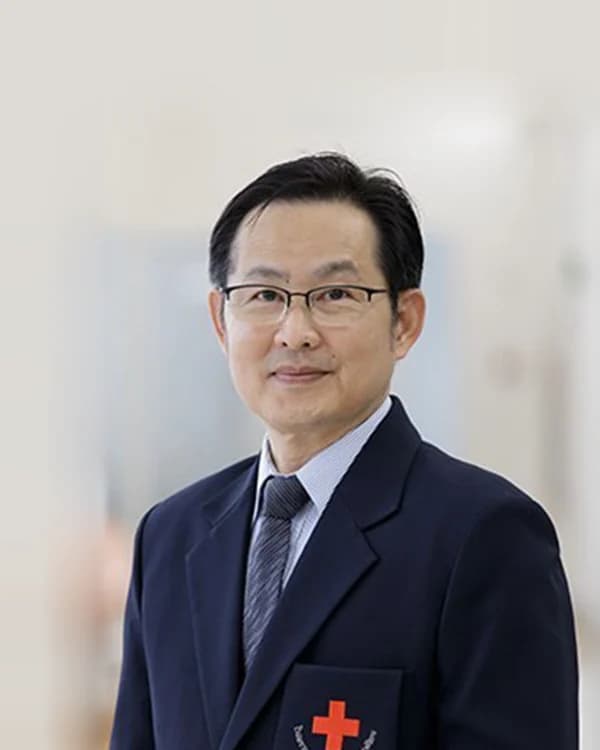
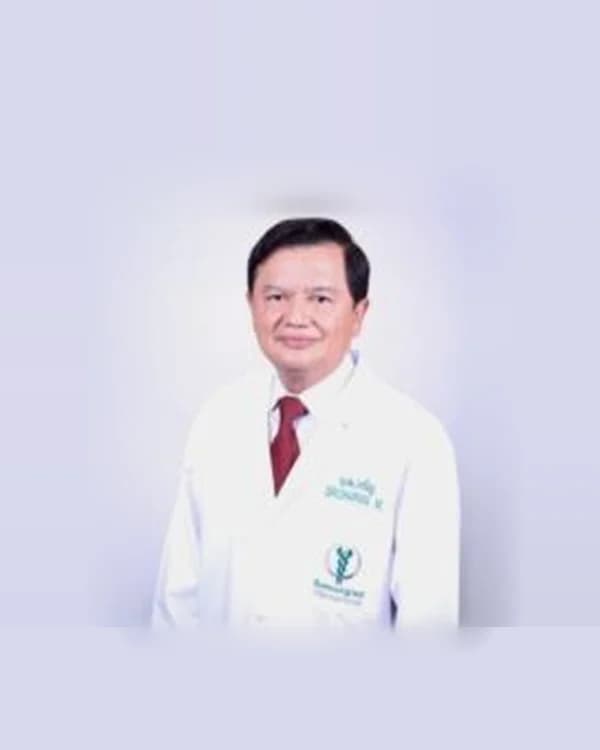
Assoc. Prof. Dr. Suppapong Tirakunwichcha, oculoplastic surgeon at the Chulalongkorn Eye Center, Bangkok
Assoc. Prof. Dr. Suppapong Tirakunwichcha (รศ.นพ. ศุภพงศ์ ถิรคุณวิชชะ) is a Bangkok ophthalmologist who sub-specialises in oculoplastic surgery. Oculoplastics is the branch of eye surgery concerned with the lids, the tear ducts, the orbit (the bony socket that holds the eye) and the replacement of a lost eye with a prosthesis. His documented home is the Chulalongkorn Eye Center, which is the Department of Ophthalmology within Chulalongkorn's Faculty of Medicine, and the hospital where that department works is King Chulalongkorn Memorial Hospital in Pathumwan, central Bangkok. The hospital's own doctor list, in a copy archived in June 2026, places him under ophthalmology.
Chulalongkorn publishes two roles for him. In the Eye Center's staff directory he sits among the special lecturers for oculoplastic and reconstructive ophthalmology, and on the page of the department's oculoplastic unit he is named as a consultant. His own profile page sets out four weekly sessions, including an oculoplastic and reconstructive clinic and a clinic for thyroid-related eye disease and artificial eyes. Beyond the university, ThaiSOPRS, the professional club for Thai eye-plastic surgeons, names him as Club Advisor and records him as the club's secretary when it was founded.
Several details that matter to patients are not published anywhere we could find: exactly which operations he carries out, whether he sees patients privately outside Chulalongkorn, where he studied medicine, and which languages he consults in. Where something could not be confirmed, this page says so rather than guessing. If you would like his view on a problem with the lids, tear drainage or eye socket, request a consultation. Our patient team first confirms his present clinic schedule with the hospital and then agrees a time with you; no appointment exists before that.
In English his name appears as Suppapong Tirakunwichcha on the ThaiSOPRS website and as the author name on his PubMed-indexed papers. Chulalongkorn writes it only in Thai, and one page, that of the oculoplastic unit, spells the surname ถิระคุณวิชชะ with an extra vowel. That variant is worth knowing if you search Thai sources.
Education and training
- Fellowship
Fellowship in Ophthalmic Plastic and Reconstruction Surgery; no year published
Duke Eye Center, Duke University Medical Center, United States
Source (web.archive.org) (opens in a new tab) - Board certification
Thai board certificate in ophthalmology (วุฒิบัตรแสดงความรู้ความชำนาญในการประกอบวิชาชีพเวชกรรม สาขาจักษุวิทยา); no year published
Not stated on the profile, Thailand
Source (web.archive.org) (opens in a new tab) - Certificate
Certificate of proficiency in oculoplastic and reconstructive ophthalmology (ประกาศนียบัตรแสดงความรู้ความชำนาญในการประกอบวิชาชีพเวชกรรม สาขาจักษุวิทยาตกแต่งและเสริมสร้าง); no year published
Not stated on the profile, Thailand
Source (web.archive.org) (opens in a new tab)
Three qualifications appear on Dr. Suppapong's profile at the Chulalongkorn Eye Center:
- Thai board certificate in ophthalmology (วุฒิบัตรแสดงความรู้ความชำนาญในการประกอบวิชาชีพเวชกรรม สาขาจักษุวิทยา), the specialist certification in eye medicine and surgery.
- Thai certificate of proficiency in oculoplastic and reconstructive ophthalmology (ประกาศนียบัตรแสดงความรู้ความชำนาญในการประกอบวิชาชีพเวชกรรม สาขาจักษุวิทยาตกแต่งและเสริมสร้าง), a further qualification in the eyelid, lacrimal and orbital branch of the specialty.
- Fellowship in Ophthalmic Plastic and Reconstruction Surgery, Duke Eye Center (part of Duke University Medical Center), United States.
Taken together, the list describes an eye surgeon who went on to sub-specialise in the plastic and reconstructive side of his field, with part of that training in the United States. For a patient comparing surgeons, the route matters. An oculoplastic surgeon comes to the eyelid from ophthalmology, with the health and function of the eye in view, while a general plastic surgeon reaches eyelid work through surgical and plastic surgery training. Surgeons from both backgrounds operate on eyelids; the point is to know which kind of specialist you are consulting.
What the profile leaves out is also worth stating. It gives no year for any of the three qualifications, does not name the bodies that awarded the two Thai certificates, and names no medical school. We have not supplied those details from secondary sources, so this page gives no graduation year and no figure for years in practice.
On his title: Chulalongkorn's profile, staff directory and unit page, and the ThaiSOPRS leadership page, all give him the rank of Associate Professor (รศ.). The ThaiSOPRS member directory shows the Thai abbreviation for a full Professor (ศ.) instead. We found no university page confirming a full professorship, so we use Associate Professor.
His professional listings are with eye-surgery bodies, described in the next section. We also went through the published membership of ThPRS, Thailand's society for general plastic surgeons, all 529 entries as fetched on 27 September 2026, and his name is absent; that fits a surgeon whose training ran through ophthalmology.
Professional experience
- Current
Special lecturer (อาจารย์พิเศษ), Department of Ophthalmology, oculoplastic and reconstructive ophthalmology (สาขาจักษุวิทยาตกแต่งและเสริมสร้าง)
Chulalongkorn Eye Center, Faculty of Medicine, Chulalongkorn University, Bangkok
Source (web.archive.org) (opens in a new tab) - Current
Consultant (อาจารย์ผู้ช่วยให้คำปรึกษา), Oculoplastic and Reconstructive Surgery Unit (หน่วยจักษุวิทยาตกแต่งและเสริมสร้าง), Department of Ophthalmology
Faculty of Medicine, Chulalongkorn University / King Chulalongkorn Memorial Hospital, Bangkok
Source (web.archive.org) (opens in a new tab) - Current
Club Advisor
Thai Society of Ophthalmic Plastic and Reconstructive Surgery (ThaiSOPRS)
Source (thaisoprs.org) (opens in a new tab) Club secretary (เลขานุการชมรมฯ) in the founding committee
Thai Society of Ophthalmic Plastic and Reconstructive Surgery (ThaiSOPRS), founding members
Source (thaisoprs.org) (opens in a new tab)
Special lecturer, Chulalongkorn Eye Center. The Eye Center's staff directory, in archived copies from December 2025 and April 2026, groups Dr. Suppapong with its special lecturers (อาจารย์พิเศษ) in oculoplastic and reconstructive ophthalmology, rather than with the full-time members of the department. He is also absent from the Faculty of Medicine's English-language staff directory for ophthalmology, which we checked on 27 September 2026. Neither source explains the arrangement. We draw no conclusion from it, beyond advising you to have his current clinics confirmed before planning travel.
Consultant, Oculoplastic and Reconstructive Surgery Unit. The unit's page, archived in February 2026, names him as อาจารย์ผู้ช่วยให้คำปรึกษา, which translates roughly as assisting consultant instructor. The hospital describes the unit's work as eyelid disorders, among them blepharoptosis and dermatochalasis, together with tear-drainage problems, orbital disease and artificial eyes. The unit holds its clinic on level 8 of the building Chulalongkorn abbreviates as สธ. (Sor Thor).
Club Advisor and founding secretary, ThaiSOPRS. The eye-plastic surgeons' society has an entry for him in its member directory, lists him as Club Advisor on its leadership page, and on its founding-members page records him as club secretary (เลขานุการชมรมฯ) at the time the club was set up.
Royal College of Ophthalmologists of Thailand (RCOPT). A name search of the college's public find-an-ophthalmologist directory returns him, with Bangkok as his contact location.
Research. Of the 18 records a PubMed search for his surname returns, 16 are his. This profile lists eight whose author details give a Chulalongkorn ophthalmology affiliation, published between 2003 and 2026:
- steatocystoma simplex, a cyst arising in the eyelid (2009), and an eyelid nodule caused by the parasite Candidatus Dirofilaria hongkongensis, identified by mitochondrial DNA sequencing (2022);
- folliculectomy, removing the roots of lashes that grow in the wrong direction, for segmental trichiasis and distichiasis (2006);
- the effect of mitomycin C in endonasal endoscopic dacryocystorhinostomy, a tear-duct bypass performed through the nose (2011);
- ab interno evisceration, a technique for removing the contents of the eye, generally ahead of an artificial eye (2019);
- visual results after open-globe eye injuries were repaired by ophthalmology residents at a tertiary eye centre (2021);
- ocular sporotrichosis, a fungal eye infection passed from animals, with cases from Thailand and a review of reports across Southeast Asia (2026);
- an unusual complication after liquid silicone was injected into the forehead for cosmetic reasons (2003).
A published paper records an interest; it does not show that he currently offers that treatment to patients. We list the papers as background to his field, not as a menu of services.
Selected publications
- Emerging zoonotic ocular sporotrichosis in southeast Asia: a case series from Thailand and systematic review of regional reports. (opens in a new tab) · Journal of Ophthalmic Inflammation and Infection, 2026
- Factors Associated with Visual Outcome after Primary Repair of Open-Globe Injury by Ophthalmology Residents in Training in a Tertiary Eye Center. (opens in a new tab) · Clinical Ophthalmology, 2021
- Ab interno evisceration. (opens in a new tab) · International Journal of Ophthalmology, 2019
- Case Report: An Eyelid Nodule Caused by Candidatus Dirofilaria hongkongensis Diagnosed by Mitochondrial 12S rRNA Sequence. (opens in a new tab) · The American Journal of Tropical Medicine and Hygiene, 2022
- Efficacy of mitomycin C in endonasal endoscopic dacryocystorhinostomy. (opens in a new tab) · The Laryngoscope, 2011
- Steatocystoma simplex of the eyelid. (opens in a new tab) · Ophthalmic Plastic and Reconstructive Surgery, 2009
- Folliculectomy: management in segmental trichiasis and distichiasis. (opens in a new tab) · Journal of the Medical Association of Thailand, 2006
- An unusual complication from esthetic injection of liquid silicone into the forehead. (opens in a new tab) · American Journal of Ophthalmology, 2003
Dr. Suppapong's documented clinics: eyelid and orbit, thyroid eye disease and artificial eyes
No official source lists the individual operations Dr. Suppapong performs. What can be documented is the timetable on his Chulalongkorn profile and the scope of the unit he consults for, so the areas below follow those clinics, each with what a patient should know before contacting him. Session times are taken from the February 2026 archived copy of his profile. The department's website was returning an error when we checked in September 2026, so our patient team re-confirms times with the hospital before arranging anything.
Eyelid, tear-duct and orbit problems: oculoplastic and reconstructive clinic, Monday 13:00–16:00
This Monday-afternoon session is where eyelid concerns are most likely to be seen. The hospital describes the unit's Monday clinic as caring for lid, lacrimal and orbital problems and artificial eyes, citing blepharoptosis (the lid margin sits too low) and dermatochalasis (surplus, loose upper-lid skin) as examples. That describes the unit as a whole; no page states which of these conditions Dr. Suppapong operates on personally, so ask him directly.
If your goal is partly cosmetic, it helps to know that the two conditions are treated differently. In general, removing surplus lid skin is a blepharoplasty, whereas a low lid margin needs repair of the lifting muscle, and our blepharoplasty guide notes that the surgeon checks for ptosis before recommending anything. Background on both operations is in our guides to upper eyelid surgery and ptosis correction. Only an examination in person can show whether either operation is suitable for you.
Thyroid eye disease and artificial eyes: Wednesday 08:30–12:00
His profile lists a Wednesday-morning clinic for eye problems related to thyroid disease and for ocular prostheses. In general, a history of thyroid eye disease is one of the things an eyelid surgeon asks about before any operation on the lids, because it bears on safety and timing; our blepharoplasty guide names it together with dry eye, glaucoma and vision. If a thyroid condition has ever been diagnosed, include that in your very first message, even when what you want is cosmetic. People who already wear an artificial eye, or who have been told they may need one, may find this session the closest match; his 2019 evisceration paper belongs to the same area of work.
Routine eye assessment: general ophthalmology clinic, Tuesday 10:30–12:30
A general eye clinic also appears on his timetable. In general, vision, dryness and the health of the eye surface are assessed before lid surgery is considered, because they influence what is safe. If you have a recent eye test or specialist report from home, bring it with you.
Evening appointments: out-of-hours special clinic, Wednesday 16:00–20:00
The profile lists a Wednesday-evening session in the hospital's out-of-hours special clinic (คลินิคพิเศษนอกเวลาราชการ). It does not describe how appointments or fees there differ from the daytime clinics, so our team asks the hospital when it submits your request.
Watering eyes and misdirected lashes
Two of his papers deal with functional problems rather than appearance: bypassing a blocked tear duct through the nose, and removing the roots of lashes that grow toward the eye. The unit includes tear-drainage problems in its scope. If your main complaint is an eye that keeps watering, or lashes rubbing against the eye, state it plainly in your request. We do not have separate procedure guides for these operations, and they are distinct from cosmetic lid surgery.
Earlier fillers or injections around the brow and eyes
His 2003 paper reported an unusual complication following cosmetic injection of liquid silicone into the forehead. In general, before any assessment of the lids, brow or forehead, the surgeon needs to know about every filler, injection or implant you have had in the face, including any product you cannot name, because previous treatment can change both the examination findings and what is advisable next.
What to ask Dr. Suppapong Tirakunwichcha about an eyelid or eye-socket concern
How Dr. Suppapong runs a consultation is not published. The questions below are general guidance for eyelid and orbital consultations, grouped around the clinics on his profile. Treat them as your own checklist rather than as a description of his practice.
His part in your care
- Is my problem one he treats himself, or would the unit pass me to a colleague?
- If surgery is advised, would he be the operating surgeon, and in which hospital?
- King Chulalongkorn Memorial Hospital trains doctors. Who would examine me, and who would be in theatre?
The diagnosis
- Is the heaviness in my upper lid due to extra skin, a low-set lid margin (ptosis), a brow that has descended, or a mix? When the brow has come down, our blepharoplasty guide says a brow lift may suit better than lid surgery alone.
- Do I have dry eye, and do my lids reduce my field of vision?
- If I have thyroid eye disease, is it settled enough for lid surgery to be considered now?
- How do my earlier operations or fillers in this area change the options?
If an operation is proposed
- Local anaesthesia with sedation, or general? Our guide lists both for eyelid surgery.
- Would it be a day case, as eyelid surgery usually is?
- When do the stitches come out, and when could I fly home? Speaking generally, our blepharoplasty guide expects stitches to come out at around 5–7 days, but the surgeon sets the timing for each patient.
- What are the main risks in my case? Among the complications our guide describes are irritated or dry eyes, short-lived blurring, lids that do not close completely, uneven results, visible scars, infection and, very rarely, a bleed behind the eye that threatens sight.
- Which warning signs need urgent attention once I am home, and whom do I call? In general, severe pain or any loss of sight after lid surgery calls for immediate medical help.
Practical points
- Which of his sessions fits my problem, and does it accept patients from abroad?
- Once I have been examined, will the hospital give me a written cost estimate?
- What should my own doctor receive from the hospital for follow-up after I return home?
Write the questions down beforehand and, if possible, bring someone to note the answers while you are being examined.
Hospitals and clinics where Assoc. Prof. Dr. Suppapong Tirakunwichcha practises
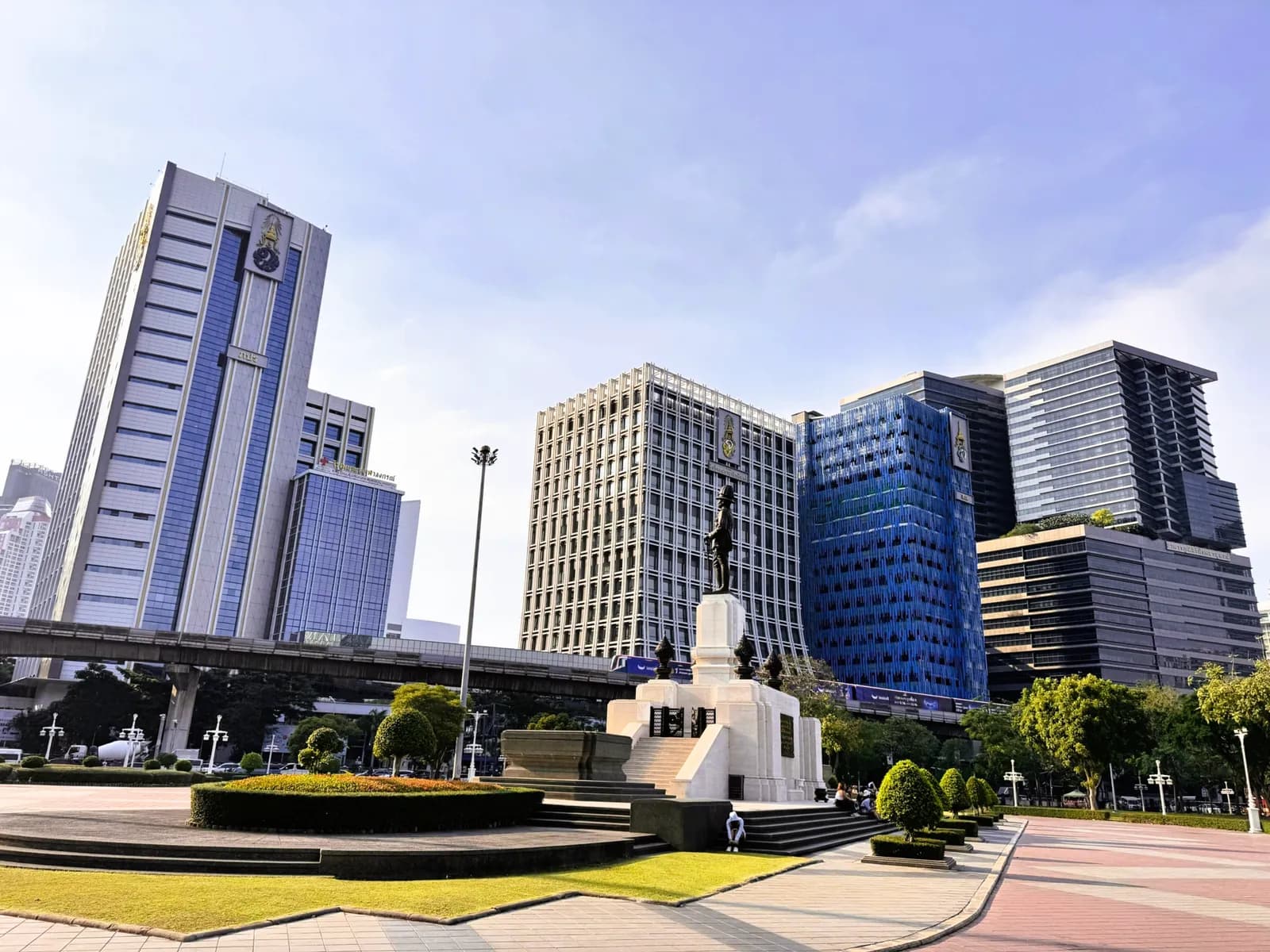
Pathumwan, Bangkok
King Chulalongkorn Memorial Hospital
โรงพยาบาลจุฬาลงกรณ์ สภากาชาดไทย
- University hospital
- Gender-affirming surgery
King Chulalongkorn Memorial Hospital (Chula Hospital, KCMH) is a Thai Red Cross Society university hospital on Rama 4 Road, Pathumwan, Bangkok, with plastic surgery, ENT facial plastic, oculoplastic and gender-affirming surgery teams.
Accreditation
- HA Thailand
- Surgeons
- 19
- Procedures
- 12
- Beds
- 1,500
- Established
- 1914
Surgeons here
International patients
Dr. Suppapong's documented clinics are at King Chulalongkorn Memorial Hospital (โรงพยาบาลจุฬาลงกรณ์ สภากาชาดไทย), a Thai Red Cross hospital where Chulalongkorn's medical students are trained. Its history page gives the opening date as 30 May 1914. The medical faculty cites a capacity of more than 1,500 beds on a facts page that also carries figures dated 2018, so read that number as approximate. Postal address for the hospital: 1873 Rama 4 Road, Pathumwan, Bangkok 10330. Our King Chulalongkorn Memorial Hospital page covers its departments and other surgeons.
Before you travel, weigh the following:
- Accreditation. In HA Thailand's accreditation search the hospital holds Advanced Hospital Accreditation (re-accreditation), dated 23 May 2025 and running to 22 May 2029. JCI, the US-based international accreditor, had no listing for it in searches we ran on 26 September 2026 and repeated a day later.
- Language support. No official page we found describes an international patient desk, interpreter service, airport pick-up or list of languages, although the hospital's website can be read in English. Let our patient team know your language at the outset so it travels with your request.
- Finding the eye clinics. The oculoplastic unit sees patients on level 8 of the สธ. building. The ophthalmology department's own page says it has eight operating theatres, a figure for the department rather than for the whole hospital.
- Confirm sessions before booking travel. His session times come from an archived profile, the department's website was down with an error on 27 September 2026, and the latest staff directory lists him as a special lecturer. Wait for our team to confirm a session before buying flights.
- Length of stay. As general guidance, if a consultation leads to eyelid surgery, our blepharoplasty guide suggests planning about 5–7 days in Thailand, until stitches are out and healing has been checked. Other procedures need different amounts of time, and the operating surgeon, not the itinerary, decides when flying is safe.
- Other teams at the hospital. The hospital's ENT (otolaryngology) department says its facial plastic and reconstructive division does cosmetic work jointly with dermatologists, plastic surgeons and oculoplastic surgeons. That describes cooperation between departments; it is not a service documented for Dr. Suppapong.
Our Bangkok guide has general information for visitors to the city.
How our patient team helps
- We pass your request to the surgeon's hospital or clinic and confirm availability, usually within one working day.
- You receive a booking reference to track your request.
- We answer practical questions on WhatsApp and by email.
ThaiCosmeticSurgery.com does not provide medical care. Treatment, prices and patient services are the responsibility of the hospital or clinic.
Requesting an appointment in Dr. Suppapong's Chulalongkorn clinics
To ask for time with Assoc. Prof. Dr. Suppapong Tirakunwichcha, use our booking form or contact our patient team by WhatsApp. Mention him by name and add a line or two about the eye or eyelid problem.
The steps after that:
- A member of our team reads the request and may come back with a few questions, such as which side is affected and whether the problem is functional, cosmetic or both.
- The team contacts King Chulalongkorn Memorial Hospital to find out whether he is currently holding the clinic that suits your problem, and whether a remote first consultation is possible, since his profile does not mention one.
- You receive the options, normally within one working day. Until the team confirms a date with you, your request is still just a request.
- Should the hospital issue an estimate after examining you, we forward it. His consultation fees are not published, and any figure given before an examination is provisional.
If he is not accepting new patients, or your problem is handled by another team, we explain that and do not switch you to a different doctor without your agreement. Options then include another member of the same unit, such as Assoc. Prof. Dr. Preamjit Saonanon, whom the Chulalongkorn Eye Center names as head of its oculoplastic unit, or the surgeons shown on our ptosis correction and blepharoplasty pages. Another route is to request a consultation with King Chulalongkorn Memorial Hospital without a named doctor, leaving the choice to its eye department.
We charge nothing for passing on a request, and you can say no at any stage.
A request is not a confirmed appointment until our patient team confirms it with you.
Eye history, thyroid details and photos to gather for Dr. Suppapong's clinic
The clearer your request, the easier it is for the hospital to place you in the right clinic. Gather the items below. Send medical details and photos to us by the site's booking form or its WhatsApp contact, and by no other route.
The problem
- Which side, what troubles you, and when it started.
- Whether drooping or heavy lids narrow your view, say while you read or drive.
- What you hope for: a functional fix, a change in appearance, or a second opinion after earlier surgery.
Your eyes
- Glasses or contact lenses, dry or gritty eyes, glaucoma, and any drops you use.
- Operation notes or letters from previous eye, lid or tear-duct surgery.
- For an artificial eye: roughly when it was made, and any reports from surgery on the socket.
Thyroid and general health
- Any thyroid diagnosis, how it is treated, and recent blood tests if you have them.
- Other medical conditions, every medicine including blood thinners and supplements, and allergies.
Earlier cosmetic treatment
- Fillers, injections, thread lifts or implants anywhere in the face, especially near the eyes and forehead, with dates and product names where known.
Photos, only when the team requests them
- Face-on photos in soft daylight without glasses or make-up: eyes open and looking straight ahead, then eyes lightly closed.
- An older photo from before the change started, which can show how the lids have altered over time.
Travel and timing
- Dates that work for you, a choice between a video call and a face-to-face visit, and your preferred consultation language.
Credential research
Every fact on this profile comes from a source we opened and dated. Where a source only states something, we say so.
- Medical Council of Thailand licence
- Check the Medical Council's public register (opens in a new tab)
- Profile last reviewed
Hospital and clinic affiliation
Education and training
Positions
- Chulalongkorn Eye Center: บุคลากร staff directory (Internet Archive capture 2026-04-21; listed under อาจารย์พิเศษ) (opens in a new tab)
- Chulalongkorn Eye Center: หน่วยจักษุวิทยาตกแต่งและเสริมสร้าง (oculoplastic unit page; Internet Archive capture 2026-02-14) (opens in a new tab)
- ThaiSOPRS: Leadership (Assoc. Prof. Dr. Suppapong Tirakunwichcha, Club Advisor) (opens in a new tab)
- ThaiSOPRS: Founding Members (นายแพทย์ศุภพงศ์ ถิรคุณวิชชะ, เลขานุการชมรมฯ) (opens in a new tab)
Society memberships
- Thai Society of Ophthalmic Plastic and Reconstructive Surgery: Member Directory (searches 'Tirakunwichcha', 'ถิรคุณวิชชะ', 'ศุภพงศ์', 'Suppapong') (opens in a new tab)
- Royal College of Ophthalmologists of Thailand: ค้นหาจักษุแพทย์ 'ศุภพงศ์' (1 result; profile page returned Error 503) (opens in a new tab)
Medical information
This profile is for information only and is not medical advice. Whether a procedure is suitable for you can only be decided after an assessment by a qualified surgeon. Every operation carries risks, and results vary from person to person. Before you commit to treatment, check the surgeon's credentials yourself, for example on the Medical Council of Thailand register. We do not accept payment for placement or rankings.
Frequently asked questions
Who is Assoc. Prof. Dr. Suppapong Tirakunwichcha?
A Bangkok ophthalmologist who sub-specialises in oculoplastic surgery, that is, operations on the lids, the tear-drainage passages and the eye socket. He holds a Thai board certificate in ophthalmology, a Thai certificate of proficiency in oculoplastic and reconstructive ophthalmology, and a fellowship from Duke Eye Center in the United States. The Chulalongkorn Eye Center lists him as a special lecturer and as a consultant to its oculoplastic unit at King Chulalongkorn Memorial Hospital.
Which hospital does Dr. Suppapong Tirakunwichcha work at?
The only documented practice is the Chulalongkorn Eye Center, the ophthalmology department of King Chulalongkorn Memorial Hospital, whose street address is 1873 Rama 4 Road (Pathumwan, Bangkok). We also checked the doctor lists of Bumrungrad, Rutnin Eye Hospital, Bangkok Eye Hospital and MedPark and did not find him at any of them.
Is Dr. Suppapong an eye surgeon or a plastic surgeon?
He is an ophthalmologist first; his narrower field, oculoplastic surgery, covers plastic and reconstructive operations on the eyelids, orbit and tear ducts. His certificates are in ophthalmology and its oculoplastic branch, and he is listed by ThaiSOPRS and in the RCOPT (Royal College of Ophthalmologists of Thailand) search tool, rather than by Thailand's general plastic surgery society.
Can Dr. Suppapong do blepharoplasty or ptosis surgery?
No official source states it for him personally. The unit he consults for lists drooping lids (blepharoptosis) and excess upper-lid skin (dermatochalasis) among the problems it treats, without saying which surgeon operates. To get his view on lid surgery, request a consultation and our team will raise it with Chulalongkorn's eye department. The procedures themselves are explained in general terms in our [blepharoplasty](/procedures/blepharoplasty/) and [ptosis correction](/procedures/ptosis-correction/) guides.
Does Dr. Suppapong have a clinic for thyroid eye disease or artificial eyes?
His profile lists a Wednesday-morning clinic for thyroid-related eye problems and ocular prostheses, and he was an author on a 2019 paper about evisceration, an operation generally followed by an artificial eye. The profile does not say which treatments he provides in that clinic. Ask our patient team to confirm the clinic is still held before you plan a trip.
What are Dr. Suppapong's clinic days and times?
According to a February 2026 archived copy of his profile: oculoplastic and reconstructive clinic, Monday 13:00–16:00; general ophthalmology, Tuesday 10:30–12:30; thyroid eye disorders and ocular prostheses, Wednesday 08:30–12:00; out-of-hours special clinic, Wednesday 16:00–20:00. The schedule may have changed since, and our team checks it with the hospital.
Where did Dr. Suppapong Tirakunwichcha train?
His profile records a Thai board certificate in ophthalmology, a Thai certificate of proficiency in oculoplastic and reconstructive ophthalmology, and a fellowship in ophthalmic plastic and reconstruction surgery completed at Duke Eye Center, within Duke University Medical Center in the US. No years are given, and no medical school is named.
Which professional bodies list Dr. Suppapong?
ThaiSOPRS, the society for eye-plastic surgeons in Thailand, carries a member-directory entry for him and gives his role as Club Advisor; its founding-members page records him as secretary on the founding committee. The Royal College of Ophthalmologists of Thailand returns him in its public find-an-ophthalmologist search, with a Bangkok contact location.
What languages does Dr. Suppapong consult in?
None of the official pages we read state his languages, and we found no published interpreter service at the hospital. Name your preferred language in your first message to our patient team so it goes to the hospital with your request.
What happens after I ask to see Dr. Suppapong?
To request a consultation, send our [booking form](/book/?doctor=suppapong-tirakunwichcha) or a WhatsApp message naming him and your concern. Our team checks with King Chulalongkorn Memorial Hospital whether he is holding a suitable clinic and replies, normally within one working day. You then accept or decline a proposed date, and only our team's confirmation turns it into an appointment.
Which eye records and photos are useful for Dr. Suppapong's clinic?
A brief description of the eye or lid problem; eye history such as glasses or contacts, dry eye, glaucoma, drops and earlier eye or tear-duct surgery; any thyroid diagnosis; past fillers or injections in the face; general health and medicines; and the dates you prefer. Photos are needed only if the team asks for them.
Is Dr. Suppapong's licence confirmed on the Medical Council register?
Not so far. The Medical Council of Thailand runs a public doctor register at checkmd.tmc.or.th, and we found no official page giving his licence number. Anyone can look him up in the register directly under his Thai name, ศุภพงศ์ ถิรคุณวิชชะ. How we research each profile is set out in our [research methodology](/provider-research-methodology/).