Key facts
- Specialty
- Facial plastic surgery (ENT)
- Subspecialties
- Otolaryngology (Bumrungrad specialty label), Pediatric Otolaryngology (Bumrungrad specialty label), Facial plastic and reconstructive surgery: holds the Diploma of The Thai Board of Facial Plastic & Reconstructive Surgery (2006); not listed as a Bumrungrad specialty
- Academic title
- Associate Professor
- City
- Bangkok, Thailand
- Practises at
- Bumrungrad International Hospital
- Medical school
- Faculty of Medicine Siriraj Hospital, Mahidol University
- Fellowship
- Children's Hospital of Pittsburgh
- Languages
- Thai, English
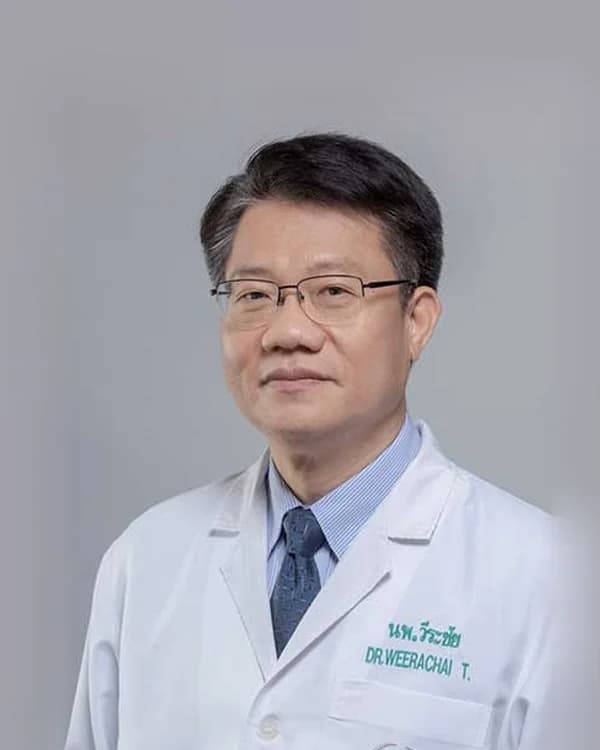
Assoc. Prof. Dr. Weerachai Tantinikorn: Bumrungrad ENT surgeon in Bangkok with a facial plastic board diploma
Assoc. Prof. Dr. Weerachai Tantinikorn (Thai: รศ.นพ. วีระชัย ตันตินิกร) is a Bangkok otolaryngologist (a surgeon for disorders of the ear, nose and throat, or ENT) whose documented place of practice is the ENT Center at Bumrungrad International Hospital, the private hospital off Sukhumvit Road at Soi 3 in central Bangkok. Bumrungrad publishes his name as "Assoc.Prof. Weerachai Tantinikorn, M.D.", files him under Otolaryngology and Pediatric Otolaryngology, and records his academic rank as Associate Professor, Mahidol University.
He appears in our facial plastic surgery (ENT) category because of a single documented qualification: his hospital profile lists a Thai Board diploma in facial plastic and reconstructive surgery, dated 2006. Beyond that diploma, no official page we opened connects him with facial plastic work. His Bumrungrad listing sits under the two ENT specialty labels only, not under the hospital's Plastic (Cosmetic) Surgery Center; it names no special interests; and nothing we read states that he performs rhinoplasty, ear reshaping or any other cosmetic operation on the face. We therefore describe him as the hospital does, as an ENT specialist who also holds a facial plastic board qualification, and we avoid implying a cosmetic surgical practice that no source records.
The documented facts at a glance:
- Bumrungrad specialty labels: Otolaryngology; Pediatric Otolaryngology. His location is given as Building A 12A, ENT Center.
- Medical degree: M.D., Mahidol University, from its Siriraj Hospital medical faculty, 1990.
- Thai Board diplomas: otolaryngology in 1996, family medicine in 2003, and facial plastic and reconstructive surgery in 2006.
- Overseas fellowship: children's ENT (Pediatric Otolaryngology) at Children's Hospital of Pittsburgh in the United States, dated 1998–1999 on his profile.
- Languages the hospital lists for him: Thai and English.
- Research: eight PubMed articles that we cite, dated 1998 to 2018, on the nose and sinuses, the ear, the airway and ENT problems in children.
Whether you have a nose, ear or throat problem, or would like an ENT opinion before thinking about a facial procedure, you can request a consultation with Assoc. Prof. Dr. Weerachai. Our patient team sends the request to Bumrungrad and reports the hospital's reply back to you; nothing is scheduled until Bumrungrad has said yes.
Education and training
- Medical degree1990
M.D. (แพทยศาสตรบัณฑิต)
Faculty of Medicine Siriraj Hospital, Mahidol University, Thailand
Source (bumrungrad.com) (opens in a new tab) - Fellowship
Fellowship in Pediatric Otolaryngology, published as 1998-1999
Children's Hospital of Pittsburgh, United States
Source (bumrungrad.com) (opens in a new tab) - Board certification1996
Diploma of The Thai Board of Otolaryngology (วุฒิบัตร สาขาโสต นาสิก ลาริงซ์วิทยา)
Thailand (Thai Board), Thailand
Source (bumrungrad.com) (opens in a new tab) - Board certification2003
Diploma of The Thai Board of Family Medicine (วุฒิบัตร สาขาเวชศาสตร์ครอบครัว)
Thailand (Thai Board), Thailand
Source (bumrungrad.com) (opens in a new tab) - Board certification2006
Diploma of The Thai Board of Facial Plastic & Reconstructive Surgery (วุฒิบัตร สาขาศัลยศาสตร์ตกแต่งและเสริมสร้างใบหน้า)
Thailand (Thai Board), Thailand
Source (bumrungrad.com) (opens in a new tab)
All the qualifications in this section come from his Bumrungrad International Hospital profile, which we read in English and in Thai on 27 September 2026. We did not find a university or board register that lists them separately, so the hospital profile is our only source for them.
- 1990 – M.D. (แพทยศาสตรบัณฑิต). Awarded by Mahidol University through its Siriraj Hospital medical faculty in Bangkok.
- 1996 – otolaryngology, Thai Board diploma (วุฒิบัตร สาขาโสต นาสิก ลาริงซ์วิทยา). This is Thailand's specialist qualification in ear, nose and throat medicine and surgery.
- 1998–1999 – Pediatric Otolaryngology fellowship at Children's Hospital of Pittsburgh, in the United States.
- 2003 – family medicine, Thai Board diploma (วุฒิบัตร สาขาเวชศาสตร์ครอบครัว).
- 2006 – facial plastic and reconstructive surgery, Thai Board diploma (Thai title: สาขาศัลยศาสตร์ตกแต่งและเสริมสร้างใบหน้า).
Taken in date order, these entries describe a doctor who qualified at Siriraj, specialised in ENT, went abroad to train in children's ENT, and later added two more Thai Board qualifications: first in family medicine, then in facial plastic and reconstructive surgery. The Thai name of that last diploma means, roughly, plastic and reconstructive surgery of the face. It is the only reason he is listed in our facial plastic category.
His profile does not explain how the facial plastic diploma was earned, whether through a formal training programme or by another pathway, and it records no fellowship in facial plastic surgery. If specific training in the operation you are considering matters to you, raise it with him at the consultation. For how we source and date qualifications, and why only official sources count, see the provider research methodology page.
Professional experience
- Current
Otolaryngologist (Otolaryngology; Pediatric Otolaryngology), ENT Center (Building A 12A)
Bumrungrad International Hospital, Bangkok
Source (bumrungrad.com) (opens in a new tab) Academic rank: Associate Professor (รองศาสตราจารย์), published on the Bumrungrad profile without a current department
Mahidol University
Source (bumrungrad.com) (opens in a new tab)Department of Otolaryngology (author affiliation on PubMed records, 2003-2004)
Faculty of Medicine Siriraj Hospital, Mahidol University
Source (pubmed.ncbi.nlm.nih.gov) (opens in a new tab)
Bumrungrad International Hospital, Bangkok (current). Bumrungrad lists Assoc. Prof. Dr. Weerachai as an otolaryngologist at its ENT Center, located at Building A 12A. The clinic sessions shown on his profile on 27 September 2026 were:
- Monday: morning only, 09:00–12:00
- Tuesday to Friday: 09:00–12:00, then again 13:00–15:00
- Saturday: none published
- Sunday: a morning session 09:00–12:00 plus an afternoon session 13:00–15:00
Bumrungrad can change a doctor's timetable, so treat this as his usual weekly pattern rather than a list of open slots; our patient team confirms current availability with Bumrungrad before suggesting a date. His profile gives no start date at the hospital, although his PubMed articles from 2012 onwards name its EENT Center or Ear Nose and Throat Center as his affiliation.
Mahidol University (academic rank). His profile gives the rank Associate Professor, Mahidol University (Thai: รองศาสตราจารย์, มหาวิทยาลัยมหิดล). It names no current department and does not say whether he still teaches. Ask our patient team about his present university post.
Siriraj Hospital, Department of Otolaryngology (earlier). His 2003 and 2004 PubMed articles place him in this department, the ENT department of the medical school where he qualified.
Published work. The eight articles we cite on this profile span 1998 to 2018. By subject:
- Nose and sinuses: a 2003 article in the journal *Facial Plastic Surgery* describing a new way of treating sclerosing lipogranuloma of the nose by transplanting adipose (fat) tissue; a 2003 report of nasal granuloma gravidarum that presented with repeated heavy nosebleeds; and a 2018 case of optic neuritis caused by a mucocele of the sphenoid sinus with sinusitis.
- Ear: a 2012 article on mastoid obliteration using soft tissue from behind the ear combined with a pericranial flap.
- Airway and neck: a 2004 article on managing laryngotracheal stenosis, a narrowing of the voice box and windpipe; a 2003 study of how children fared after tracheotomy; and a 2013 article on quality of care once a care map was introduced for hemithyroidectomy, the removal of one half of the thyroid gland.
- Newborns: a 1998 report of suppurative submandibular sialadenitis, a pus-forming infection of the salivary gland beneath the jaw, in newborn babies.
The titles indicate where his published clinical interests have lain. They are not a menu of operations he offers now, and none of them is about a cosmetic procedure. The 2003 *Facial Plastic Surgery* article is the only one that sits inside the facial plastic field, and its subject is treating a nasal tissue disorder with transplanted fat, not reshaping the nose for appearance.
The Thai version of his Bumrungrad profile also links to hospital health articles written by him on enlarged adenoids and snoring in children, obstructive sleep apnoea in children, and hearing problems in children.
Selected publications
- Rhinogenic Optic Neuritis Caused by Sphenoid Mucocele with Sinusitis. (opens in a new tab) · Case Reports in Radiology, 2018
- The improved quality process after implementation of the hemithyroidectomy care map. (opens in a new tab) · Journal of the Medical Association of Thailand, 2013
- Mastoid obliteration with postconchal soft tissue and postauricular pericranial flap. (opens in a new tab) · Journal of the Medical Association of Thailand, 2012
- How to overcome laryngotracheal stenosis. (opens in a new tab) · Journal of the Medical Association of Thailand, 2004
- Sclerosing lipogranuloma of the nose: a new treatment using adipose tissue transplantation. (opens in a new tab) · Facial Plastic Surgery, 2003
- Outcome in pediatric tracheotomy. (opens in a new tab) · American Journal of Otolaryngology, 2003
- Nasal granuloma gravidarum presenting with recurrent massive epistaxis. (opens in a new tab) · Journal of the Medical Association of Thailand, 2003
- Neonatal suppurative submandibular sialadenitis: a rare clinical entity. (opens in a new tab) · International Journal of Pediatric Otorhinolaryngology, 1998
The areas Dr. Weerachai's official record documents, and where a cosmetic question fits
Our directory connects a surgeon with an operation only when an official page states that they perform it. No such page exists for Assoc. Prof. Dr. Weerachai, so his profile carries no procedure links. Below, the areas that the official sources do document are taken one at a time, each with a note on what it means if you bring that kind of question to him.
Facial plastic and reconstructive surgery
*On record:* his 2006 Thai Board diploma in this field and his 2003 journal article on treating a nasal condition by transplanting fat tissue. *Not on record:* which facial operations, cosmetic or reconstructive, he currently performs, at which facility, or how often.
Bumrungrad handles cosmetic facial surgery through a separate unit, its Plastic (Cosmetic) Surgery Center, found on floor 16 of Building A. That centre's published list names rhinoplasty (augmentation and reduction), otoplasty, blepharoplasty, face lift, forehead lift, chin augmentation and facial implants. The ENT Center where he works describes ear, sinus, thyroid, head and neck, laryngeal and sleep apnoea services, with no cosmetic facial surgery among them. Anyone hoping for a cosmetic facial operation should therefore start by asking whether cosmetic consultations are something he takes on at all; we can put that question to Bumrungrad on your behalf. The plastic surgeons documented at the hospital appear on our Bumrungrad hospital profile, and Asst. Prof. Dhave Setabutr is another doctor at the same ENT Center in our directory whose record includes a facial plastic and reconstructive surgery qualification.
The nose: airflow, sinuses and appearance
*On record:* the Otolaryngology label, the sinus services of the ENT Center and his articles on nasal and sinus conditions. In general, an ENT specialist examines the inside of the nose, including the septum and the sinuses, and looks for the causes of poor airflow. In the terms our rhinoplasty guide uses, reshaping the nose while also straightening the internal septum for better airflow is a septorhinoplasty, and only a medical assessment can show whether a given patient needs one. Nothing on his profile says he performs septorhinoplasty or rhinoplasty, so please do not assume he does. For a nose that is both blocked and a cosmetic worry, an ENT opinion on the breathing side can still be a reasonable place to begin, and our patient team can ask whether he would give one.
The ear
*On record:* his 2012 article on mastoid obliteration, the linked hospital article on children's hearing and the ENT Center's ear services. The cosmetic side of the ear, such as setting prominent ears back, reshaping the folds or making large earlobes smaller, is covered in our otoplasty guide. At Bumrungrad, otoplasty is offered by the Plastic (Cosmetic) Surgery Center, and his profile does not connect him with it. If your concern is the shape of an ear rather than hearing or infection, make that clear when you write to us.
ENT problems in children
*On record:* the Pediatric Otolaryngology label, the Pittsburgh fellowship, his articles on tracheotomy outcomes in children and on a salivary gland infection in newborns, and his hospital articles on enlarged adenoids, snoring, sleep apnoea and hearing in children. Of all the areas on this page, children's ENT has the most official documentation behind it. Our own guides deal with cosmetic and facial surgery, not paediatric ENT, so for a child the hospital itself will be the main source of medical advice; our patient team can still forward a consultation request.
Airway, voice box and neck
*On record:* articles on laryngotracheal stenosis, tracheotomy in children and a hemithyroidectomy care map, plus the ENT Center's thyroid, head and neck and laryngeal services. These are medical and surgical ENT subjects that fall outside the cosmetic procedures our guides describe. They are listed so that this profile gives a fair account of his published work.
Seeing Assoc. Prof. Dr. Weerachai about a nose, ear or facial concern: what to settle first
His official profile lists qualifications rather than operations, so the opening part of any consultation with Assoc. Prof. Dr. Weerachai is usually about scope: what he treats himself and what he would pass to a colleague. A detailed plan only makes sense once that is clear. The questions below follow that order.
Start with scope
- Is my concern something you see at Bumrungrad, and does it form a regular part of your ENT Center work?
- Is the problem mostly about function (breathing, sinuses, hearing), mostly about appearance, or both, and does that change who should treat it?
- If surgery is advised, would you operate yourself, and in which department of the hospital?
- If not, which colleague or department would you refer me to?
If nasal surgery comes up
Our rhinoplasty guide suggests questions for any surgeon, and they are just as relevant with him:
- What technique, and what graft or implant material, would you propose for me, and for what reason?
- Is this an operation you carry out regularly, and about how many a year?
- Which unit of Bumrungrad would host it, and who would be responsible for the anaesthetic?
- What is included in the quote, and what would a revision cost?
- When would it be reasonable for me to fly home, and how would follow-up work once I have left Thailand?
The following is general guidance from our rhinoplasty guide, not something Assoc. Prof. Dr. Weerachai or Bumrungrad has published: a general anaesthetic is the usual choice for nose reshaping; patients who fly in usually budget 7–10 days on the ground, which leaves room for the outer splint's removal and a healing review by the surgeon; and the nasal tip often needs 12 months or more before its final shape shows. The same guide lists the risks that come with any nose operation, among them bleeding, infection, numbness, persistent swelling, uneven results, nasal blockage and dissatisfaction with the outcome; whether you are a suitable candidate can be judged only after a face-to-face examination by the operating surgeon.
If you have had earlier surgery or an injury
Bring operation notes if you have them, and explain what was done, when and where. In general, a second nose operation is normally held back for a minimum of one year after the first, and a second operation tends to be more complex than the first; that is the position our rhinoplasty guide takes.
If the patient is a child
Describe the symptoms, for example snoring, pauses in breathing during sleep, hearing difficulty or repeated ear infections, say how long they have lasted and what has already been tried, and bring hearing-test results and letters from the child's own doctors.
Checking credentials
The licence can be looked up on the Medical Council of Thailand's public register at checkmd.tmc.or.th, and our patient team can help you confirm it before you travel. The accreditation we found for Bumrungrad is set out in the next section.
Hospitals and clinics where Assoc. Prof. Dr. Weerachai Tantinikorn practises
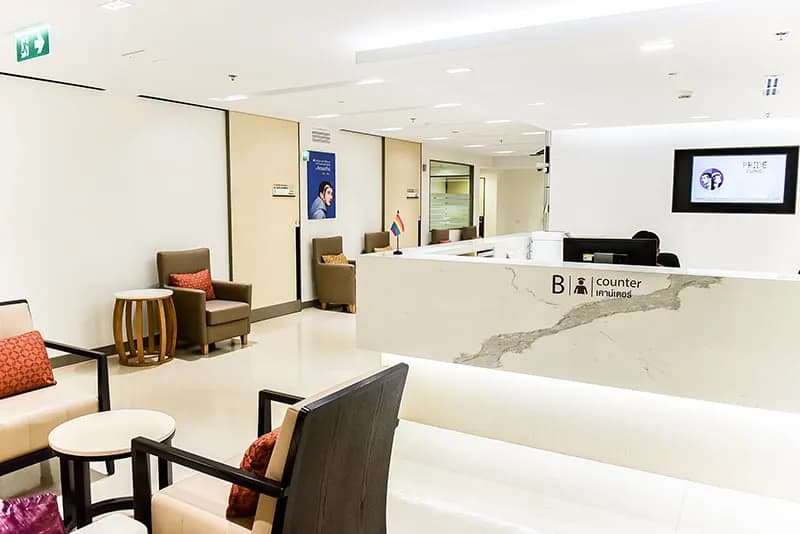
Watthana, Bangkok
Bumrungrad International Hospital
โรงพยาบาลบำรุงราษฎร์ อินเตอร์เนชั่นแนล
- Private hospital
- International patient service
Bumrungrad International Hospital is a private hospital on Sukhumvit Soi 3 in Bangkok, accredited by JCI and HA Thailand. Its Plastic (Cosmetic) Surgery Center and Pride Clinic offer cosmetic, reconstructive, hair transplant and gender-affirming surgery.
Accreditation
- JCI
- HA Thailand
- Surgeons
- 39
- Procedures
- 36
- Beds
- 580
- Established
- 1980
- Languages
- English, Thai, Amharic, Arabic, Bengali, Bahasa Indonesia, Chinese (Cantonese), Chinese (Mandarin), French, German, Hindi, Japanese, Khmer, Korean, Mongolian, Myanmar (Burmese), Nepali, Russian, Urdu, Vietnamese, Danish, Finnish, Greek, Italian, Norwegian, Persian, Sign Language, Sinhala, Spanish, Turkish
Surgeons here
International patients
The only place of practice documented for Assoc. Prof. Dr. Weerachai is Bumrungrad International Hospital. Its contact page places it at number 33 on Sukhumvit 3 (the soi known locally as Nana Nua), Wattana, Bangkok 10110. The hospital's factsheet describes a private hospital with 580 inpatient beds, and its About page dates the founding to 1980. Each accreditation below was checked on 27 September 2026 in the accrediting body's own directory:
- JCI (Joint Commission International), Hospital Program: status accredited, with 2 February 2002 as the first effective date and no expiry shown.
- HA Thailand, Advanced Hospital Accreditation: re-accredited; the HA search result shows 22 May 2029 as the end date, with 23 May 2025 as the start.
- GHA (Global Healthcare Accreditation): listed since 20 September 2017 under its medical-travel programme, named Hospital Accreditation with Excellence for Medical Travel.
For patients coming from another country, the hospital describes these services:
- the Medical Coordination Office, which Bumrungrad says is free for international patients and which is on Building A's 10th floor. Before you travel, its coordination doctors and nurses look over records, work out estimated costs and book appointments or telemedicine sessions; once you are discharged, they deal with medical reports, fit-for-flight documents and follow-up;
- interpreters, more than 130 according to the factsheet, and Cultural Support Officers for international patients whose first choice of language is something other than English;
- an airport representative at Suvarnabhumi, waiting at Gate 9, Exit C, in the arrivals hall for international flights between 07.00 and 23.00 daily, plus a free shuttle van that leaves roughly hourly, depending on passenger numbers, for the hospital or hotels in its neighbourhood;
- a complimentary van, running daily, that shuttles between Bumrungrad and the Skytrain (BTS) at Nana and Phrom Phong;
- visa extensions, which the hospital's Business Center arranges with the Bangkok Immigration Office, and help from that same Business Center with hotels, flights and local transport;
- assistance with embassies and with international insurers.
Language. Bumrungrad lists Thai and English for him, so a consultation in English should not require an interpreter. The hospital's patient services page offers interpreting in many further languages, Arabic, Japanese, Mandarin, Russian and Vietnamese among them.
Planning the trip. His published sessions fall on mornings and early afternoons from Sunday to Friday; no Saturday session is shown. If you are flying in mainly for a consultation, keep a spare day in Bangkok in case the time changes. If an operation is proposed, let the surgeon's advice set the length of your stay rather than a fixed return flight. Our procedure guides give typical stays for each operation, yet the final word on flying belongs to the surgeon.
Follow-up at home. Before you travel, ask how follow-up will be handled after you leave Bangkok, and whether the Medical Coordination Office can send your reports to your own doctor.
Published by the hospitals and clinics
These services are offered and provided by each facility itself, as listed on its official site.
Bumrungrad International Hospital
- International patient desk
- Medical Coordination Office: complimentary service for international patients, with coordination physicians and nurses who help before arrival (records review, estimated prices, appointments, telemedicine, medical transport, insurers and embassies), during the stay and after discharge (medical reports, fit-to-fly, follow-up). Located on the 10th floor of Building A. Source (bumrungrad.com) (opens in a new tab)
- Cultural Support Officers for medical travel patients whose preferred language is not English, and Cultural Helpdesks (10th floor Sky Lobby, BI Clinic Building, 08:00-18:00) offering coordination, language support, escorts and concierge help Source (bumrungrad.com) (opens in a new tab)
- Over 130 interpreters Source (bumrungrad.com) (opens in a new tab)
- Hospital desk in the arrival area (Area C) of Suvarnabhumi Airport; the hospital can meet patients and provide plane-to-hospital VIP service. Airport Representative at International Arrival Hall Exit C, Gate 9, open daily 07.00-23.00 Source (bumrungrad.com) (opens in a new tab)
- Free shuttle van from Suvarnabhumi International Airport to the hospital or nearby hotels, departing hourly (subject to number of passengers) Source (bumrungrad.com) (opens in a new tab)
- Complimentary shuttle van service from BTS Nana and BTS Phrom Phong stations, 7 days a week Source (bumrungrad.com) (opens in a new tab)
- Visa extension service coordinated with the Bangkok Immigration Office for patients and accompanying persons (through the Business Center) Source (bumrungrad.com) (opens in a new tab)
- Business Center: hotel reservations, domestic and international air tickets, transport to the airport and other destinations, local tours Source (bumrungrad.com) (opens in a new tab)
- Embassy assistance and international insurance coordination Source (bumrungrad.com) (opens in a new tab)
- International Referral Offices in Australia, Bahrain, Bangladesh, Cambodia, Chad, China, Ethiopia, Hong Kong, Indonesia, Kenya, Kuwait, Laos, Mongolia, Myanmar, Nepal, Oman, Pakistan, Qatar, Russia, Sudan, UAE, Vietnam and a virtual office Source (bumrungrad.com) (opens in a new tab)
- Muslim prayer room with 300-person capacity Source (bumrungrad.com) (opens in a new tab)
- Tele-consultation with doctors Source (bumrungrad.com) (opens in a new tab)
Languages listed: English, Thai, Amharic, Arabic, Bengali, Bahasa Indonesia, Chinese (Cantonese), Chinese (Mandarin), French, German, Hindi, Japanese, Khmer, Korean, Mongolian, Myanmar (Burmese), Nepali, Russian, Urdu, Vietnamese, Danish, Finnish, Greek, Italian, Norwegian, Persian, Sign Language, Sinhala, Spanish, Turkish
How our patient team helps
- We pass your request to the surgeon's hospital or clinic and confirm availability, usually within one working day.
- You receive a booking reference to track your request.
- We answer practical questions on WhatsApp and by email.
ThaiCosmeticSurgery.com does not provide medical care. Treatment, prices and patient services are the responsibility of the hospital or clinic.
Requesting a consultation with Assoc. Prof. Dr. Weerachai Tantinikorn through our patient team
ThaiCosmeticSurgery.com is not an instant booking system. Each request goes from our patient team to Bumrungrad International Hospital. Think of an appointment as real once two things have happened: Bumrungrad has offered a time with Assoc. Prof. Dr. Weerachai, and we have relayed that offer to you. There is no charge for asking, and asking binds you to nothing.
- Send the request. Fill in the consultation request form for Assoc. Prof. Dr. Weerachai, or tap the WhatsApp button on this page and tell our patient team you are asking about him. If another specialist at the same hospital would suit you just as well, use the Bumrungrad request form instead.
- Describe the symptom or concern, not only a procedure name. His profile lists no cosmetic operations, so a message such as "nose blocked on one side and a bump on the bridge; I would like an ENT view first" helps more than a single word. Tell us whether you would prefer to meet him by video or at the hospital.
- Give us your dates. Include when you will be in Bangkok, bearing in mind that his published clinic days run Sunday through Friday.
- We ask the hospital. Our patient team asks Bumrungrad whether he sees patients with your kind of question and, if so, when. Your request is given a reference so that you can follow its progress.
- A clear answer. If he is not the appropriate doctor for your question, we say so and can point you to surgeons in Bangkok, at Bumrungrad or elsewhere, whose documented procedures fit it.
- The decision stays with you. Any price estimate from the hospital is provisional until you have been examined, and you are free to go no further.
Please keep medical information and photos to the request form or to the WhatsApp number published on this site.
A request is not a confirmed appointment until our patient team confirms it with you.
Documents and photos to prepare before seeing Assoc. Prof. Dr. Weerachai
A brief, specific request helps the hospital judge quickly whether he is the appropriate doctor for your concern. Include the essentials in your first message, and send photos or scans only when the hospital or our team asks for them.
Include in any request
- how old you are, where you live, and whether you would rather talk by video or come to Bumrungrad in person;
- a description of the problem in your own words, and whether it concerns breathing, hearing, appearance or several of these;
- the dates you expect to be in Bangkok;
- your general health, including long-term illnesses, bleeding disorders, any past blood clot, heart or lung disease and diabetes;
- every medicine and supplement you take, especially aspirin or other blood thinners (do not stop any of them on your own initiative; ask your own doctor first);
- allergies, hay fever and other nasal allergies included, and whether you smoke or use nicotine;
- the questions you would like him to answer.
Nose or sinus concerns
- how long the symptoms have been present, which side is blocked, any nosebleeds or reduced sense of smell, and the treatments already tried;
- any previous nasal surgery, injury, implant or filler injection, with operation notes where available;
- existing sinus CT reports or images;
- if photos are asked for: a front view, a side view and a view from underneath (the base of the nose), in even, neutral light with hair held back, which is the set our rhinoplasty guide describes.
Ear concerns
- audiogram (hearing test) results, previous ENT letters and details of any ear operation;
- if the question is about ear shape and photos are requested: both ears seen from the front and from behind.
Requests for a child
- the child's age, the main symptoms (snoring, pauses in breathing at night, hearing difficulty, repeated ear infections), how long they have been going on and what has been tried;
- hearing-test results and letters from the child's usual doctors.
Hold on to your original documents and send copies only through the request form or our WhatsApp number, never on public social media.
Credential research
Every fact on this profile comes from a source we opened and dated. Where a source only states something, we say so.
- Medical Council of Thailand licence
- Check the Medical Council's public register (opens in a new tab)
- Profile last reviewed
Hospital and clinic affiliation
Education and training
Positions
Medical information
This profile is for information only and is not medical advice. Whether a procedure is suitable for you can only be decided after an assessment by a qualified surgeon. Every operation carries risks, and results vary from person to person. Before you commit to treatment, check the surgeon's credentials yourself, for example on the Medical Council of Thailand register. We do not accept payment for placement or rankings.
Frequently asked questions
Who is Assoc. Prof. Dr. Weerachai Tantinikorn?
An otolaryngologist, or ear, nose and throat surgeon, at the ENT Center of Bumrungrad International Hospital in Bangkok, where he is listed for Otolaryngology and Pediatric Otolaryngology. His hospital profile records an M.D. (1990) earned at Siriraj Hospital, Mahidol University's medical school, Thai Board diplomas in otolaryngology (1996), family medicine (2003) and facial plastic and reconstructive surgery (2006), and the academic rank of Associate Professor at Mahidol University.
Where does Assoc. Prof. Dr. Weerachai Tantinikorn practise?
At the ENT Center of [Bumrungrad International Hospital](/hospital/bumrungrad-international-hospital/), given on his profile as Building A 12A; the hospital is on Soi Nana Nua (Sukhumvit Soi 3), number 33, in Wattana, Bangkok. No other facility lists him on an official page we read. His 2003 and 2004 PubMed articles give his affiliation as the Department of Otolaryngology at Siriraj Hospital, Mahidol University, but we found no page confirming a current post there.
Is Dr. Weerachai Tantinikorn a plastic surgeon or an ENT surgeon?
He is an ENT surgeon who also holds a facial plastic board qualification. Bumrungrad places him under Otolaryngology and Pediatric Otolaryngology, and his profile includes the 2006 Thai Board diploma in facial plastic and reconstructive surgery. The hospital does not list him under its Plastic (Cosmetic) Surgery Center. Neither the ThPRS member roll (529 names, read by us on 27 September 2026; the letters stand for the Thai Plastic and Reconstructive Surgeons' society) nor the archived 2020 ThSAPS directory includes him. Facial plastic and ENT society lists were not part of our check.
Does Assoc. Prof. Dr. Weerachai perform rhinoplasty?
No official page we read says that he does. His profile names no cosmetic procedures, and at Bumrungrad rhinoplasty is offered through the Plastic (Cosmetic) Surgery Center. His published work covers nasal and sinus conditions, and ENT specialists in general assess nasal breathing, so you can ask him for an ENT opinion on a nose that is blocked as well as a cosmetic concern. Whether he would operate is a question our patient team can put to the hospital. For a general overview of the operation, see our [rhinoplasty guide](/procedures/rhinoplasty/).
Does Dr. Weerachai Tantinikorn treat children?
Yes. Bumrungrad lists him under Pediatric Otolaryngology, his profile records a Pediatric Otolaryngology fellowship at Children's Hospital of Pittsburgh (dated 1998–1999), and the Thai version of his hospital profile links his health articles on enlarged adenoids and snoring, sleep apnoea and hearing problems in children.
Which languages does Assoc. Prof. Dr. Weerachai speak?
Thai and English are the two his Bumrungrad profile gives. Should another language suit you better, Bumrungrad provides interpreters; its patient services page covers Arabic, Mandarin, Russian and Vietnamese, among many others.
On which days does Dr. Weerachai see patients at Bumrungrad?
His profile showed the following on 27 September 2026: Monday 09:00–12:00; Tuesday to Friday 09:00–12:00, then again 13:00–15:00; Sunday a morning session 09:00–12:00 plus an afternoon session 13:00–15:00. No Saturday session was listed. Timetables change, so our patient team checks availability with the hospital before you book travel.
Can I have an online consultation with Assoc. Prof. Dr. Weerachai?
His profile does not say whether he consults online. Bumrungrad's Medical Coordination Office includes telemedicine among its services for international patients, so say in your request that a video consultation would suit you and our team will find out whether he offers one.
Is Dr. Weerachai Tantinikorn's medical licence verified?
Not at the time of writing. On 27 September 2026, Cloudflare security cut off our search of checkmd.tmc.or.th, the online doctor register of Thailand's Medical Council, before his entry was reached. His Bumrungrad profile shows no licence number either. Bumrungrad can confirm his registration if you ask, or you can try the register lookup from your own browser.
How much does a consultation with Assoc. Prof. Dr. Weerachai cost?
None of our sources publishes consultation or procedure prices for him. Bumrungrad's Medical Coordination Office says it provides estimated prices to international patients. Any estimate remains provisional until you have been examined, so get the quote in writing, broken down item by item, before committing to treatment.
How do I request a consultation with Assoc. Prof. Dr. Weerachai Tantinikorn?
Use the [request form](/book/?doctor=weerachai-tantinikorn) on this site, or send a WhatsApp message that names Assoc. Prof. Dr. Weerachai and sums up the problem in a few lines. We pass it to Bumrungrad and let you know once the hospital has confirmed a time. Asking costs nothing, and you can stop at any stage.
Which documents and photos are useful before seeing Dr. Weerachai?
Describe your concern in your own words and add your travel dates, general health, medicines, allergies and any earlier nose, sinus or ear surgery or injury. Include sinus CT or hearing-test reports if you already have them. Send photos only when the hospital requests them: front, side and base views for a nose question, or front and rear views of each ear for an ear question.