
Key facts
- Specialty
- Oculoplastic surgery (ophthalmology)
- Subspecialties
- Eyelid Reconstruction, Eyelid Neoplasm, Lacrimal Surgery, Orbital Surgery
- City
- Bangkok, Thailand
- Medical school
- College of Medicine, Rangsit University
- Fellowship
- Ramathibodi Hospital, Mahidol University
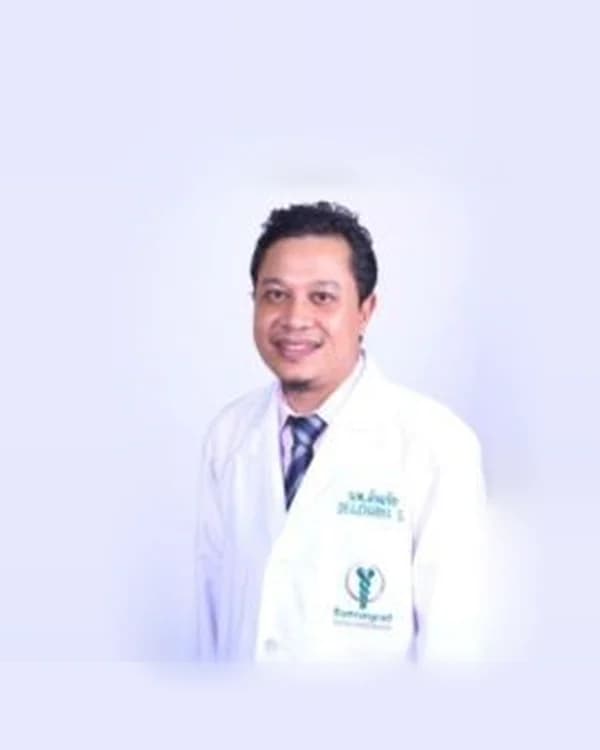
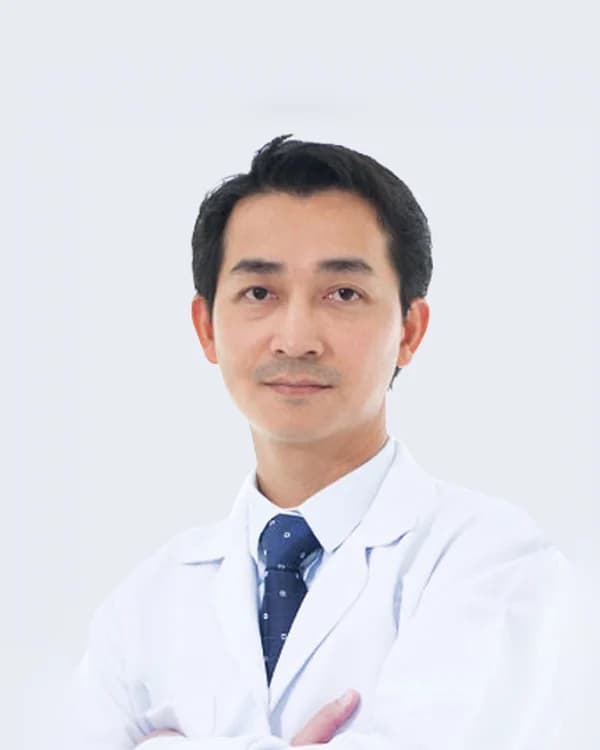
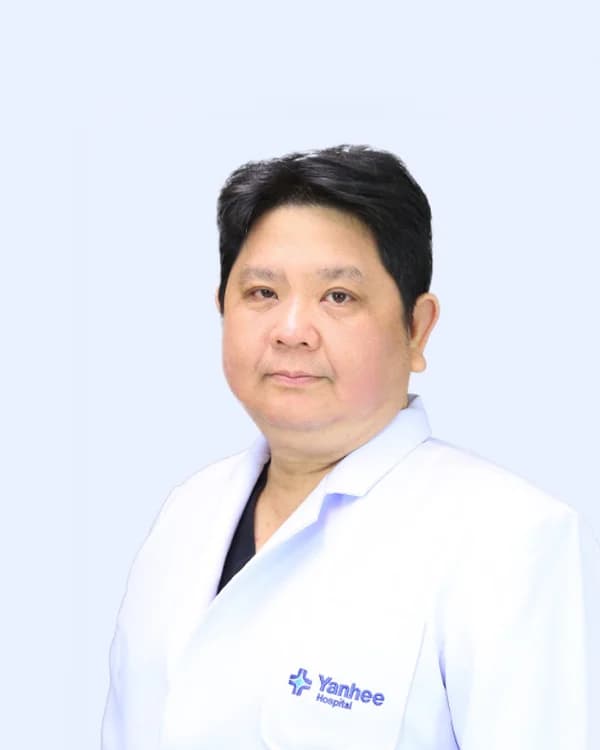
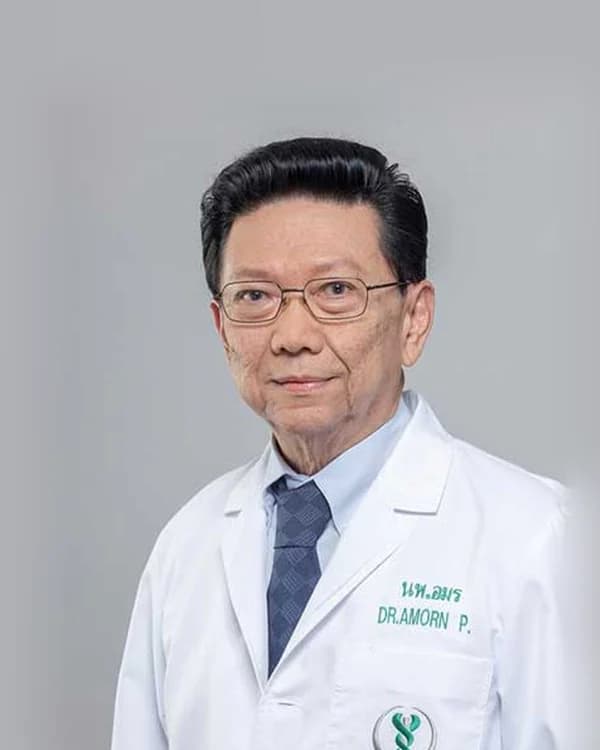
Who is Dr. Vorarit Jinaratana?
Dr. Vorarit Jinaratana is an oculoplastic surgeon and ophthalmologist who practises in Bangkok, Thailand. The Praram 9 Hospital doctor directory lists the surgeon in the hospital's Eye Center as an oculoplastic and reconstructive surgeon, and the profile gives the subspecialties as eyelid reconstruction, eyelid neoplasm (tumours of the eyelid), lacrimal surgery (the tear drainage system) and orbital surgery (the bony socket around the eye).
In plain terms, oculoplastic surgery is a branch of ophthalmology that deals with the structures around the eyeball: the eyelids, the tear ducts and the orbit. Some of this work is reconstructive or medical, such as removing an eyelid growth and rebuilding the lid, and some overlaps with cosmetic eyelid surgery. That overlap is why an oculoplastic surgeon appears on a cosmetic surgery platform. It also means you should read this profile for what it is: the page of a surgeon whose published focus is eyelid, tear-duct and orbital problems, not a general cosmetic or body surgeon.
Quick facts from the verified record
- Name as published: Vorarit Jinaratana, M.D. The English profile does not state a gender, so this page avoids pronouns, and no Thai-script name is recorded because the hospital's Thai-language profile page could not be found.
- Specialty: oculoplastic and reconstructive surgery within ophthalmology.
- Place of practice: Eye Center, Praram 9 Hospital, Bangkok.
- Listed subspecialties: eyelid reconstruction, eyelid neoplasm, lacrimal surgery, orbital surgery.
- Fellowship: oculoplastic and reconstructive surgery, Ramathibodi Hospital, Mahidol University (2024, as listed).
Praram 9 is a private hospital. You can read about the setting on our Praram 9 Hospital page and about the city on our Bangkok guide. If you would like to ask about an appointment, our patient team handles requests: ask for a consultation with Dr. Jinaratana.
Our research on this surgeon rests on one official source, the hospital's own profile, checked on 2 October 2026. Where a fact a patient would reasonably want is not published, this page says so rather than guessing. The way we collect and label this information is described in our provider research methodology.
Education and training
- Medical degree2016
Doctor of Medicine (2nd class honors)
College of Medicine, Rangsit University, Thailand
Source (praram9.com) (opens in a new tab) - Fellowship2024
Oculoplastic and reconstructive surgery
Ramathibodi Hospital, Mahidol University, Thailand
Source (praram9.com) (opens in a new tab)
The Praram 9 profile lists three steps of education, which together describe a path from general medicine, through ophthalmology, to a sub-specialty fellowship in oculoplastic surgery.
- Doctor of Medicine, College of Medicine, Rangsit University (2016). The profile records the degree with second-class honours.
- Residency in ophthalmology, Thailand (2022). The profile names the country and year but does not name the training institution, so we cannot say where this residency was completed.
- Fellowship in oculoplastic and reconstructive surgery, Ramathibodi Hospital, Mahidol University (2024). Ramathibodi is the teaching hospital of Mahidol University's Faculty of Medicine in Bangkok.
In general, an ophthalmology residency is the foundation for any eye surgeon, and a fellowship is additional focused training taken after residency. The dates on the profile place the oculoplastic fellowship after the ophthalmology residency, at a university hospital. The most recent listed training year is 2024. The profile does not state how many procedures have been performed or how long the surgeon has worked in practice, and we do not estimate either.
What we could not confirm
- Medical Council of Thailand registration. No licence number is shown on this profile; the licence can be looked up on the Medical Council of Thailand's public register at checkmd.tmc.or.th. This is a gap in our verification, not a finding about the surgeon. Patients can check a Thai doctor's registration themselves, and our methodology page explains how we treat this status.
- Board certification and society membership. The hospital profile lists no memberships. We did not find a statement of board status, and we do not assume one.
- Publications. None are recorded for this surgeon.
Professional experience
The one practice documented for Dr. Jinaratana is the Eye Center at Praram 9 Hospital, where the surgeon is listed as an oculoplastic surgeon. The hospital's description of that centre refers to oculoplastic surgeons in the plural, so other colleagues work in the same field there.
No leadership posts, teaching appointments, earlier hospital positions, years in practice or case numbers are published on the profile, so none appear here. If any of these matter to your decision, tell the patient team early so they can find out from the hospital while you are still deciding.
The facility around the surgeon
The hospital's own pages describe neighbouring departments: its Eye Center, an ENT centre (which lists a facial plastic and reconstructive surgeon), a Surgery Center, a Breast Clinic and a Skin and Plastic Surgery centre that offers dermatology and laser treatments, botulinum toxin and filler injections. For a patient whose eyelid problem needs another specialty's view (a dermatologist for a skin lesion, say, or an ENT surgeon for a nasal or sinus component to a tear-duct problem), having these centres under one roof is a practical advantage in principle. The hospital does not publish how the centres coordinate cases, so ask rather than assume.
The hospital's bed numbers, operating room count and current accreditation are not reported here. We deliberately say nothing about accreditation for Praram 9, because we could not confirm a current, dated status from an accrediting body.
Eyelid, tear-duct and orbital surgery: the documented focus
The profile's four subspecialty terms are the only procedure-related information published about Dr. Jinaratana. The hospital does not list individual named operations such as blepharoplasty, double eyelid surgery or ptosis repair on the surgeon's profile, so this page does not claim the surgeon performs any of them. What follows explains each documented area in general terms, so you know what to ask.
### Eyelid reconstruction
Eyelid reconstruction means rebuilding the eyelid's shape and function after something has altered it: removal of a growth, an injury, previous surgery, or scarring that pulls the lid out of position. The goals are protection of the eye surface, comfortable closing and opening, and an appearance that is as natural as possible. In general, reconstruction is planned around which layers of the lid are affected (skin, the supporting tissue, and the inner lining) and how much tissue must be borrowed from nearby areas.
A patient asking about reconstruction typically needs to discuss the cause, the expected number of stages, how the lid will protect the eye in the early weeks, and what a realistic cosmetic result looks like. Reconstruction aims at function first; appearance follows from that.
### Eyelid neoplasm
Eyelid neoplasm means an abnormal growth on or in the lid. Many are harmless, but some need to be removed and examined under the microscope. An oculoplastic surgeon's role is usually to remove the lesion while preserving as much healthy eyelid as possible, send tissue for pathology and then repair the gap. In general, any new, changing, bleeding or non-healing lump on the eyelid should be assessed by a doctor in person; photographs help but do not replace an examination. If you are travelling to Thailand for this reason, ask the team how pathology results will be shared and what happens if the result calls for further treatment.
### Lacrimal surgery
The lacrimal system produces and drains tears. When the drainage channel is blocked, people can have constantly watering eyes, recurrent infection or discharge. Surgery on this system is a recognised part of oculoplastic practice. In general, a clinician first confirms where the blockage is, because the right operation depends on the level of the problem. This is a functional problem rather than a cosmetic one, and it usually needs an in-person examination, so plan for an assessment before any decision about travelling for treatment.
### Orbital surgery
The orbit is the bony cavity that holds the eye, its muscles, nerves and fat. Orbital surgery can relate to injury, growths, inflammatory or thyroid-related eye disease, or reconstruction of the socket. This is specialised surgery that goes well beyond cosmetic goals. If this is why you are looking at this profile, bring any scans and your treating ophthalmologist's report, and expect the surgeon to want to see them before offering a view.
### Where cosmetic eyelid procedures fit
Our site carries general guides to blepharoplasty (eyelid surgery), double eyelid surgery, the drooping-lid operation described in our ptosis correction guide, and brow lift. Each guide covers its procedure in general terms and makes no claim about what Dr. Jinaratana offers. Because the profile emphasises reconstructive and medical oculoplastic problems, ask the patient team directly whether a particular cosmetic eyelid operation is part of this surgeon's work at Praram 9 before you plan any travel. Which operation, if any, is appropriate depends on a personal examination.
What to discuss at a consultation about eyelid or orbital surgery
The following is general guidance for patients considering any oculoplastic consultation. It is not specific to Dr. Jinaratana, and the surgeon's own advice for your case takes priority.
Start with the problem, not the procedure. Describe what bothers you (heavy lids, a drooping lid, watering, a growth, a changed eye position, double vision) and when it began. Oculoplastic surgeons usually decide on the operation after an examination of the lids, the tear system and the eye itself.
Questions worth asking
- Which operation do you recommend for my situation, and are there non-surgical or observation options?
- Is the aim of surgery mainly functional (vision, tearing, eye protection) or cosmetic, and how would you describe a realistic result?
- How much of the planned operation do you perform yourself, and who will see me for follow-up checks?
- What are the specific risks for my eyelids or orbit, and how are they handled at this hospital?
- What should I do if I have severe pain, sudden change in vision, or a swollen, red eye after I get home?
- If tissue is removed, how and when will I get the pathology result?
Eye health matters before eyelid surgery. In general, eyelid surgeons ask about dry eyes, glaucoma, thyroid eye disease, previous eye surgery, contact lens use and any blood-thinning medication. Our blepharoplasty guide explains why these matter for safety; they would be part of any consultation. Like any surgery near the eye, eyelid operations carry real risks, from dryness and irritation to uneven results or scars, and rarely a serious bleed behind the eye. Whether surgery is right for you is a question for a personal examination, not for a web page.
Ask about the evidence for the surgeon's experience. The hospital profile does not publish volumes or outcomes for this surgeon, and we do not either. It is reasonable to ask the hospital what experience the surgeon has with the specific operation you need. Training dates are public; case experience is something you have to ask about directly.
Ask for the plan in writing. Before travelling, request the proposed procedure, anaesthesia type, expected length of stay in Bangkok, follow-up schedule and the full cost, so you can compare it with advice from your doctor at home.
Hospitals and clinics where Dr. Vorarit Jinaratana practises
- Surgeons
- 6
- Procedures
- 16
- Languages
- Thai, English, Malay, Arabic, Indonesian, Chinese, Japanese, Korean
Surgeons here

Bangkok
Vejthani Hospital
โรงพยาบาลเวชธานี อินเตอร์เนชันแนล
- Private hospital
- International patient service
Vejthani International Hospital is a private hospital in Bangkok, open since 1994, with a Plastic Surgery Center on its 11th floor, an international referral division and a hospital-listed JCI accreditation. Request a consultation through our patient team.
Accreditation
- JCI
- Surgeons
- 13
- Procedures
- 12
- Beds
- 263
- Established
- 1994
- Languages
- Over 20 languages through the hospital translator team (individual languages not listed on the page read)
Surgeons here



Huai Khwang, Bangkok
Praram 9 Hospital
โรงพยาบาลพระรามเก้า
- Private hospital
- International patient service
Praram 9 Hospital (โรงพยาบาลพระรามเก้า) is a private general hospital in Huai Khwang, Bangkok. Its directory lists plastic, facial plastic and oculoplastic surgeons next to dermatology and laser services.
- Surgeons
- 17
- Languages
- English, Mandarin, Burmese, Khmer, Japanese, Arabic
Surgeons here
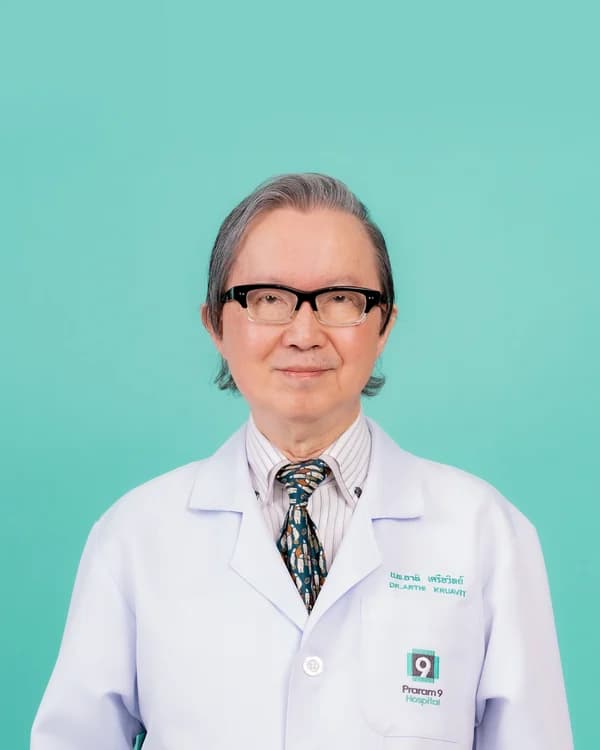


International patients
Praram 9 Hospital describes services for international patients on its own site. These facts come from the hospital's pages and apply to the hospital in general, not specifically to Dr. Jinaratana's patients.
- Interpreters. Its international-patient page promises interpreter support from before arrival until after departure, staffed daily between 7.00am and 5.00pm, covering English plus Mandarin, Burmese, Khmer, Japanese and Arabic.
- International contact numbers. The hospital publishes dedicated international and expatriate contact numbers grouped by country or region.
- Getting there. The hospital advertises a free shuttle van from Phetchaburi MRT Station (Exit 1) and a second free shuttle bus that serves the Airport Rail Link's Makkasan station. It sits in the Bang Kapi area of Huai Khwang, central-east Bangkok; the hospital's contact page gives the full address.
The surgeon's own spoken languages are not listed on the profile, so we cannot say whether consultations are held in English directly or with an interpreter. Mention this when you send your request, and the team will check.
Planning a trip around eye surgery
For cosmetic eyelid surgery, our blepharoplasty guide describes a typical trip of about 5–7 days, roughly the time until stitches come out. That is a general figure, not a plan for any individual. Reconstructive, lacrimal or orbital surgery can need a different timetable, and the hospital or surgeon should advise on the length of stay for your case. Do not book non-refundable flights until your case has been reviewed and the team has outlined the likely recovery period.
If you already have a treating eye doctor at home, ask them for a summary letter and any imaging. Because follow-up eye care after you fly home matters, ask who you should contact in your own country if a problem arises.
Published by the hospitals and clinics
These services are offered and provided by each facility itself, as listed on its official site.
Samitivej Sukhumvit Hospital
- International patient desk
Languages listed: Thai, English, Malay, Arabic, Indonesian, Chinese, Japanese, Korean
Vejthani Hospital
- International patient desk
- Referral and Aviation Division: visa extension, travel arrangement, hotel reservation and V-Flight service for patients and companions Source (vejthani.com) (opens in a new tab)
- Team of translators covering over 20 languages Source (vejthani.com) (opens in a new tab)
Languages listed: Over 20 languages through the hospital translator team (individual languages not listed on the page read)
Praram 9 Hospital
- International patient desk
- Interpreters available for international patients through the whole patient journey, before arrival to after leaving the hospital; operate daily 7.00am-5.00pm Source (praram9.com) (opens in a new tab)
- Dedicated international and expats contact numbers by country (Myanmar, Bangladesh, Cambodia, China, Arab, Expats and Others) Source (praram9.com) (opens in a new tab)
- Free hospital shuttle van from Phetchaburi MRT Station Exit 1 and a free shuttle bus from Makkasan Airport Rail Link station Source (praram9.com) (opens in a new tab)
Languages listed: English, Mandarin, Burmese, Khmer, Japanese, Arabic
How our patient team helps
- We pass your request to the surgeon's hospital or clinic and confirm availability, usually within one working day.
- You receive a booking reference to track your request.
- We answer practical questions on WhatsApp and by email.
ThaiCosmeticSurgery.com does not provide medical care. Treatment, prices and patient services are the responsibility of the hospital or clinic.
Asking for an appointment with Dr. Jinaratana
You can send a consultation request for Dr. Vorarit Jinaratana through ThaiCosmeticSurgery.com. Requests are handled by our patient team, who contact the hospital on your behalf and confirm availability with you. A request is not an instant booking, and a time is only confirmed once the patient team has replied.
When you submit a request, it helps to include:
- the eye or eyelid problem you want assessed, and which side is affected;
- whether you want a function-related opinion (for example tearing, a growth, or a drooping lid) or a cosmetic one;
- the dates you could travel, if you plan to visit Bangkok;
- the languages you are comfortable in, so the team can ask about an interpreter.
Because the surgeon's profile names no specific cosmetic procedures, state plainly in your request which operation you are asking about, so the team can confirm with the hospital whether it falls within the surgeon's practice before you commit to anything. You can also read about the hospital first on its Praram 9 Hospital page.
A request is not a confirmed appointment until our patient team confirms it with you.
What to prepare and send ahead of a consultation
Good information shortens the process and helps the surgeon give a useful opinion. For eyelid and orbital problems, patients commonly prepare:
- Clear photographs. Face-on, left and right profile, with the eyes open and relaxed, then looking up and down, in natural daylight without make-up. For a growth, add a close-up with a coin or ruler beside it for scale. For a lid that droops, a photo of the problem from a year or two ago, if you have one, is often useful for comparison.
- A short history. When the problem started, whether it is getting worse, any pain, discharge, watering, double vision, headaches or change in vision, and previous eye or eyelid surgery or injuries.
- Medical records. Your eye doctor's letter, recent prescription, any scans (CT or MRI) as image files or discs, and pathology reports if a lesion has already been removed.
- Medications and conditions. Particularly blood thinners, thyroid disease, diabetes, glaucoma and dry eye treatment, plus allergies.
- Your goals. For example: to see better, to stop the tearing, to remove a lesion, or to improve appearance, and how important each is to you.
Send files through the form, or by whichever channel the team tells you to use. Do not post medical images on public social media in order to get a response. The surgeon may still need an in-person examination to decide on treatment, and the team will tell you if a remote review is not enough.
Credential research
Every fact on this profile comes from a source we opened and dated. Where a source only states something, we say so.
- Medical Council of Thailand licence
- Check the Medical Council's public register (opens in a new tab)
- Profile last reviewed
Hospital and clinic affiliation
Education and training
Medical information
This profile is for information only and is not medical advice. Whether a procedure is suitable for you can only be decided after an assessment by a qualified surgeon. Every operation carries risks, and results vary from person to person. Before you commit to treatment, check the surgeon's credentials yourself, for example on the Medical Council of Thailand register. We do not accept payment for placement or rankings.
Frequently asked questions
Who is Dr. Vorarit Jinaratana?
Dr. Jinaratana is an eye surgeon (ophthalmologist) with oculoplastic and reconstructive training, working in Bangkok. The directory entry gives the subspecialties as eyelid reconstruction, eyelid neoplasm, lacrimal surgery and orbital surgery.
Where does Dr. Jinaratana practise?
In the Eye Center of [Praram 9 Hospital](/hospital/praram-9-hospital/). The profile lists no other clinic or hospital.
What training does Dr. Jinaratana have?
Three steps: an M.D. at Rangsit University's College of Medicine (2016, second-class honours), an ophthalmology residency in Thailand finished in 2022 (the school is not named), and a 2024 oculoplastic and reconstructive fellowship at Ramathibodi Hospital, Mahidol University.
Does Dr. Jinaratana perform eyelid surgery (blepharoplasty)?
Eyelid reconstruction is a listed subspecialty, but the profile does not name blepharoplasty, double eyelid surgery or ptosis repair as procedures. Please check with the patient team with the hospital before planning travel for a specific cosmetic eyelid operation. Our general [blepharoplasty guide](/procedures/blepharoplasty/) explains what the operation involves.
Does Dr. Jinaratana treat tear-duct problems or eyelid growths?
Lacrimal surgery and eyelid neoplasm are both listed as subspecialties on the hospital profile. These are mainly medical or reconstructive problems, so expect an in-person assessment and, where relevant, pathology testing.
What is the way to request a visit with Dr. Jinaratana?
Send a request through [our booking form](/book/?doctor=vorarit-jinaratana). The patient team checks with the hospital and writes back; nothing is booked until you receive that confirmation.
What should I send before a consultation?
Photographs of the eyes and face (front and sides), a short timeline of the problem, recent eye reports or scans, current medicines and conditions, and what you hope to achieve. These let the team judge whether a remote first look is possible.
Does Dr. Jinaratana speak English?
The profile does not list the surgeon's languages, so we cannot confirm this. The hospital's international-patient page mentions interpreter support in six languages, staffed daily until 5.00pm. Ask the patient team to confirm the language arrangements for your consultation.
Is Dr. Jinaratana a board-certified or society-member surgeon?
The directory entry lists no memberships or board status. The hospital can supply registration details on request.
How experienced is Dr. Jinaratana?
Years in practice, case volumes and outcomes are not published, and we will not guess. The only dates on record are an ophthalmology residency completed in 2022 and an oculoplastic fellowship in 2024. Ask the hospital about experience with the specific operation you need.
How many days should I set aside for the trip?
That depends on the operation. Our [blepharoplasty guide](/procedures/blepharoplasty/) gives about 5–7 days as a typical trip for cosmetic eyelid surgery. Tear-duct, reconstructive or orbital surgery can differ, so wait for the surgeon's advice before buying flights.
Can I reach the hospital by train?
Arriving by rail is straightforward on paper: the hospital advertises free shuttles from an MRT exit and an Airport Rail Link stop. Our [Bangkok page](/cities/bangkok/) covers the wider city, and the hospital can give current shuttle times.