Key facts
- Specialty
- Plastic surgery
- Subspecialties
- Cleft and craniofacial surgery
- Academic title
- Lecturer
- City
- Bangkok, Thailand
- Medical school
- Faculty of Medicine Siriraj Hospital, Mahidol University
- Special interests
- Cleft and craniofacial surgery
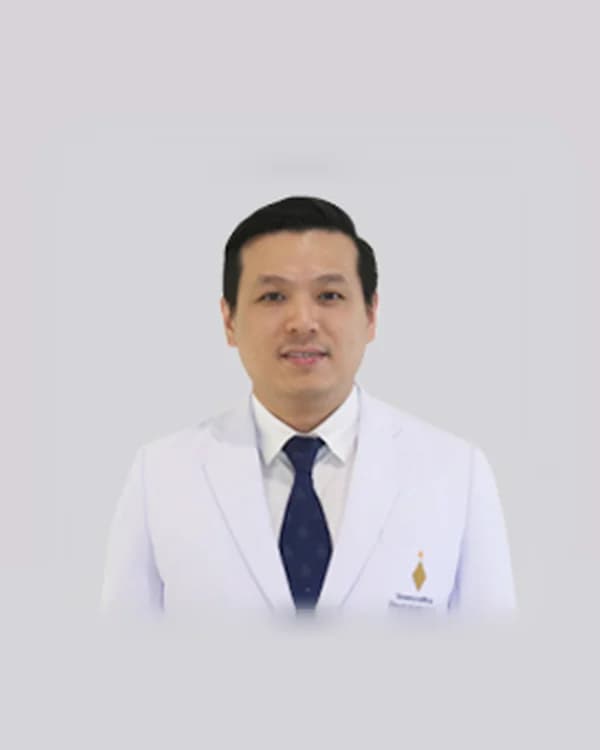
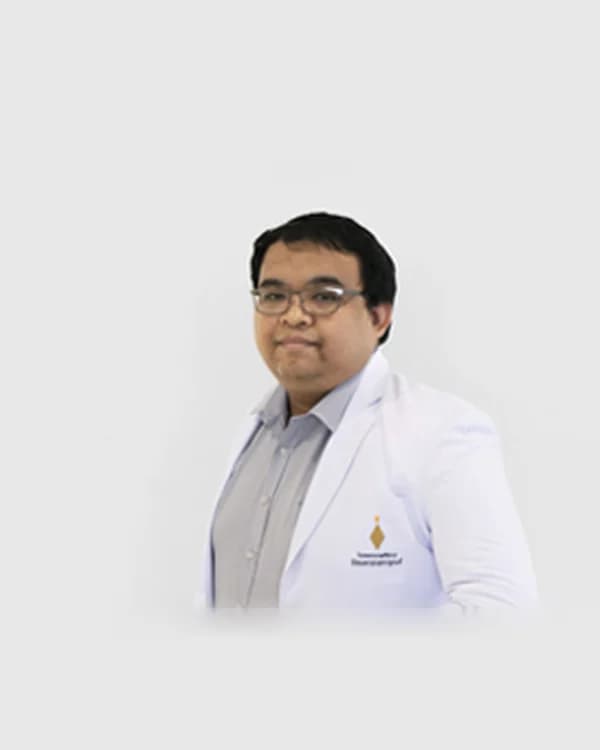
Peerasak Chortrakarnkij: plastic surgeon in Bangkok
Peerasak Chortrakarnkij (Thai: พีรศักดิ์ ฉอตระการกิจ) is a male plastic surgeon based in Bangkok, Thailand. He appears on the official doctor pages of two Bangkok hospitals under the title "Lecturer", exactly as the hospitals publish it. His primary specialty is plastic surgery, and the one subspecialty his hospital profile names is cleft and craniofacial surgery.
That last point matters for anyone reading this page with a cosmetic goal in mind. Cleft and craniofacial surgery is a reconstructive field: it deals with differences of the lip, palate, face and skull, usually from birth. The public sources we reviewed do not list a cosmetic procedure, such as rhinoplasty, breast surgery or body contouring, for this surgeon, so none is attached to him. If you are searching for a surgeon for a specific cosmetic operation, the sections below explain what is and is not documented so you can decide whether a consultation request is the right next step.
He is listed at two facilities:
- Siriraj Piyamaharajkarun Hospital, where he is shown under Surgery Center (Plastic Surgery), with an outpatient schedule.
- Chaophya Hospital, where he is listed under plastic surgery (ศัลยศาสตร์ตกแต่ง) in the hospital's 24-hour general surgery centre, with a Monday clinic from 16:00 to 19:00 shown on the profile.
Both hospitals are in the Bangkok Noi area of Bangkok. You can ask our patient team to pass an enquiry to either site by using the request link on this page. Statements about Dr. Peerasak himself rely on the doctor pages of the two hospitals, read on 2 October 2026; anything introduced as general guidance is a separate, non-personal explanation. How we gather and check information is explained in the provider research methodology.
Education and training
- Medical degree2002
Doctor of Medicine
Faculty of Medicine Siriraj Hospital, Mahidol University, Thailand
Source (siphhospital.com) (opens in a new tab) - Board certification2009
Diplomate of Surgery
Department of Surgery, Faculty of Medicine Siriraj Hospital, Mahidol University, Thailand
Source (siphhospital.com) (opens in a new tab) - Board certification2012
Diplomate of Plastic Surgery
Department of Surgery, Faculty of Medicine Siriraj Hospital, Mahidol University, Thailand
Source (siphhospital.com) (opens in a new tab)
The Siriraj Piyamaharajkarun Hospital profile lists three qualifications, all from Thailand and all tied to Mahidol University's Siriraj faculty of medicine:
- Doctor of Medicine, 2002. His medical degree, from Mahidol University's Siriraj medical faculty.
- Diplomate of Surgery, 2009. A surgical board qualification from the Department of Surgery at the same faculty.
- Diplomate of Plastic Surgery, 2012. A plastic surgery board qualification, again from the surgery department there.
Read in order, the dates run from a medical degree, to a surgical qualification, to a plastic surgery qualification. We state the years only as the hospital publishes them and do not infer how long any period of training lasted or what cases it included.
Two things we could not confirm, and which we therefore do not claim. The licence can be looked up on the Medical Council of Thailand's public register at checkmd.tmc.or.th, and our patient team can help you confirm it before you travel. Second, no society membership (Thai plastic surgery society or otherwise) turned up on a verified list, and no fellowship or overseas training appears on either hospital page. Should either matter to you, say so when you write to us, or look him up on the Medical Council register directly.
In general, a board qualification in plastic surgery shows that formal specialist training has been completed. On its own it says nothing about how often a surgeon performs a particular operation or treats a particular condition, which is a separate question worth asking directly in a consultation.
Professional experience
- Current
Lecturer
Siriraj Piyamaharajkarun Hospital (title as published)
Source (siphhospital.com) (opens in a new tab)
The published role is "Lecturer", and the Siriraj Piyamaharajkarun Hospital page shows it as his current title. A lecturer title usually indicates an academic or teaching-linked appointment, but the profile does not describe his teaching duties, and we do not guess at them.
At Siriraj Piyamaharajkarun Hospital, the profile files him under the Surgery Center (Plastic Surgery) and gives an outpatient timetable. The hospital describes itself as a public hospital, and its Skin and Plastic Surgery Center lists services including paediatric plastic surgery, craniofacial and jaw surgery, scar revision, wound care, burn management, hand surgery, lymphedema surgery, facial palsy surgery and reconstructive and breast reconstruction surgery. That is a description of the centre as a whole, not a statement of what any one surgeon does, so please read it as context for the kind of work the department covers rather than as his personal procedure list.
At Chaophya Hospital, he is listed under plastic surgery in the 24-hour general surgery centre, with a clinic on Mondays from 16:00 to 19:00. Clinic hours at hospitals change, so treat the day and time as the hospital's published information and not as an appointment you can rely on. Our patient team asks the hospital for current availability before suggesting dates.
A Siriraj Hospital role is not stated here; ask our patient team about it.
Cleft and craniofacial surgery: the documented practice area
What is documented. One practice area is documented for Dr. Peerasak: cleft and craniofacial surgery, named as his subspecialty and special interest on the Siriraj Piyamaharajkarun Hospital profile. No individual cosmetic procedure is documented for him on either hospital page.
What the field involves, in general. Cleft and craniofacial surgery treats differences in how the lip, palate, jaw, face and skull have formed. Cleft lip and cleft palate are the conditions most people associate with it. Care is usually staged over years and often involves other specialists such as speech therapists, orthodontists, ENT doctors and paediatricians. Many patients are children, and the surgery is reconstructive rather than elective cosmetic work. Adults sometimes seek further procedures to refine an earlier repair, for instance to the lip, nose or jaw, and a surgeon in this field is usually the first person to ask whether that is possible.
What this means for an enquiry. If you or your child has a cleft or craniofacial condition, the useful question for a consultation is not "Does he do procedure X?" but "Is this kind of case within the service, and what assessment is needed first?" The hospital decides who is suitable to see. We do not assume that a facility offers cleft care in a form that suits an overseas patient, and we do not publish treatment plans, timings or outcomes, because none are documented.
If your goal is cosmetic. Some cosmetic operations are related to craniofacial anatomy, for example chin surgery or jaw contouring, and the Siriraj Piyamaharajkarun Hospital centre lists craniofacial and jaw surgery among its services. But the hospital does not state that Dr. Peerasak performs those operations, so we leave them off. If you are comparing surgeons for a nose, eyelid, breast or body procedure, browse the other surgeons on the Bangkok page, or ask our patient team to match you with a surgeon whose profile documents that procedure.
General guidance on staged care. In general, people who have had cleft repair in childhood may need review at several points as the face grows, and some concerns, such as lip scarring, nasal shape, bite or speech, are handled by different professionals at different times. A first visit to a craniofacial surgeon is often an assessment of what has already been done and which problems, if any, are worth treating now rather than later. Bring that history and expect the discussion to be about priorities and sequence, not a single operation. Suitability for any procedure is decided only after a full assessment, and the plan can change as a child grows or as new findings appear.
What to discuss in a consultation about cleft or craniofacial care
A consultation is the place to find out whether your situation fits the service. The points below are general guidance for people seeking reconstructive craniofacial care, not statements about how Dr. Peerasak runs his clinic.
- Your history in full. Previous operations, the age at which they were done, the hospital, and any operative notes or discharge summaries. For a child, include birth history and any feeding, hearing or speech concerns.
- The specific goal. Function (feeding, speech, breathing, jaw closure), appearance, or both. Be clear about which matters most, because the sequence of treatment can differ.
- Which specialists are needed. Ask whether orthodontic, speech, ENT or dental input is expected alongside surgery, and whether the hospital can arrange it or whether it should be organised at home.
- Staging and timing. Ask whether treatment is likely to be one operation or several, how far apart they would be, and what would need to be done at home between visits.
- Anaesthesia and where the surgery takes place. Ask which hospital site, who gives the anaesthetic, and how long an inpatient stay is expected to be.
- Risks and what they are for you. Ask for the risks that apply to your specific case, such as bleeding, infection, scarring, a need for further surgery, and the effect on growth where relevant.
- Follow-up. Ask what follow-up is needed after you leave Thailand and who will provide it locally. Long-term review is a normal part of cleft and craniofacial care.
Write your questions down before you attend. Ask for the plan and any costs in writing, and expect that the surgeon may want imaging or tests before giving a firm recommendation.
In general, it also helps to ask who will be the surgeon in the operating room and who will manage your care day to day, since in a teaching hospital several clinicians may be involved. Ask the same question about any follow-up visit in Bangkok. If a plan is offered, ask what the alternatives are, including the option of waiting, and what the realistic limits of surgery are for your situation.
Hospitals and clinics where Lecturer Peerasak Chortrakarnkij practises
Bangkok Noi, Bangkok
Siriraj Piyamaharajkarun Hospital
โรงพยาบาลศิริราช ปิยมหาราชการุณย์
- Public hospital
- Gender-affirming surgery
Siriraj Piyamaharajkarun Hospital (SiPH) is a public hospital in Bangkok Noi, Bangkok, with a Skin and Plastic Surgery Center. We list 17 of its surgeons across plastic, oculoplastic, facial plastic and breast surgery.
Accreditation
- JCI
- Surgeons
- 17
- Procedures
- 9
Surgeons here
- Surgeons
- 10
- Languages
- Thai
Surgeons here
International patients
Nothing we read from either hospital describes an overseas-patient desk or interpreter service, and no spoken languages are recorded for Dr. Peerasak. Whether a consultation can be held in English is therefore an open question for now. We would rather say that plainly than assume an answer, and language support and the option of a remote first consultation are among the first points we raise with the hospital once your request reaches us.
What the sources do document:
- Siriraj Piyamaharajkarun Hospital has its address at 2 Wanglang Road, Bangkok Noi (postcode 10700); the plastics service sits on the third floor of Zone A, and appointments go through the hospital's call centre. The hospital's accreditation page describes a Joint Commission International cycle that finishes in mid-November 2026. The hospital's own wording is the evidence here; look up its accreditation yourself, especially if you plan to travel close to or after that date.
- Chaophya Hospital is at 113/44 Borommaratchachonnani Road, Arun Ammarin, Bangkok Noi, Bangkok 10700. We have not recorded an accreditation for it.
In general, if your care could involve several visits, ask the patient team how much time in Bangkok the surgeon expects you to allow, whether a follow-up can be done remotely, and what records the hospital will give you to take home. Ask early about travel for a child, including who will accompany them, because hospitals often have their own rules on this.
Published by the hospitals and clinics
These services are offered and provided by each facility itself, as listed on its official site.
Siriraj Hospital
Languages listed: Thai
How our patient team helps
- We pass your request to the surgeon's hospital or clinic and confirm availability, usually within one working day.
- You receive a booking reference to track your request.
- We answer practical questions on WhatsApp and by email.
ThaiCosmeticSurgery.com does not provide medical care. Treatment, prices and patient services are the responsibility of the hospital or clinic.
How to request a consultation with Dr. Peerasak
You can request a consultation with Dr. Peerasak Chortrakarnkij through our patient team. The process works like this:
- Send a request. Tell us who the patient is (age, location), what you are seeking help with, and which hospital you prefer if you have a preference.
- We contact the hospital. Our team asks Siriraj Piyamaharajkarun Hospital or Chaophya Hospital whether the surgeon can see your case and what they need from you.
- You hear back. We pass on the hospital's answer on consultation format, possible dates and next steps. You decide whether to go ahead.
- Confirmation comes from the hospital. Until the hospital replies in writing, you hold no appointment. Any deposit or payment terms come from the hospital's side.
A request is only an enquiry, so you are not tied to a booking, and the hospital has to agree before any slot is yours. No fee information for him is documented, so none appears here. If the surgeon is not the right fit for your case, we will say so and can suggest other surgeons listed on the site.
A request is not a confirmed appointment until our patient team confirms it with you.
What to send before a consultation
Preparing your material in advance saves the hospital from asking for it piece by piece. For a cleft or craniofacial enquiry, we suggest preparing the following.
- A short written summary of the condition, its history and what you hope to achieve.
- Clear, recent photographs in good, even light: face on, both sides in profile, and close-ups of the lip and nose if the lip or nose is the concern. For an infant or child, take them in a calm moment; do not distress the child for the sake of a photograph.
- Previous medical records, including operative notes, clinic letters, imaging reports and any speech or dental assessments, translated into English where possible.
- Current medicines, allergies and relevant health conditions, including any previous reaction to anaesthesia.
- Age and, for a child, height and weight, since these affect how the team plans anaesthesia and timing.
- Your travel window, so the patient team can ask the hospital what fits.
Only send what you are comfortable disclosing, and send it through the request form or the patient team's channel and not through public posts. The surgeon may ask for further tests or images after reviewing what you provide.
Credential research
Every fact on this profile comes from a source we opened and dated. Where a source only states something, we say so.
- Medical Council of Thailand licence
- Check the Medical Council's public register (opens in a new tab)
- Profile last reviewed
Hospital and clinic affiliation
Education and training
Medical information
This profile is for information only and is not medical advice. Whether a procedure is suitable for you can only be decided after an assessment by a qualified surgeon. Every operation carries risks, and results vary from person to person. Before you commit to treatment, check the surgeon's credentials yourself, for example on the Medical Council of Thailand register. We do not accept payment for placement or rankings.
Frequently asked questions
Who is Dr. Peerasak Chortrakarnkij?
Peerasak Chortrakarnkij (พีรศักดิ์ ฉอตระการกิจ) is a male plastic surgeon in Bangkok, listed with the title Lecturer on the official pages of Siriraj Piyamaharajkarun Hospital and Chaophya Hospital. His published subspecialty is cleft and craniofacial surgery.
Where does Dr. Peerasak practise?
Siriraj Piyamaharajkarun Hospital lists him under Surgery Center, Plastic Surgery, with an outpatient schedule and at Chaophya Hospital (plastic surgery, with a Monday 16:00-19:00 clinic shown). Both are in Bangkok Noi, Bangkok. Hospital schedules change, so we confirm current availability when you send a request.
What are his qualifications?
The Siriraj Piyamaharajkarun page lists a Doctor of Medicine (2002), Diplomate of Surgery (2009) and Diplomate of Plastic Surgery (2012), all connected to Mahidol University's Siriraj faculty. The Medical Council register was inaccessible to us, so no licence number is recorded, and no society membership is verified.
Does Dr. Peerasak perform cosmetic procedures such as rhinoplasty or breast surgery?
No cosmetic procedure is documented for him on the sources we reviewed, so none is attached to him here. His documented focus is cleft and craniofacial surgery, which is reconstructive. If you want a specific cosmetic operation, ask our patient team to suggest surgeons whose profiles document it.
What is cleft and craniofacial surgery?
In general, it is surgery for differences in how the lip, palate, jaw, face or skull have formed, such as cleft lip and palate. Care is often staged over years and involves other specialists, including speech, orthodontic and ENT teams. Adults may also seek refinement of an earlier repair.
How do I get a first appointment with Dr. Peerasak?
Use the request a consultation button on this page. The patient team forwards your enquiry to the hospital, asks what the surgeon needs from you and replies with options. Only the hospital's own confirmation makes it an appointment.
What material helps before seeing him?
A brief summary of the condition and your aim, recent clear photographs from the front and both sides, previous medical records and operative notes, current medicines and allergies, the patient's age, and your travel dates. Send them through the request form or our patient team, not publicly.
Which languages does he speak?
None are recorded for him in the research we completed, so we cannot answer this yet. Language support and the possibility of a remote first consultation are points we put to the hospital as part of handling your request.
Does Siriraj Piyamaharajkarun Hospital hold JCI accreditation?
The hospital's accreditation page describes a JCI cycle ending in mid-November 2026. We could not get into the JCI directory to cross-check it, so please confirm the status directly with the hospital or JCI. We have no accreditation recorded for Chaophya Hospital.
Can you tell me how much treatment with Dr. Peerasak costs?
No fee information is documented for him, so we publish none. Cost depends on the assessment and the plan, so ask for a written treatment plan and what it includes after the consultation.