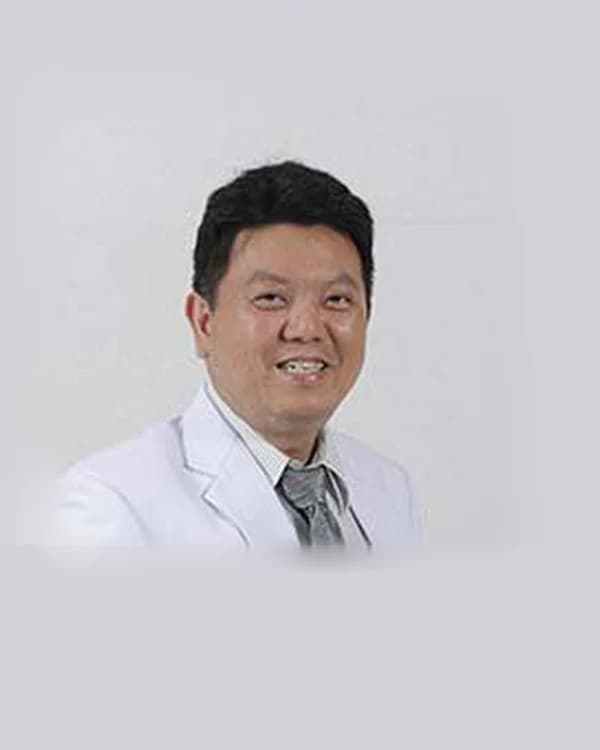
Key facts
- Specialty
- Plastic surgery
- Academic title
- Associate Professor
- City
- Bangkok, Thailand
- Practises at
- Siriraj Piyamaharajkarun Hospital, Siriraj Hospital
- Medical school
- Faculty of Medicine, Siriraj Hospital Mahidol University
- Fellowship
- Division of Plastic Surgery, University of Pittsburgh Medical
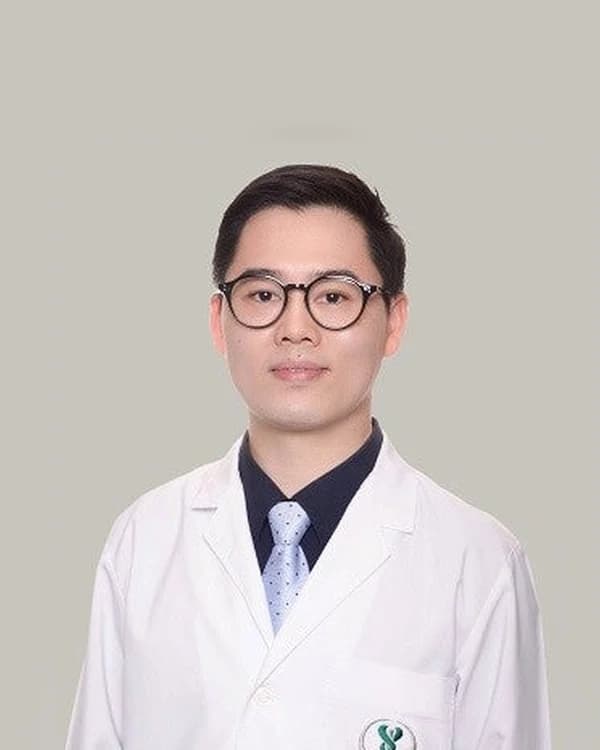
Who is Assoc. Prof. Chongdee Aojanepong?
Assoc. Prof. Chongdee Aojanepong (Thai: จงดี อาวเจนพงษ์) is entered in the staff directory of Siriraj Piyamaharajkarun Hospital (SiPH), a hospital located in the Bangkok Noi district of Bangkok. The directory records plastic surgery as his specialty and files him under both Surgery (Plastic Surgery) and the Surgery Center (Plastic Surgery). The Thai-language version of the same profile gives his title as รศ. นพ. and uses the male honorific.
Everything on this page comes from two kinds of source: the hospital's own directory entry and a handful of indexed academic papers. It describes a surgeon's recorded background. It is not a ranking and it is not advice to choose him over anyone else. Several things a prospective patient would reasonably want to know are simply not on public record, and where that is so we say it in plain terms rather than guess.
The key facts in brief:
- Specialty: plastic surgery. The hospital profile records a plastic surgery board diploma from the Medical Council of Thailand dated 1995.
- Where he is listed: SiPH, a state-run hospital in Bangkok Noi. Our hospital page describes the facility, and the Bangkok guide covers the city.
- Documented procedures: none. The expertise section of his hospital profile is blank, so we do not attach any named operation to him.
- How to go further: request a consultation. Our patient team will get in touch, ask the hospital whether he is the suitable surgeon for your concern, and arrange what comes next.
Education and training
- Medical degree1986
Doctor of Medicine
Faculty of Medicine, Siriraj Hospital Mahidol University, Thailand
Source (siphhospital.com) (opens in a new tab) - Fellowship1999
Research Fellowship
Division of Plastic Surgery, University of Pittsburgh Medical, United States
Source (siphhospital.com) (opens in a new tab) - Board certification1992
Diploma of Thai Board of General Surgery
The Medical Council of Thailand, Thailand
Source (siphhospital.com) (opens in a new tab) - Board certification1995
Diploma of Thai Board of Plastic Surgery
The Medical Council of Thailand, Thailand
Source (siphhospital.com) (opens in a new tab) - Board certification2003
Diploma of Thai Board of Family Medicine
The Medical Council of Thailand, Thailand
Source (siphhospital.com) (opens in a new tab) - Certificate1990
Higher Graduate Diploma Program in Clinical Sciences (Surgery)
Graduate school, Mahidol University, Thailand
Source (siphhospital.com) (opens in a new tab)
The hospital directory lists six education and training entries. In date order:
- 1986: he took his Doctor of Medicine at Mahidol University, in its Siriraj faculty of medicine.
- 1990: he completed a Higher Graduate Diploma in Clinical Sciences (Surgery) through Mahidol University's graduate school.
- 1992: the Medical Council of Thailand awarded him a board diploma in general surgery.
- 1995: the same council awarded him a board diploma in plastic surgery.
- 1999: a research fellowship in the plastic surgery division at the University of Pittsburgh Medical. The profile's wording stops at 'Medical', so we reproduce it as written and cannot name the exact department or centre.
- 2003: a board diploma in family medicine from the Medical Council of Thailand.
Taken together, the entries show a surgical career built in stages: first a medical degree, then graduate surgical study, then a general surgery board diploma, and then the plastic surgery board diploma three years later. The fellowship abroad and the family medicine diploma came afterwards. The fellowship is labelled 'research' by the hospital, and we keep that label. We do not describe it as clinical or operative fellowship training because the source does not.
Gaps in verification. The licence can be looked up on the Medical Council of Thailand's public register at checkmd.tmc.or.th, and our patient team can help you confirm it before you travel. No society member list was opened either, and the membership field on his hospital profile is empty, so we state no professional-society membership of any kind. If you want to confirm his registration yourself, you can search the council's public register or ask our patient team to help you request confirmation.
For the sourcing rules behind every provider page, read our provider research methodology.
Professional experience
At SiPH he is listed in two places: Surgery (Plastic Surgery) and the Surgery Center (Plastic Surgery). The profile also gives an outpatient clinic slot on Wednesdays between 10:00 and 12:00. Hospital clinic times change, so read that as a snapshot taken on 2 October 2026 and expect our patient team to confirm the current timetable when you ask for a consultation.
Assoc. Prof. is an academic rank. The profile does not set out his teaching duties, committee posts, or how long he has held any role, and we do not guess at them. His published work is the clearest outside record of what he has studied. PubMed indexes the following papers under his name with a Siriraj or Mahidol surgery or plastic surgery affiliation:
- 1998, Annals of Plastic Surgery: a national-scale look at how often cleft lip and palate occur in Thailand.
- 2009, Journal of Craniofacial Surgery: *Coronal incision with preserved temporoparietal fascia*.
- 2011, Journal of Craniofacial Surgery: *Purse-string closure for frontoethmoidal encephalomeningocele*.
- 2017, Annals of Plastic Surgery: *Vascular Nature and Existence of Anastomoses of Extrinsic Postauricular Fascia: Application for Staged Auricular Reconstruction*.
- 2023, Scientific Reports: a preliminary-phase Siriraj report on images and three-dimensional custom-made nostril retainers for cleft-related nose deformities.
Read together, these papers touch on cleft conditions, a scalp approach to the facial skeleton, a congenital skull-base defect, and the blood supply behind the ear as it relates to ear reconstruction. That is a reconstructive and craniofacial pattern. Publications are research outputs. They are not a menu of cosmetic services, and a paper on a subject shows that the author has studied it, not that he offers it to private patients today. For that reason we do not turn this list into a procedure list.
One further point: a 2004 paper on embolization that appeared under a similar name was left out, because its only listed affiliation was a radiology department and so we could not tie it to him.
Selected publications
- Coronal incision with preserved temporoparietal fascia (opens in a new tab) · J Craniofac Surg, 2009
- Purse-string closure for frontoethmoidal encephalomeningocele (opens in a new tab) · J Craniofac Surg, 2011
- Epidemiology of cleft lip and palate in Thailand (opens in a new tab) · Ann Plast Surg, 1998
- Vascular Nature and Existence of Anastomoses of Extrinsic Postauricular Fascia: Application for Staged Auricular Reconstruction (opens in a new tab) · Ann Plast Surg, 2017
- Utilization of images and three-dimensional custom-made nostril retainer fabricate for patients with cleft lip and cleft lip nose deformities at Siriraj Hospital: preliminary phase (opens in a new tab) · Sci Rep, 2023
Procedure areas: what is and is not documented
No procedure is documented for Assoc. Prof. Chongdee Aojanepong. The expertise field of his hospital profile contains nothing, and we pair a surgeon with a named operation only where an official source does so. Being a plastic surgeon describes his specialty. It does not tell you which individual operations he performs.
What the hospital, rather than the surgeon, offers. On the third floor of Zone A, the hospital's skin and plastic surgery unit publishes a service range covering lymphoedema, children's plastic surgery, the hand, scar revision, craniofacial and jaw work, wounds and burns, eyelids, the nose, breast and other reconstruction, and facial palsy. Our hospital data also links the unit to eyelid and chin procedures such as ptosis correction, double eyelid surgery, lower blepharoplasty and genioplasty. Those are statements about the unit. None of them says that this particular surgeon carries out each one.
How to use that in practice. Should a particular operation be your reason for writing, put a narrow question to our patient team: is Assoc. Prof. Chongdee Aojanepong the right surgeon at SiPH for this operation, or would a colleague in the same centre be a better match? We can put that question to the hospital and tell you its answer. The other plastic surgeons listed at the hospital are shown on the hospital page.
General guidance for two commonly requested operations. The numbers below come from our procedure pages and describe typical cases in general. They are not predictions for you and they are not statements about this surgeon.
- Eyelid surgery (blepharoplasty): usually done under local anaesthesia with sedation, or general anaesthesia; operating time is about 1 to 2 hours; it is normally a day case; sutures typically come out within about 5 to 7 days; bruising mostly settles in 1 to 2 weeks; a trip of 5 to 7 days is common for visitors.
- Rhinoplasty: usually under general anaesthesia; typically 1.5 to 3 hours, and revision cases often take longer; same day or one night in hospital; commonly 7 to 10 days in Thailand until the splint is removed and you are checked; most visible swelling settles in 2 to 3 weeks, while the tip can keep refining for 12 months or more.
Every operation carries risks, among them bleeding, infection, unfavourable scarring and anaesthetic risk, together with risks particular to the operation. Whether any of this is appropriate for you is something the operating surgeon can judge only after examining you.
If your concern is reconstructive rather than cosmetic, for example a congenital difference, a scar or a facial deformity, say so in your first message. His publications and the centre's service list point towards that field, but only a consultation can establish whether your case is one he treats.
What to discuss at a consultation
With no procedure documented for this surgeon, the sensible way to use a first appointment is as a fit-finding conversation. In general, a consultation with any plastic surgeon should work through the questions below, and you can use them as a checklist with our patient team and with the surgeon.
1. Does he perform your operation regularly? Ask which operations fill most of his working week and whether yours is one of them. Research interests in cleft or craniofacial reconstruction are one thing, and a routine cosmetic practice is another.
2. What are you hoping for, and what is realistic? Describe the change in your own words and bring photographs. A good consultation separates what surgery can achieve from what it cannot.
3. What are the alternatives? Ask about non-surgical or less invasive options where they exist, and about the case for simply not operating.
4. Which risks apply, and who deals with problems? Typical risks are described on our procedure pages, for example blepharoplasty and rhinoplasty. Ask who would manage a complication or a revision, and where.
5. Anaesthesia and setting. Find out who administers the anaesthetic and which theatre or ward area would be used. SiPH is a hospital and not a stand-alone clinic, which matters for how complications can be handled, but you should confirm the details for your own case.
6. Recovery and follow-up. Ask how long you must stay in Bangkok, when dressings or stitches are removed, and what review is possible after you return home.
7. Cost in writing. No prices are documented for this surgeon, so we publish none. Ask for a written quote that itemises inclusions and exclusions before you commit to anything.
In general, a decision to operate should never be made on the day of a first conversation if you feel rushed. Time to think, and a second opinion if you want one, are normal parts of planning surgery abroad.
Questions specific to eyelid or nose surgery. If either is your interest, ask whether he would take the case himself, how much of the operation a trainee or assistant would perform, and whether photographs of previous patients with a similar starting point can be shown with their permission. For a nose, also raise breathing, because function and shape are often considered together. For eyelids, mention dry eyes, previous eye surgery and any contact lens use. None of these questions presumes that he offers the operation; they simply give you a structured way to find out.
Hospitals and clinics where Assoc. Prof. Chongdee Aojanepong practises
Bangkok Noi, Bangkok
Siriraj Piyamaharajkarun Hospital
โรงพยาบาลศิริราช ปิยมหาราชการุณย์
- Public hospital
- Gender-affirming surgery
Siriraj Piyamaharajkarun Hospital (SiPH) is a public hospital in Bangkok Noi, Bangkok, with a Skin and Plastic Surgery Center. We list 17 of its surgeons across plastic, oculoplastic, facial plastic and breast surgery.
Accreditation
- JCI
- Surgeons
- 17
- Procedures
- 9
Surgeons here
- Surgeons
- 10
- Languages
- Thai
Surgeons here
International patients
Siriraj Piyamaharajkarun Hospital has its address at number 2, Wanglang Road, postcode 10700, in an area on the western side of the Chao Phraya river. The hospital's standards page states that it holds JCI accreditation and gives 17 November 2026 as the end date of the current cycle. We could not find the hospital on the JCI online directory when we checked, so this is the hospital's own claim and not independently confirmed. Because that date is close, ask our patient team for the current status before you travel.
Several things are not documented, and they are as relevant to you as the things that are. We found no dedicated international patient desk, no listed interpreter service, no airport transfer arrangement and no assisted-stay programme at this hospital. Which languages he speaks is not recorded on his profile. If you need an interpreter, mention it early so we can find out from the hospital what is available, and so that your questions are not lost in translation at the first visit.
On the practical side, appointments for the plastic surgery unit are made through the hospital call centre, number 1474 and then option 1. The published hours run from eight in the morning to eight in the evening on weekdays and Sundays, and to seven in the evening on Saturdays.
In general, an overseas patient should expect a pre-operative consultation, any tests the surgeon asks for, the operation, and a post-operative check before flying home. The length of each stage depends on the procedure and on how you recover, so avoid booking flights until the surgeon has given you a written timeline. When you reach the appointment, bring original copies or clear digital versions of the documents you listed in your request, your medicines in their packaging, and a list of questions. If you are travelling with a companion, tell the team in advance, because ward and waiting-area rules differ between hospitals. Keep in mind that the hospital is a large academic institution, so allow generous time for registration and queues on the day. More about the city, including where to stay, is in our Bangkok guide.
Published by the hospitals and clinics
These services are offered and provided by each facility itself, as listed on its official site.
Siriraj Hospital
Languages listed: Thai
How our patient team helps
- We pass your request to the surgeon's hospital or clinic and confirm availability, usually within one working day.
- You receive a booking reference to track your request.
- We answer practical questions on WhatsApp and by email.
ThaiCosmeticSurgery.com does not provide medical care. Treatment, prices and patient services are the responsibility of the hospital or clinic.
Asking for an appointment with this surgeon
Our patient team handles every request for this surgeon. Nothing is booked instantly. The process runs like this:
- You send a request giving your name, your country, the procedure or concern you have in mind and, if relevant, a few photographs.
- Our patient team contacts you, asks the hospital whether this surgeon suits your case, and checks availability. His profile lists a Wednesday clinic session, but that should be confirmed for the date you want.
- When the hospital confirms an appointment, we send you the details and tell you what to bring.
If you prefer to start from the facility, you can send the request to the hospital itself and note that you would like to see him if he is suitable.
A request is not a confirmed appointment until our patient team confirms it with you.
What to prepare and send ahead of your appointment
The more specific your request, the more useful the reply. In general, include the following:
- Your aim in plain words. The problem you want solved, the result you picture, and how long you have lived with it.
- Clear photographs. Plain background and good light. For the face, take straight-on and side views. For the body, front, side and back. For a scar or deformity, add a close-up and a wider shot.
- Medical history. Earlier operations, regular medicines, allergies, smoking, and conditions such as diabetes, clotting problems or heart disease.
- Records of earlier surgery. Operation notes or discharge summaries, with the surgeon's name and the hospital, if you have been treated in the same area before.
- Reports and scans related to your concern, in English or accompanied by a translation.
- Practical limits. The dates you can travel, how long you can remain in Bangkok, and whether you will need an interpreter.
If you are asking about eyelid or nose surgery, photographs from the front and both sides, plus one looking slightly upward for the nose, help the team judge whether to refer you to this surgeon or a colleague. For a reconstructive concern, such as a cleft-related difference, include any previous operation records and the age at which each was done.
Please do not send a passport scan or payment details with your first message. Our patient team will tell you if and when identification is needed.
Credential research
Every fact on this profile comes from a source we opened and dated. Where a source only states something, we say so.
- Medical Council of Thailand licence
- Check the Medical Council's public register (opens in a new tab)
- Profile last reviewed
Hospital and clinic affiliation
Education and training
Medical information
This profile is for information only and is not medical advice. Whether a procedure is suitable for you can only be decided after an assessment by a qualified surgeon. Every operation carries risks, and results vary from person to person. Before you commit to treatment, check the surgeon's credentials yourself, for example on the Medical Council of Thailand register. We do not accept payment for placement or rankings.
Frequently asked questions
Who is Assoc. Prof. Chongdee Aojanepong?
He is a plastic surgeon on the staff directory of SiPH in Bangkok, filed under its Surgery Center (Plastic Surgery). His profile records a plastic surgery board diploma from 1995 and an MD awarded in 1986 by Mahidol University at Siriraj.
Where does he work?
His listed workplace is SiPH, found on the Thonburi side of Bangkok in Bangkok Noi. Our [hospital page](/hospital/siriraj-piyamaharajkarun-hospital/) has the facility details.
Does he perform rhinoplasty or eyelid surgery?
We cannot say. The expertise field on his hospital profile is empty, so no operation is documented for him. The hospital's plastic surgery unit names nasal and eyelid surgery among its services, which does not show that he does them. If you have one operation in mind, we will take that exact question to the hospital on your behalf.
What are his qualifications?
According to the hospital profile: Doctor of Medicine, Mahidol University (1986); Higher Graduate Diploma in Clinical Sciences (Surgery), Mahidol University (1990); general surgery board diploma (1992); plastic surgery board diploma (1995); research fellowship, plastic surgery division, University of Pittsburgh Medical (1999); family medicine board diploma (2003).
Is his medical licence verified on this site?
No. No licence number is shown on this profile; the licence can be looked up on the Medical Council of Thailand's public register at checkmd.tmc.or.th. The qualifications listed come from the hospital's own profile and have not been checked against the register.
Has he published research?
Indexed papers carry his name with a Siriraj or Mahidol affiliation: a Thai cleft lip and palate epidemiology study (1998), a coronal incision technique (2009), closure of frontoethmoidal encephalomeningocele (2011), postauricular fascia anatomy for ear reconstruction (2017) and a nostril retainer for cleft nose deformity (2023). These are research topics, not a list of services.
How do I request a consultation with him?
Fill in the [request form for this surgeon](/book/?doctor=chongdee-aojanepong). A member of our team replies, asks the hospital whether he fits your case and whether he has availability, and then tells you what was agreed. Sending the form does not hold a date.
What should I send before a consultation?
Photos of the concern, a summary of your health and any medicines, records of earlier surgery, relevant reports or scans, your aim in your own words, and the dates you can travel. Leave out passport and payment details at this stage.
Which languages does he speak?
His hospital profile gives no languages, and we found no documented international patient desk. If you need an interpreter, tell our patient team so we can ask the hospital what it can arrange.
When is his clinic?
The hospital profile shows a Wednesday clinic from 10:00 to 12:00, as read on 2 October 2026. Timetables change, so our patient team will confirm availability for your preferred date.
Is Siriraj Piyamaharajkarun Hospital accredited?
On its own standards page the hospital describes itself as JCI-accredited through 17 November 2026; the public JCI directory gave us no matching entry, so ask our patient team for the current status before you travel.