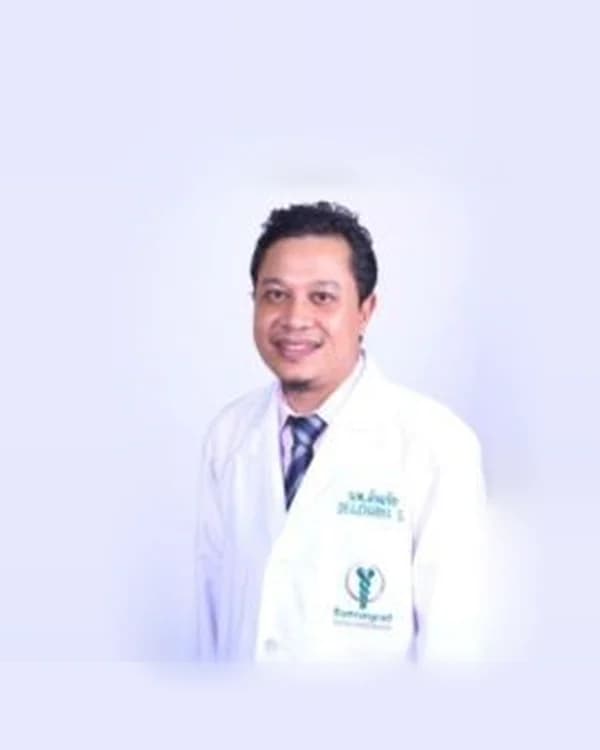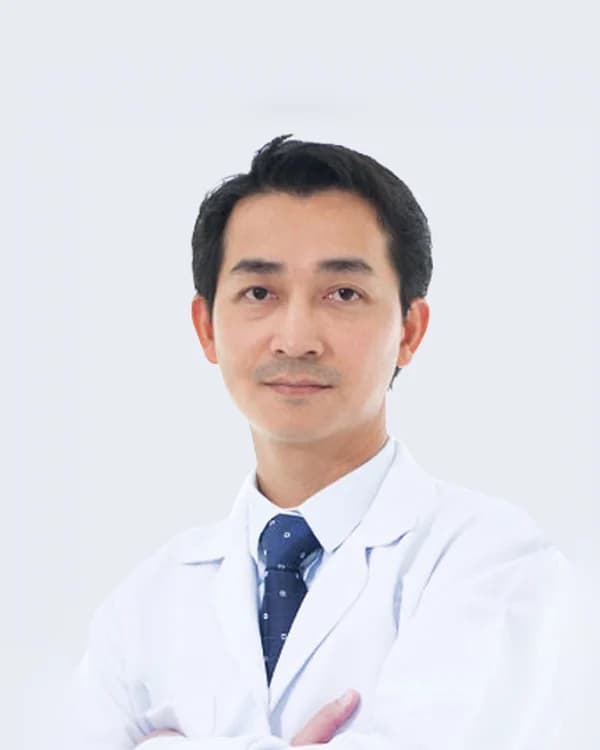

Key facts
- Specialty
- Oculoplastic surgery (ophthalmology)
- Subspecialties
- General Ophthalmology, Orbital and Ophthalmic Plastic and Reconstructive Surgery
- Academic title
- Associate Professor
- City
- Bangkok, Thailand
- Practises at
- Siriraj Piyamaharajkarun Hospital
- Medical school
- Ramathibodi Hospital, Mahidol University
- Fellowship
- University of California
- Special interests
- Eyelids, orbit, nasolacrimal duct obstruction, thyroid eye disease, proptosis, eyelid margin, ptosis, double eyelid, conjunctival/eyelid growths (listed in Thai as the doctor's expertise)
- Procedures
- 2 documented procedures
Who is Assoc. Prof. Kanograt Pornpanich?
Assoc. Prof. Kanograt Pornpanich (Thai name: กนกรัตน์ พรพาณิชย์) is a female ophthalmologist. Her published specialty is oculoplastic surgery, the branch of eye surgery that deals with the eyelids, the soft tissues around the eye and the bony eye socket, called the orbit. The official profile on the website of Siriraj Piyamaharajkarun Hospital (often shortened to SiPH) gives her two subspecialty labels, namely general ophthalmology and the orbital and oculoplastic reconstructive field. Her base is the Eye Center at that hospital in the Thai capital.
That description shapes what a consultation with her is likely to be about. She is an eye surgeon with eyelid and orbit training, not a general plastic surgeon, and the documented focus of her profile is the area around the eye, not the face or body as a whole. If your concern is an eyelid fold, an eyelid that sits too low, or an eyelid or orbital condition that overlaps with a cosmetic wish, that is the ground her profile covers.
Key facts from the hospital's official profile:
- Name and title: Assoc. Prof. Kanograt Pornpanich
- Specialty: oculoplastic surgery within ophthalmology
- Where she practises: Siriraj Piyamaharajkarun Hospital, Bangkok (see our hospital page)
- Role listed: Ophthalmologist (Eye Center), oculoplastic and orbital surgery
- Areas of expertise (listed in Thai on the profile): eyelids, the orbit, nasolacrimal duct obstruction, thyroid eye disease, proptosis, the eyelid margin, ptosis, double eyelid, and growths on the conjunctiva and eyelid
Two of those areas have matching pages on this site: double eyelid surgery and ptosis correction. Both of those pages are still short, and our full guides to them are in preparation, so the guidance below is deliberately cautious.
We researched this profile on 2 October 2026, reading the hospital's own profile pages in English and in Thai. A few things a patient would reasonably want to know could not be confirmed, namely professional memberships, spoken languages, publications and the licence number, and each is addressed in the sections that follow. How we check providers can be read on our provider research methodology page.
Education and training
- Medical degree1989
Doctor of Medicine
Ramathibodi Hospital, Mahidol University, Thailand
Source (siphhospital.com) (opens in a new tab) - Fellowship2002
Clinical Fellowship in Orbital and Oculoplastic Surgery
University of California, USA
Source (siphhospital.com) (opens in a new tab) - Board certification1995
Diplomate, The Thai Board of Ophthalmology
Siriraj Hospital, Mahidol University, Thailand
Source (siphhospital.com) (opens in a new tab)
The hospital profile lists three entries under her education and training. We repeat these and nothing more.
- Doctor of Medicine, Ramathibodi Hospital, Mahidol University (Thailand), 1989. This is her basic medical degree.
- Diplomate, The Thai Board of Ophthalmology, Siriraj Hospital, Mahidol University (Thailand), 1995. This is the specialist qualification in ophthalmology, the field of medicine that covers eye disease and eye surgery.
- Clinical Fellowship in Orbital and Oculoplastic Surgery, University of California (USA), 2002. The profile names the university only as "University of California". It does not say which of its campuses, and we have not guessed.
Taken in order, the entries describe a familiar path into this subspecialty: medical school, then training in ophthalmology with a specialist board qualification, then an additional fellowship devoted to orbital and eyelid work. In general, oculoplastic surgery is something ophthalmologists move into after their core training, so the fellowship is the entry that speaks most directly to eyelid and orbit surgery. The profile does not say what the fellowship involved day to day, and we do not describe it.
What is not documented. The profile has no section of professional society memberships, and we found no oculoplastic society roster that we could read, so we state nothing about memberships. The licence can be looked up on the Medical Council of Thailand's public register at checkmd.tmc.or.th, and our patient team can help you confirm it before you travel. If seeing proof of licensure matters to you, tell us in your message and we will pass the request to the hospital; alternatively, put it to the hospital yourself once an appointment is arranged.
Professional experience
The one role on record is her present post at Siriraj Piyamaharajkarun Hospital, where the hospital's website shows her as an ophthalmologist attached to the Eye Center, with oculoplastic and orbital surgery as her field. The title "Assoc. Prof." is an academic rank as shown on the hospital's own site.
The sources we could read are silent on several points, and we prefer to omit those points than to estimate them. We do not state how long she has been in practice, how many operations she has done, or what her results look like. No earlier appointments appear on the hospital profile, so we describe no past positions. We found no papers we could safely link to her name, so no publications are listed here.
Hospitals and registries seldom publish figures such as case volume, so the surgeon is the person to ask. One neutral question to bring: how often is the exact operation I am considering part of your routine work, and for which kinds of eyelid problem? A direct answer about her own routine experience with the operation you are considering tells you more than any headline number would.
Procedures performed
Procedures are listed only when an official source, such as a hospital or clinic profile, a department page or the surgeon's own site, names them. A listing is not a recommendation: whether a procedure suits you is decided at a consultation.
Facial plastic surgery
Where these listings come from
- Expertise list on the Siriraj Piyamaharajkarun profile includes ตา2ชั้น (double eyelid) siphhospital.com (opens in a new tab)
- Expertise list includes ตาตก (drooping eyelid) siphhospital.com (opens in a new tab)
Procedure areas listed for her: double eyelid surgery and ptosis correction
Her expertise list on the Siriraj Piyamaharajkarun profile contains two items that correspond to procedures described on this site. Unless a sentence below explicitly refers to her profile, it is general information about the operation and not a statement about how she personally operates.
### Double eyelid surgery with Dr. Kanograt Pornpanich in Bangkok
Double eyelid appears in the Thai list of her expertise. In general, double eyelid surgery, sometimes called Asian blepharoplasty, creates or sharpens a crease in the upper eyelid. It is an aesthetic procedure, and what is possible depends heavily on the eyelid you start with: how thick the skin is, how much fat sits in the lid, how the lifting muscle attaches, and how similar the two sides are. Our double eyelid surgery page gives the wider picture and lists the other surgeons and hospitals in our network who offer it.
Because she is an oculoplastic surgeon, patients commonly wonder how a cosmetic request sits alongside the working side of the eyelid. In general, a surgeon with eyelid and orbital training looks beyond the crease itself: how fully the eyelid opens, how well the surface of the eye is protected, and whether a low-sitting lid is part of why the eye looks the way it does. Questions to take to the appointment include whether a crease alone is the right answer for you, whether anything else about the eyelid should be addressed first, how the incision would be placed, and how any difference between the two sides would be handled.
### Ptosis correction with Dr. Kanograt Pornpanich
Ptosis is the word for an upper eyelid that rests lower than it should, and the Thai entry on her profile corresponds to a drooping eyelid. In general it can be there from birth or develop later, and it can affect one eye or both. A mild droop may be chiefly an appearance matter, whereas a more marked one can start to block part of the visual field. Our page on ptosis correction is the general reference on this site.
In general, the operation chosen for ptosis depends on how strongly the muscle that raises the eyelid is working. That is judged by examining you in person and cannot be settled from a photograph. Ptosis is also a condition where the cause sometimes needs to be looked into before anything is corrected, which is one reason an ophthalmologist with oculoplastic training is a sensible person to consult. Her profile does not say which surgical techniques she uses for ptosis or for the eyelid crease, so please do not assume one; ask her.
### Other conditions on her expertise list
The profile also names the eyelid margin, growths of the eyelid and conjunctiva, nasolacrimal duct obstruction (a blocked tear drainage channel), thyroid eye disease, proptosis (a bulging eye) and orbital problems in general. These are medical and reconstructive matters that sit beside cosmetic eyelid work. We have no procedure pages for them and do not present them as cosmetic procedures. If one of them applies to you, say so in your first message, because it can change which specialist you need and which records to bring.
Questions to bring to an oculoplastic eyelid consultation
What follows is general advice for anyone weighing eyelid surgery with an oculoplastic surgeon. It is meant to help you prepare and does not describe what Dr. Kanograt will say or do.
Start with your eyes
- Tell the surgeon at the outset about dry or watery eyes, past eye surgery, and any thyroid or other eye disease. Eyelid surgery alters how the lid closes and how tears spread across the eye, so these details matter to the plan.
- Say whether you wear glasses or lenses, and when you last had your eyes tested. Bring the prescription if you have one.
- Ask whether the heaviness you notice comes from skin, from the lifting muscle, or from both. An examiner with oculoplastic training can distinguish these.
Then the plan
- Which operation is advised, and why that one over the alternatives?
- Where will the cuts go, and how visible are the scars expected to be once healed?
- What are the risks for my kind of eyelid, and how are revisions handled? In general, eyelid surgery can lead to uneven results between the two sides, a crease sitting higher or lower than intended, dryness or irritation, trouble closing the eye completely early on, scarring, and sometimes a second operation. Ask her which of these are relevant to you, because suitability always needs an in-person assessment.
- If the operation is for ptosis, what happens if the lid ends up too high or too low, and when would an adjustment be considered?
Finally, aftercare
- Who reviews me after surgery, and for how many days should I expect to stay in Bangkok? As general guidance, our double eyelid surgery page gives 5 to 7 days as the usual length of a trip to Thailand. Your own surgeon sets the actual date you may fly, and our ptosis correction page does not yet give a stay estimate.
- If something worries me once I am home, how do I reach the team, and in which language?
A good consultation leaves you able to explain in plain words what is going to be done, what you can expect to see, and what might go wrong. If that is not the case, ask for the explanation again. These operations are small, but the tissues involved are fine and unforgiving of error, which is a reason to take your time over the decision.
Hospitals and clinics where Assoc. Prof. Kanograt Pornpanich practises
Bangkok Noi, Bangkok
Siriraj Piyamaharajkarun Hospital
โรงพยาบาลศิริราช ปิยมหาราชการุณย์
- Public hospital
- Gender-affirming surgery
Siriraj Piyamaharajkarun Hospital (SiPH) is a public hospital in Bangkok Noi, Bangkok, with a Skin and Plastic Surgery Center. We list 17 of its surgeons across plastic, oculoplastic, facial plastic and breast surgery.
Accreditation
- JCI
- Surgeons
- 17
- Procedures
- 9
Surgeons here

International patients
Her workplace is Siriraj Piyamaharajkarun Hospital, at 2 Wanglang Road in the Bangkok Noi district of Bangkok, postcode 10700. The hospital calls itself the first JCI-accredited public hospital in Thailand, and its accreditation page states a fourth cycle that runs from 18 November 2023 to 17 November 2026. This rests on the hospital's own statement; check the current status when you book, particularly if your dates fall near the end of that period. Facility details we have verified are on our hospital page.
Separately, SiPH runs a Skin and Plastic Surgery Center that names eyelid surgery in its service list. Dr. Kanograt is shown under the Eye Center, not under that centre, so the two should not be treated as the same route in. Our patient team will clarify the correct way to reach her when you send a request.
International services. The official pages we could read describe no international patient desk, airport pickup or interpreter service, and the profile does not list the languages she speaks. We therefore make no claim about English-language consultation or interpreting. If language matters to you, tell us in your first message and we will check with the hospital for you. For wider trip planning, see our page on Bangkok.
How our patient team helps
- We pass your request to the surgeon's hospital or clinic and confirm availability, usually within one working day.
- You receive a booking reference to track your request.
- We answer practical questions on WhatsApp and by email.
ThaiCosmeticSurgery.com does not provide medical care. Treatment, prices and patient services are the responsibility of the hospital or clinic.
Requesting an appointment with Dr. Kanograt Pornpanich
Our patient team handles enquiries for Assoc. Prof. Kanograt Pornpanich; use the link to ask for a consultation. What you submit is an enquiry, not a confirmed slot. Our team approaches the hospital to find out whether she has an appointment available and in what format, and then tells you the result.
- Send your request with the booking form. Say which eyelid concern brings you to us, for example a low-sitting eyelid or a wish for an eyelid crease, along with your preferred dates and your country.
- Add your background if you can: eye conditions, earlier eyelid or eye surgery, and the medicines you take. The next section lists what is useful.
- Wait for our confirmation. We check availability with the hospital. Whether surgery is suitable for you is the surgeon's decision, and a consultation slot is not an agreement to operate.
- Fix your travel only once there is a confirmed plan. Healing speeds differ and only the surgeon can clear you for a flight, which makes a rebookable fare the prudent option.
If you prefer to look around first, our double eyelid surgery and ptosis correction pages list other surgeons, and the same hospital has two more oculoplastic surgeons with profiles on this site: Pimkwan Jaru-ampornpan (Assist. Prof.) and Sumalee Vangveeravong (Assoc. Prof.).
A request is not a confirmed appointment until our patient team confirms it with you.
Photos and records to gather for an eyelid assessment
Decisions about eyelid surgery rest on detail about your eyes and your medical history. Collecting the items below before you write to us makes the first conversation more productive. None of it replaces an examination in person, which is how eyelid position and muscle strength are normally judged by an oculoplastic surgeon.
Photographs
- Well-lit front-on photos of your face, eyes open and looking straight ahead, with no eye make-up
- A second set with the eyes lightly closed, plus one set looking up and one looking down if possible
- A side-on photo of each eye
- If the concern is a low eyelid, some older pictures, such as a passport or identity card photo from years back, which can show how long the droop has been present and whether it has changed
- No filters or retouching, please
Medical history
- Any diagnosis involving the eye: dry eye, glaucoma, a thyroid-related eye problem or blocked tear ducts
- Earlier eyelid, eye or facial surgery, including injectable cosmetic treatments
- Every medicine and supplement you take (anticoagulants especially), plus allergies of any kind
- Glasses or contact lenses, with the latest prescription
- Other medical conditions, and whether you smoke
What you hope to achieve
- A few lines on what bothers you and what change you would like
- Example pictures of looks you like, if you have any. These help the surgeon grasp your preferences and are not a promise of an outcome
- The dates you could travel, so we can suggest workable options
Send everything through the consultation request form. We will tell you if the hospital also wants something further, such as translated medical records.
Credential research
Every fact on this profile comes from a source we opened and dated. Where a source only states something, we say so.
- Medical Council of Thailand licence
- Check the Medical Council's public register (opens in a new tab)
- Profile last reviewed
Hospital and clinic affiliation
Education and training
Medical information
This profile is for information only and is not medical advice. Whether a procedure is suitable for you can only be decided after an assessment by a qualified surgeon. Every operation carries risks, and results vary from person to person. Before you commit to treatment, check the surgeon's credentials yourself, for example on the Medical Council of Thailand register. We do not accept payment for placement or rankings.
Frequently asked questions
Who is Assoc. Prof. Kanograt Pornpanich?
She is an ophthalmologist whose specialty is oculoplastic and orbital surgery, meaning surgery of the eyelids and the eye socket. According to the official hospital profile she belongs to the Eye Center of Siriraj Piyamaharajkarun, Bangkok, and her title there is Assoc. Prof.
Where does she work?
Her place of work on the hospital website is Siriraj Piyamaharajkarun Hospital, in Bangkok Noi. Nothing we read points to a second workplace. Details of the hospital are on our [Siriraj Piyamaharajkarun Hospital](/hospital/siriraj-piyamaharajkarun-hospital/) page.
What are her qualifications?
Her medical degree (Doctor of Medicine) was awarded at Ramathibodi Hospital, Mahidol University, in 1989, according to the hospital profile; it also lists the Thai Board of Ophthalmology diploma from Siriraj Hospital, Mahidol University (1995), and a clinical fellowship in orbital and oculoplastic surgery at the University of California in the USA (2002).
Is double eyelid surgery among her listed areas?
Yes, double eyelid appears in the list of expertise on her hospital profile. Our page on [double eyelid surgery](/procedures/double-eyelid-surgery/) explains the operation in general terms. Whether it suits your eyelids can be decided only at an examination.
Does she treat drooping eyelids (ptosis)?
Ptosis is on her profile's expertise list, in the Thai entry for a drooping eyelid. Our [ptosis correction](/procedures/ptosis-correction/) page gives general background. The profile does not state which technique she uses, so raise that in the consultation.
Is she a plastic surgeon?
Her published specialty is oculoplastic surgery within ophthalmology, so she is an eye surgeon with fellowship training in eyelid and orbital surgery. Her profile does not call her a plastic surgeon, and the hospital lists its plastic surgeons separately.
Does she treat anything besides cosmetic eyelid concerns?
Her profile lists nasolacrimal duct obstruction, thyroid eye disease, proptosis and growths of the eyelid and conjunctiva. These are medical or reconstructive conditions rather than cosmetic procedures, and we have no procedure pages for them. Tell our patient team if one applies to you.
Which steps lead to an appointment with her?
Use the [booking form](/book/?doctor=kanograt-pornpanich) to send your enquiry. The patient team enquires at the hospital about availability and then reports back to you. A confirmed consultation does not commit you to surgery.
What should I gather before getting in touch?
Sharp photographs of each eye in several positions, older pictures if a drooping lid is the worry, your history of eye problems and operations, the medicines and allergies we should know about, and your spectacle or lens prescription. The preparation section above has the complete list.
Does she speak English?
The profile does not list her languages, so we cannot confirm English-language consultation. Include the question in your message and we will take it up with the hospital for you.
Has her medical licence been checked?
Not by us. When we looked on 2 October 2026 the Medical Council of Thailand register was closed to our access, and so we display no licence number. Her degree, board qualification and fellowship come from the hospital's own profile. Our [research methodology](/provider-research-methodology/) explains how we treat gaps like this.
What length of trip does double eyelid surgery usually involve?
On our double eyelid surgery page, the usual trip length is given as 5 to 7 days, offered only as a rough guide. Recovery pace differs between patients and flight clearance is the surgeon's call, so favour changeable tickets and agree the schedule with the surgeon first.