Key facts
- Specialty
- Gender-affirming surgery
- Subspecialties
- Onco Gynecologist (gynecologist with a subspecialty in gynecologic oncology), Removal of internal reproductive organs in trans men (Female-to-Male gender-affirming surgical team)
- City
- Bangkok, Thailand
- Practises at
- Kamol Cosmetic Hospital
- Medical school
- Faculty of Medicine Siriraj Hospital, Mahidol University
- Residency and fellowship
- Faculty of Medicine Siriraj Hospital, Bangkok; Rajvithi Hospital, Bangkok
- Special interests
- Hysterectomy, oophorectomy and prevention of gynecologic cancer (ความเชี่ยวชาญ: การผ่าตัดมดลูก การผ่าตัดรังไข่ และการป้องกันมะเร็งนรีเวช); Safe removal of internal reproductive organs in trans men, with consideration of future health and patient goals
- Procedures
- 1 documented procedure
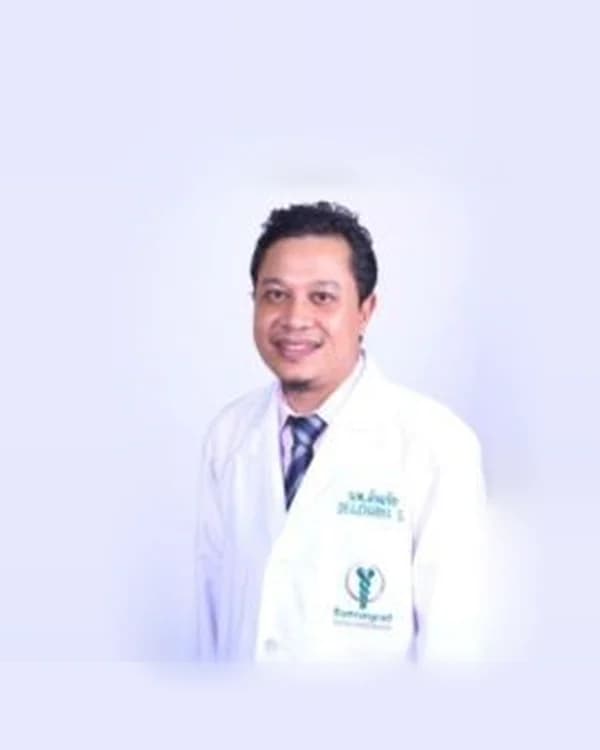
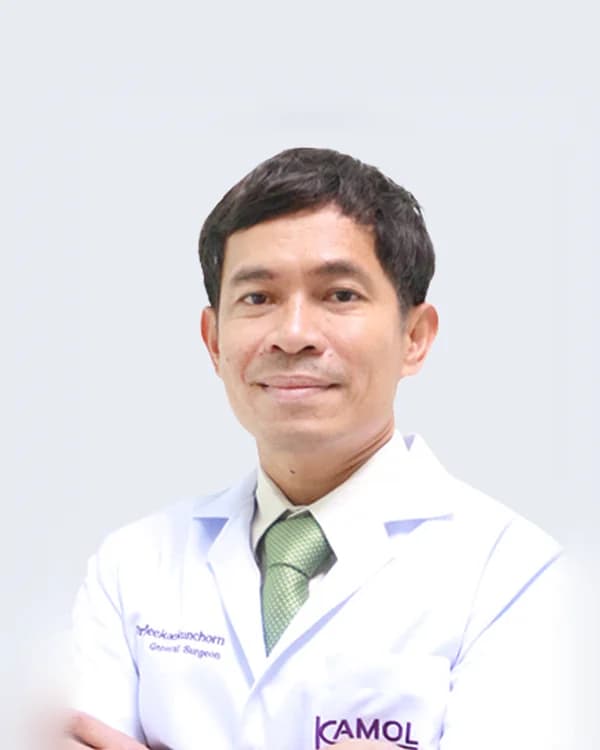
Dr. Pittaya Vapattanawong: onco-gynecologist on Kamol's FtM surgical team in Bangkok
Dr. Pittaya Vapattanawong (Thai: นพ. พิทยา ว่าพัฒนวงศ์) is a Thai gynecologist with a sub-board qualification in gynecologic oncology who works at Kamol Cosmetic Hospital in Wang Thonglang, Bangkok. Kamol's doctor directory lists him as an “Onco Gynecologist”, and his official profile places him on the hospital's Female-to-Male (FtM) gender-affirming surgical team. His part of that work is the removal of internal reproductive organs in trans men: in practice, hysterectomy and oophorectomy as a step in masculinizing surgery.
He is not a plastic surgeon, and it is worth being clear about that before you contact anyone. Chest surgery, phalloplasty, metoidioplasty and the other visible stages of female-to-male surgery are listed on Kamol's own service pages, but nothing on Dr. Pittaya's profile says he performs them. His documented role is the gynecological one. The Thai version of his Kamol profile lists his expertise as operations on the uterus, operations on the ovaries and the prevention of gynecologic cancer, and the English version describes his aim as removing these organs safely while keeping the patient's future health and personal goals in view.
His documented career starts with general practice in Narathiwat province in the far south of Thailand, moves through gynecology training at Siriraj and gynecologic oncology training at Rajvithi Hospital in Bangkok, and continues with a decade on the gynecology staff of Pranangklao Hospital in Nonthaburi, a department he later chaired. Each step is set out below, and the structured facts on this page link to the source we read them on. Where something is not published, such as the languages he speaks or a Medical Council of Thailand licence check, we say so instead of filling the gap. Our provider research methodology explains how profiles are checked.
Patients weighing a gender-affirming hysterectomy in Bangkok can request a consultation with Dr. Pittaya. Our patient team relays the request to Kamol, checks Dr. Pittaya's availability, and agrees a date with you before it goes in his calendar.
Education and training
- Medical degree1986
Doctor of Medicine (M.D., M.Sc., as published)
Faculty of Medicine Siriraj Hospital, Mahidol University, Thailand
Source (kamolhospital.com) (opens in a new tab) - Residency1992
Residency Program of Gynecology (1989–1992)
Faculty of Medicine Siriraj Hospital, Bangkok, Thailand
Source (web.archive.org) (opens in a new tab) - Fellowship2001
Curriculum for Subspecialty Training in Gynecologic Oncology (1999–2001)
Rajvithi Hospital, Bangkok, Thailand
Source (web.archive.org) (opens in a new tab) - Board certification1992
Thai Board of Gynecology (Thai profile: วุฒิบัตรสาขาสูติศาสตร์และนรีเวชวิทยา, obstetrics and gynecology)
Siriraj Hospital, Thailand
Source (kamolhospital.com) (opens in a new tab) - Board certification2001
Sub-board in Gynecologic Oncology (Thai profile: วุฒิบัตรเฉพาะทางย่อยด้านมะเร็งนรีเวช; the archived Kamol profile words it 'Diplomate Thai Sub-board in Gynecologic Oncology')
Rajvithi Hospital, Thailand
Source (kamolhospital.com) (opens in a new tab)
Dr. Pittaya's training is recorded on two versions of his Kamol Cosmetic Hospital profile: the current English and Thai pages, and an earlier English page preserved in the Internet Archive (captures from January to September 2025). Read together, they give this sequence:
- Medical degree, 1986. Awarded by Mahidol University through its Faculty of Medicine Siriraj Hospital. In English his qualification appears as “Doctor of Medicine (M.D., M.Sc.)”; the Thai page gives a medical degree together with a master of science (แพทยศาสตรบัณฑิตและวิทยาศาสตรมหาบัณฑิต). We show it as published; the master's degree has not been confirmed from a separate source.
- Residency in gynecology, 1989–1992. Faculty of Medicine Siriraj Hospital, Bangkok, listed on the earlier profile as the Residency Program of Gynecology.
- Thai board, 1992. The English profiles call it the Thai Board of Gynecology; the Thai profile names the specialist diploma (วุฒิบัตร) as obstetrics and gynecology, with Siriraj Hospital as the institution.
- Subspecialty training in gynecologic oncology, 1999–2001. Rajvithi Hospital, Bangkok, listed as the Curriculum for Subspecialty Training in Gynecologic Oncology.
- Sub-board in gynecologic oncology, 2001. Rajvithi Hospital. The earlier profile words it “Diplomate Thai Sub-board in Gynecologic Oncology”; the Thai profile describes a sub-specialty diploma in gynecologic cancer.
Gynecologic oncology is the branch of gynecology concerned with cancers of the uterus, cervix and ovaries, including the surgery used to treat them. It is a sub-specialty taken after the obstetrics and gynecology board, and in his record the two qualifications are dated 1992 and 2001. For someone considering a gender-affirming hysterectomy, the link is direct: the operation he is documented as performing on Kamol's FtM team involves the same organs this training centres on.
One peer-reviewed paper can be attributed to him with a matching affiliation: a 2006 single-author study in the Medical Association of Thailand's journal (J Med Assoc Thai) comparing the effects on blood counts of two first-line chemotherapy combinations for epithelial ovarian cancer (carboplatin with cyclophosphamide, and carboplatin with paclitaxel), published from the Department of Obstetrics and Gynecology at Pranangklao Hospital. Most other PubMed results under the surname belong to a different researcher, so we list only this one.
Neither Kamol profile names a professional society he belongs to. As a gynecologist he would not normally appear among plastic surgeons, but we still went through the ThPRS member entries (Thailand's plastic and reconstructive surgery society); his name was not among them when we looked on 27 September 2026. Thailand's college for obstetricians and gynaecologists (RTCOG), the body closest to his field, offers no public member search.
We also tried to confirm his registration with the Medical Council of Thailand that day. No licence number appears on the official profiles we read; the licence can be looked up on the Medical Council of Thailand's public register at checkmd.tmc.or.th. His licence status is therefore unconfirmed by us, and the council's public register is worth searching yourself before you agree to surgery.
Professional experience
- Current
Onco gynecologist, Female-to-Male gender-affirming surgical team
Kamol Cosmetic Hospital, Bangkok
Source (kamolhospital.com) (opens in a new tab) - Since 2011
Former Chairman of the Gynecology Department (อดีตประธานภาควิชาสูตินรีเวชวิทยา); the archived Kamol profile dates the post from 2011
Pranangklao Hospital, Nonthaburi
Source (kamolhospital.com) (opens in a new tab) - 2001–2011
Gynecologist staff, Gynecology Department (2001–2011)
Pranangklao Hospital, Nonthaburi
Source (web.archive.org) (opens in a new tab) - 1992–1999
Gynecologist (1992–1999)
Sungaikolok Hospital, Narathiwat
Source (web.archive.org) (opens in a new tab) - 1986–1989
General Practitioner (1986–1989)
Waeng Hospital, Narathiwat
Source (web.archive.org) (opens in a new tab)
The earlier Kamol profile lists his posts in date order, and the current Thai profile adds his title at Pranangklao Hospital. The record reads:
- General practitioner, Waeng Hospital, Narathiwat (1986–1989), straight after his medical degree.
- Gynecologist, Sungaikolok Hospital, Narathiwat (1992–1999), after the gynecology residency at Siriraj.
- Gynecologist, Gynecology Department, Pranangklao Hospital, Nonthaburi (2001–2011), after the gynecologic oncology training at Rajvithi.
- Chairman of the Gynecology Department, Pranangklao Hospital. The earlier profile dates the post from 2011; the current Thai profile describes him as a former chairman (อดีตประธาน).
- Onco gynecologist, Female-to-Male gender-affirming surgical team, Kamol Cosmetic Hospital, Bangkok. Current.
Most of that career was spent outside central Bangkok: first in Narathiwat in the far south, and then in Nonthaburi, the province bordering Bangkok. His 2006 ovarian cancer paper comes from the Pranangklao years.
Two details matter if you are comparing profiles. First, we do not list Pranangklao Hospital as a current place of practice. His Kamol profile now describes the chairmanship in the past tense, and the Pranangklao obstetrics and gynecology department's own faculty page, read on 27 September 2026, names a different head and does not include him. Second, Kamol's pages disagree on when his work there began. The earlier profile listed a Kamol post from 2011, while the current profile says he has been part of the FtM team for more than two decades. Both statements come from the hospital, and they cannot both be exact, so we leave the start date out rather than pick one.
Kamol does not publish case numbers for him, and neither does any other official source we opened, so this page gives none. No other hospital or clinic that we searched lists him today, so both consultation and surgery with Dr. Pittaya take place, as far as the record shows, at Kamol Cosmetic Hospital.
Procedures performed
Procedures are listed only when an official source, such as a hospital or clinic profile, a department page or the surgeon's own site, names them. A listing is not a recommendation: whether a procedure suits you is decided at a consultation.
Masculinizing procedures
Where these listings come from
- Kamol profile: member of the Female-to-Male gender-affirming surgical team, 'ensuring safe and precise removal of reproductive organs in trans men'; he 'works closely with the surgical team to ensure safe removal of internal reproductive organs' (Thai page: การผ่าตัดเอาอวัยวะสืบพันธุ์ภายในออก; expertise in hysterectomy and oophorectomy) kamolhospital.com (opens in a new tab)
Gender-affirming hysterectomy and oophorectomy with Dr. Pittaya Vapattanawong
Dr. Pittaya has one documented procedure area on our site: hysterectomy and oophorectomy (gender-affirming). The evidence is his Kamol profile, which says he works alongside the FtM surgical team on the safe removal of internal reproductive organs in trans men, and the Thai version of that profile, which names hysterectomy and oophorectomy among his areas of expertise. Kamol also publishes a dedicated FtM hysterectomy service page. A second gynecologist on the same team, Dr. Apichart Jaideecharoen, has a Kamol profile listing vaginal hysterectomy for transgender men and oophorectomy among his areas of expertise, so Kamol has two gynecologists documented in this role.
What the operation involves, in general. A hysterectomy removes the uterus; when the cervix is removed as well, it is a total hysterectomy. Oophorectomy removes the ovaries, and the fallopian tubes are commonly removed at the same operation. Surgeons can reach these organs through an abdominal incision (open surgery), laparoscopically through small keyhole incisions, or through the vagina. The choice depends on anatomy, previous abdominal or pelvic surgery and the team's own practice. Dr. Pittaya's profile does not say which approach he uses, so it is one of the first things to ask.
Where it fits in masculinizing surgery. For some trans men and transmasculine people the operation is an end in itself; for others it is one stage of a longer plan. Our phalloplasty guide notes that many people have had a hysterectomy beforehand or at an early stage, and metoidioplasty can include removal of the vagina (vaginectomy). Kamol lists top surgery, phalloplasty, metoidioplasty, urethral lengthening and scrotoplasty among its FtM services. If any of these are in your plan, ask how the hysterectomy is sequenced with them, and whether it would be a separate operation or trip.
Ovaries, hormones and fertility. Removing both ovaries ends their hormone production, so from then on your hormone therapy is what your body relies on, including for bone health. That makes it sensible to involve whoever prescribes your testosterone before surgery, not after. Keeping one or both ovaries is sometimes an option, and the reasons for and against depend on the individual. Removing the uterus ends the possibility of carrying a pregnancy; removing both ovaries also ends the possibility of using your own eggs later, unless eggs or embryos have been frozen first. Kamol describes Dr. Pittaya's approach as taking future health and each patient's goals into account, and the consultation is where to find out what that means for you.
Cancer prevention and screening. The Thai profile names the prevention of gynecologic cancer as an area of his expertise, which reflects his oncology training. In general, organs that are removed no longer need screening, while any that remain may still need it: if the cervix is kept, cervical screening usually continues. A family history of ovarian, uterine or breast cancer, or a known genetic test result, can change what is recommended, so mention it early.
Risks, in general. Like other pelvic operations, hysterectomy and oophorectomy carry risks of bleeding, infection, blood clots and reactions to anaesthesia, and less commonly injury to nearby structures such as the bladder, bowel or ureters. Whether this operation is suitable for you, and by which route, needs an individual assessment by the Kamol team; nothing on this page replaces that. Our full guide to this operation is still being written, so this page does not give recovery times, hospital nights or complication rates. Ask the Kamol team for their own figures and for what recovery looks like with the approach they propose.
Consulting Dr. Pittaya about FtM hysterectomy: what to discuss and ask
In general, a consultation before a gender-affirming hysterectomy covers your gynecological history, any earlier abdominal or pelvic surgery, your hormone therapy, your general health and your wider surgical plan. It may include an examination and imaging such as a pelvic ultrasound. Pre-operative tests can often be done in the same building: Kamol's 2nd floor has a wellness and diagnostic centre where blood tests, X-rays, ultrasound scans, ECGs and cardiac stress tests are carried out. Ask Dr. Pittaya's team which results they need and whether any should be arranged at home before you fly.
Questions that fit Dr. Pittaya's documented role:
- Exactly what will be removed? The uterus alone, or also the cervix, fallopian tubes and one or both ovaries, and what is the reasoning in your case?
- Which surgical approach? Open, laparoscopic or vaginal, and how does that change scars, time in hospital and the point at which flying home is considered safe?
- Who operates? Will Dr. Pittaya perform the operation himself, and which other members of the FtM team or anaesthesia staff will be involved?
- Alone or combined? Is the hysterectomy planned as a separate operation, or alongside another step of your masculinizing surgery? If combined, who leads each part?
- What documentation is required? SOC-8, the eighth version of WPATH's care standards, is the reference many gender-affirming surgery teams use. For removal of the uterus and ovaries it generally looks for a documented assessment and, unless hormones are unwanted or unsuitable for you, a period of hormone therapy beforehand. Ask exactly which letters or records Kamol needs, and in what language.
- Testosterone around surgery. Does the team want any change to your hormones before or after the operation, and how will this be passed on to your prescriber at home?
- Fertility. If you want to keep the option of biological children, is there time to preserve eggs or embryos before the planned date?
- After the operation. Will removed tissue be sent for laboratory (pathology) examination, and will you receive the report in English? If the cervix or an ovary stays, what follow-up or screening do they suggest?
- Once you are back home. If pain, bleeding or a fever develops after you have flown back, whom should you contact at Kamol, and will you leave with a full operation note in English for your own doctor?
- Cost. Ask for the quote in writing and check what it covers: nights on the ward, K Garden accommodation, follow-up visits, and treatment of any complications.
It helps to decide beforehand which of these matter most to you, and to write the answers down. If you are consulting online, have your documents in front of you so you can answer questions about dates, doses and previous operations accurately.
Hospitals and clinics where Dr. Pittaya Vapattanawong practises
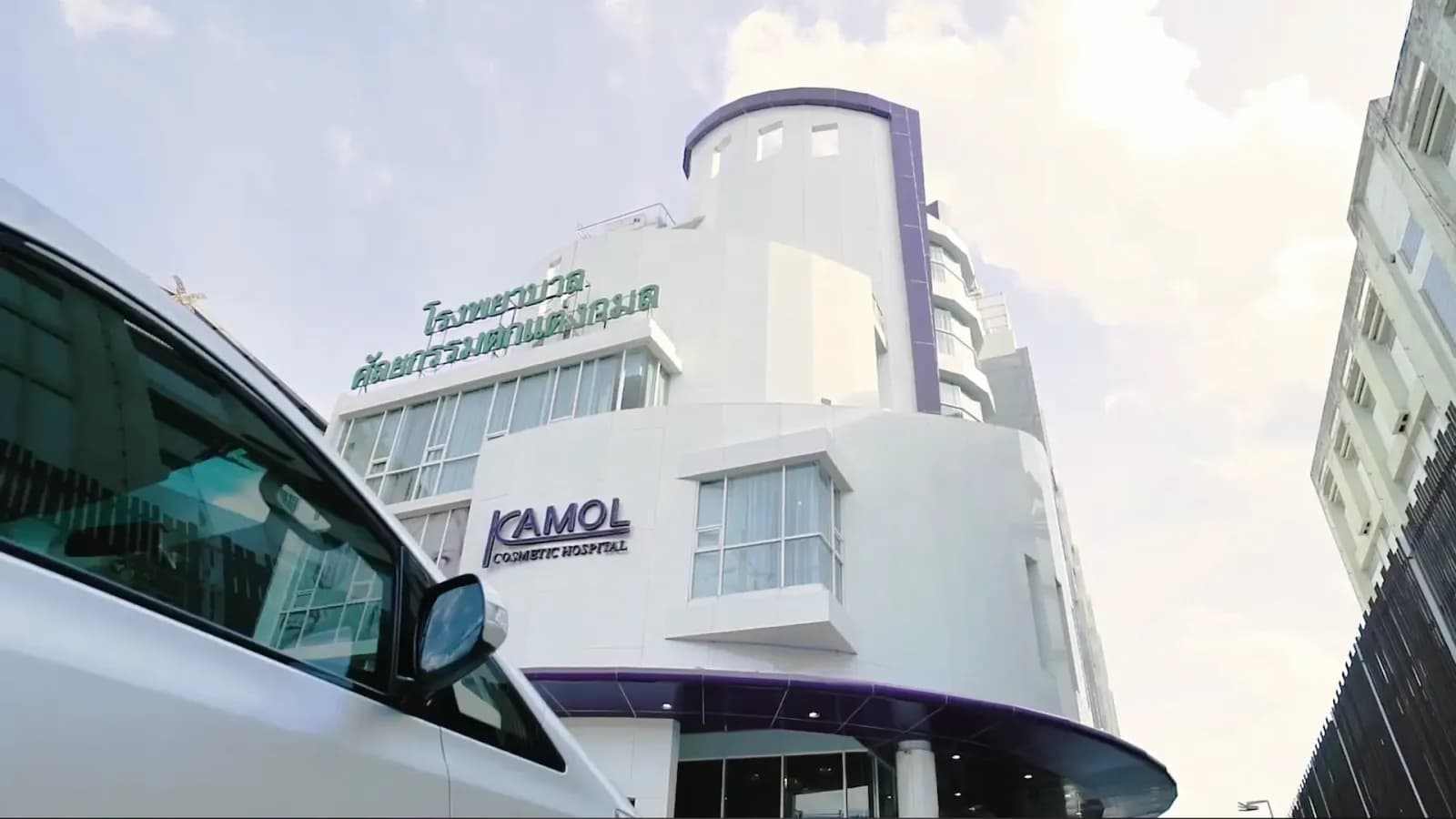
Wang Thonglang, Bangkok
Kamol Cosmetic Hospital
โรงพยาบาลศัลยกรรมตกแต่งกมล
- Cosmetic surgery hospital
- International patient service
- Gender-affirming surgery
Kamol Cosmetic Hospital (โรงพยาบาลศัลยกรรมตกแต่งกมล) is a cosmetic surgery hospital in Wang Thonglang, Bangkok, listed as accredited by JCI. It offers male-to-female and female-to-male gender-affirming surgery plus facial, breast and body surgery.
Accreditation
- JCI
- Surgeons
- 14
- Procedures
- 74
- Languages
- English, Thai
Surgeons here
International patients
As far as his profiles show, Dr. Pittaya consults and operates at a single address: Kamol Cosmetic Hospital (street address: 1223 Lat Phrao 94, Inthraphon Rd.; district: Wang Thonglang; Bangkok 10310). Kamol presents the building as designed around complex aesthetic and gender-affirming operations. On accreditation, the Joint Commission International directory showed Kamol with an “Accredited” decision when we searched it on 27 September 2026, while a search of HA Thailand, the national hospital accreditation body, returned no Kamol record.
What Kamol's own pages say about the building and its services:
- Surgery happens on the 4th floor. The Thai facilities page gives seven operating rooms; among them are a room set up for microsurgery and an endoscopic suite, and a monitored recovery area with 11 beds adjoins them.
- Dr. Pittaya's patients who stay in overnight are nursed on the 5th or 6th floor, where standard and VIP rooms share a central nurse station; one floor up, on the 7th, Kamol keeps medical residence apartments for longer recovery stays.
- You register and are seen for consultation on the 3rd floor, which also has facilities for minor procedures.
- When patients leave the ward they move on to K Garden, a block of serviced apartments that Kamol operates near the hospital; dressing changes, taking out stitches and follow-up checks by the surgeon are done there.
- Before you travel, the international team can set up a secure video call with a surgeon. It also appoints a named representative to coordinate each request, helps arrange hotels and airport pick-ups, and keeps an international phone line open for questions and urgent concerns. When it is time to leave, Kamol's limousine service drives you to the airport.
- If recovery runs longer than planned, a medical treatment visa extension is something Kamol says it can handle.
- Payment options listed by Kamol: bank transfer; credit and debit cards; and cash, whether Thai baht or euros, pounds sterling, or US, Canadian or Australian dollars.
Languages. Neither of Dr. Pittaya's profiles says which languages he speaks. Kamol's contact page covers the hospital side: Thai and English are spoken by its team, and interpretation into further languages is arranged on request. If you need one for the consultation, on the ward or at K Garden, mention it in your request.
Planning your stay. Our general guide for this operation does not yet give a typical length of stay in Thailand, so do not book flights around a number you have seen elsewhere. Ask the Kamol team how long they want you nearby after the approach they plan, whether you will stay in the ward or at K Garden, and at what point they would be comfortable with you flying home. A flexible return ticket is the safer choice. If you are combining a hysterectomy with other FtM procedures, the overall plan, not the hysterectomy alone, will set the length of your trip. The city itself, where you would spend your recovery, is covered in our Bangkok guide.
Published by the hospitals and clinics
These services are offered and provided by each facility itself, as listed on its official site.
Kamol Cosmetic Hospital
- International patient desk
- Secure online video consultations with the surgeons for patients who cannot travel immediately Source (kamolhospital.com) (opens in a new tab)
- Interpretation for languages other than English and Thai, on request Source (kamolhospital.com) (opens in a new tab)
- Help with hotel bookings and airport transfers Source (kamolhospital.com) (opens in a new tab)
- A personal representative is assigned to coordinate each consultation request Source (kamolhospital.com) (opens in a new tab)
- International phone line for enquiries and urgent questions Source (kamolhospital.com) (opens in a new tab)
- Discharge from the ward to K Garden, the hospital's serviced apartments located close to the hospital Source (kamolhospital.com) (opens in a new tab)
- Post-operative care at K Garden: wound dressing, stitch removal and surgeon follow-up; after male-to-female genital surgery, twice-daily wound dressing and dilation by specialist nurses Source (kamolhospital.com) (opens in a new tab)
- Transport to the airport by limousine service on departure Source (kamolhospital.com) (opens in a new tab)
- The hospital can extend a medical treatment visa Source (kamolhospital.com) (opens in a new tab)
- Payment accepted in cash in several currencies (THB, EUR, USD, AUD, GBP, CAD), by credit/debit card or by bank transfer Source (kamolhospital.com) (opens in a new tab)
Languages listed: English, Thai
How our patient team helps
- We pass your request to the surgeon's hospital or clinic and confirm availability, usually within one working day.
- You receive a booking reference to track your request.
- We answer practical questions on WhatsApp and by email.
ThaiCosmeticSurgery.com does not provide medical care. Treatment, prices and patient services are the responsibility of the hospital or clinic.
Requesting an appointment with Dr. Pittaya Vapattanawong
The booking form has a field for the doctor's name, so you can ask for Dr. Pittaya specifically, and then asks which of three things you need:
- Online consultation: a first conversation before you travel. Kamol runs video consultations with its surgeons, but Dr. Pittaya's profile does not say whether he joins them himself, so we check with the hospital on your behalf.
- In-person consultation at Kamol Cosmetic Hospital in Wang Thonglang, Bangkok.
- Surgery dates and planning, if you have already been assessed or have a plan from the Kamol team.
Request a consultation with Dr. Pittaya Vapattanawong. Tell us that your question is about gender-affirming hysterectomy or oophorectomy, give your preferred dates, and say whether other FtM procedures are part of your plan. Open to seeing either of Kamol's two gender-affirming gynecologists? Say so, and we can ask about Dr. Pittaya and Dr. Apichart Jaideecharoen together. If your question covers a whole FtM plan and not only this gynecological step, the Kamol Cosmetic Hospital request form is the better starting point.
After you send the form, our patient team raises your hysterectomy question with Kamol, and a booking reference plus an answer on Dr. Pittaya's diary typically follow within one working day. Practical questions can reach us on WhatsApp or by email in the meantime. Your date is only fixed when our team confirms it to you. Asking about Dr. Pittaya is free and does not tie you to surgery at Kamol.
ThaiCosmeticSurgery.com does not provide medical care. Dr. Pittaya and Kamol Cosmetic Hospital are responsible for the consultation, the decision on whether to operate, the operation itself and its price. Any quote the hospital prepares is passed on unchanged, and it is not final until you have been assessed in person.
A request is not a confirmed appointment until our patient team confirms it with you.
What to send before a consultation about gender-affirming hysterectomy
Planning an internal operation depends far more on your history and records than on photos. Gathering the following before your first consultation with Dr. Pittaya's team saves time and helps them give you a realistic plan:
- Your goal and wider plan. Hysterectomy alone, or with oophorectomy; any other FtM procedures you are considering (top surgery, metoidioplasty, phalloplasty) and roughly when.
- Hormone therapy. When you started testosterone, your current dose and how you take it, and your prescriber's contact details.
- Assessment letters. Any letters or reports from your gender-affirming care team that you already have, and a note of what you are still waiting for.
- Gynecological history. Whether you still have periods, earlier pregnancies or caesarean sections, and any diagnosis such as endometriosis, fibroids, ovarian cysts or pelvic infection.
- Previous surgery. Above all, abdominal or pelvic operations; copies of the surgeon's notes help if you can get them.
- Screening and test results. Your most recent cervical screening result and any pelvic ultrasound or other imaging reports.
- Family and genetic history. Relatives with ovarian, uterine or breast cancer, and any genetic test result you have received.
- General health. Long-term conditions, medicines (particularly blood thinners), allergies, previous reactions to anaesthesia, and whether you smoke.
- Fertility decisions. Whether you have stored eggs or embryos, or want to discuss doing so.
- Practical details. Preferred dates, online or in-person consultation, and whether you need an interpreter.
Photos are rarely needed for this operation; send them only if the team asks. Records meant for Dr. Pittaya's team should go through our booking form or WhatsApp line rather than social media messages, and it is wise to keep your own copy of everything you share.
Credential research
Every fact on this profile comes from a source we opened and dated. Where a source only states something, we say so.
- Medical Council of Thailand licence
- Check the Medical Council's public register (opens in a new tab)
- Profile last reviewed
Hospital and clinic affiliation
Education and training
Positions
Special interests
Medical information
This profile is for information only and is not medical advice. Whether a procedure is suitable for you can only be decided after an assessment by a qualified surgeon. Every operation carries risks, and results vary from person to person. Before you commit to treatment, check the surgeon's credentials yourself, for example on the Medical Council of Thailand register. We do not accept payment for placement or rankings.
Frequently asked questions
Who is Dr. Pittaya Vapattanawong?
Dr. Pittaya Vapattanawong (นพ. พิทยา ว่าพัฒนวงศ์) is a Thai gynecologist with a sub-board in gynecologic oncology. He works at Kamol Cosmetic Hospital in Bangkok as part of its Female-to-Male gender-affirming surgical team, where his documented role is removing the internal reproductive organs (uterus and ovaries) in trans men. He trained at Siriraj and Rajvithi Hospital and previously chaired the gynecology department at Pranangklao Hospital in Nonthaburi.
Is Dr. Pittaya Vapattanawong a plastic surgeon?
No. His qualifications are a Thai board in obstetrics and gynecology and a sub-board in gynecologic oncology, and Kamol's directory labels him an onco gynecologist. In gender-affirming care his documented part is the gynecological operation, hysterectomy and oophorectomy, not chest, genital or facial reconstruction.
Where does Dr. Pittaya Vapattanawong practise?
[Kamol Cosmetic Hospital](/hospital/kamol-cosmetic-hospital/) (Lat Phrao 94, Wang Thonglang, Bangkok) is his only documented place of practice. We could not find him on any other hospital's or clinic's current doctor list. Pranangklao Hospital in Nonthaburi and the Narathiwat hospitals where he worked earlier are past posts.
Does Dr. Pittaya Vapattanawong perform hysterectomy for trans men?
Yes, according to Kamol Cosmetic Hospital. His profile says he works with the FtM surgical team on the safe removal of internal reproductive organs in trans men, and the Thai profile lists hysterectomy among his areas of expertise. Neither the approach he favours nor his personal case numbers are published; both are fair questions at a consultation. See our overview of [gender-affirming hysterectomy and oophorectomy](/gender-affirming-surgery/gender-affirming-hysterectomy/).
Does Dr. Pittaya also remove the ovaries (oophorectomy)?
His Thai Kamol profile lists oophorectomy alongside hysterectomy. Whether one, both or neither ovary is removed in your case is decided with you after assessment. In general, removing both ovaries ends their hormone production and the possibility of using your own eggs later, so long-term hormone therapy, bone health, fertility preservation and any family history of cancer are all part of that discussion.
Does Dr. Pittaya perform top surgery, phalloplasty or metoidioplasty?
No official source we found says so. Kamol lists [top surgery](/gender-affirming-surgery/top-surgery/), [phalloplasty](/gender-affirming-surgery/phalloplasty/) and [metoidioplasty](/gender-affirming-surgery/metoidioplasty/) among its FtM services, and its team includes plastic surgeons such as its chief plastic surgeon, [Dr. Kamol Pansritum](/doctor/kamol-pansritum/), and a urologist, [Dr. Ravis Tivitmahaisoon](/doctor/ravis-tivitmahaisoon/), whose profile lists urethral lengthening. Dr. Pittaya's documented role is the hysterectomy and oophorectomy.
What qualifications does Dr. Pittaya Vapattanawong have?
According to his Kamol profiles: a medical degree in 1986 (published as M.D., M.Sc.) from Mahidol University, whose Siriraj Hospital medical faculty he attended; gynecology residency at Siriraj, 1989–1992; the Thai board in gynecology, given in Thai as obstetrics and gynecology, 1992; gynecologic oncology subspecialty training at Rajvithi Hospital, 1999–2001; and the Thai sub-board in gynecologic oncology, 2001. The profiles state no society membership.
Is Dr. Pittaya's Medical Council of Thailand licence verified on this page?
No, not yet. No licence number appears on the official profiles we read; the licence can be looked up on the Medical Council of Thailand's public register at checkmd.tmc.or.th. Anyone can use the council's public register (checkmd.tmc.or.th), and we suggest looking him up there before a hysterectomy is scheduled.
Through which steps do I reach Dr. Pittaya for a hysterectomy consultation?
Use [Dr. Pittaya's booking form](/book/?doctor=pittaya-vapattanawong). Choose whether you want a video consultation, a visit to Kamol in person, or surgery planning; add that the question concerns gender-affirming hysterectomy and list dates that work for you. Kamol Cosmetic Hospital is then asked about his diary, and our reply normally reaches you inside one working day. Nothing is charged for the request, and your appointment exists only once our team has confirmed it.
Can I speak to Dr. Pittaya online before travelling to Bangkok?
Kamol advertises secure video calls with its surgeons for people who are not ready to travel. Dr. Pittaya's profile is silent on whether he takes such calls. Choose the online option when you request him, and we will ask Kamol whether he can, then tell you what is available.
Which records help Dr. Pittaya's team prepare for a hysterectomy consultation?
Your surgical goals and wider FtM plan, your testosterone history and prescriber, any assessment letters, your gynecological and surgical history (including caesarean sections, endometriosis or other pelvic conditions), recent cervical screening and ultrasound reports, family history of ovarian, uterine or breast cancer, medicines and allergies, and your fertility plans. Photos are rarely needed; send them only if asked.
Is Kamol Cosmetic Hospital, where Dr. Pittaya works, accredited?
Yes, by JCI. Kamol Cosmetic Hospital carried the decision “Accredited” in the Joint Commission International directory as of our 27 September 2026 check. HA Thailand, the Thai national accreditor, had no Kamol entry in its search. Neither accreditor assesses individual doctors, so this says nothing specific about Dr. Pittaya's own practice.