Key facts
- Specialty
- Facial plastic surgery (ENT)
- Subspecialties
- Otolaryngology (โสต ศอ นาสิกวิทยา), Open rhinoplasty (เสริมจมูกแบบโอเพ่น), Rhinoplasty with the patient's own costal (rib) cartilage (เทคนิคกระดูกซี่โครง)
- City
- Bangkok, Thailand
- Practises at
- Masterpiece Hospital
- Societies
- สมาคมศัลยกรรมตกแต่งและเสริมสร้างใบหน้าแห่งประเทศไทย (facial plastic and reconstructive surgery society of Thailand; English name not given on the source)
- Special interests
- Open rhinoplasty, including the patient's own costal (rib) cartilage in cases needing a clear structural change, safety and durability; Revision rhinoplasty, including complex cases with scar tissue, deformed earlier structures or septal and ear cartilage already used, where costal cartilage may be needed
- Procedures
- 2 documented procedures
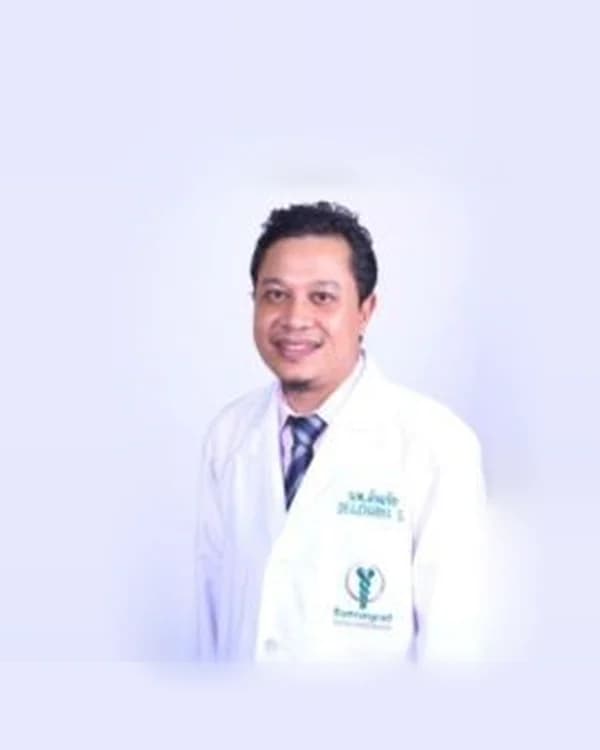
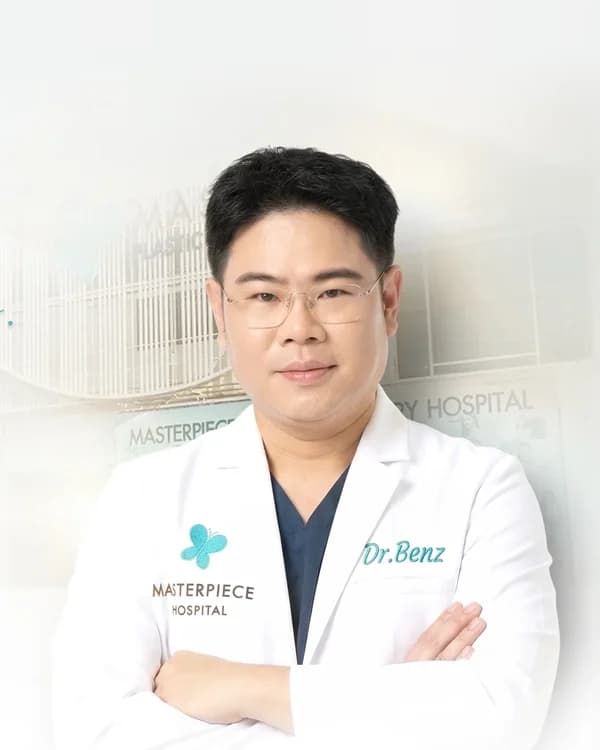
Dr. Kosit Ieochai: ENT facial plastic surgeon and rhinoplasty specialist in Bangkok
Dr. Kosit Ieochai (Thai: นพ.โฆษิต เอี้ยวฉาย) is a Thai surgeon whose published specialty is facial plastic surgery, built on a background in otolaryngology, the medical field covering the ear, nose and throat (ENT). His Thai profile gives the nickname หมอเบนซ์, and the banner on the hospital's profile page reads "Dr. Benz". He practises in Bangkok at Masterpiece Hospital, whose own profile lists him in the Nasal Surgery department (แผนกศัลยกรรมจมูก) as an ENT specialist and rhinoplasty surgeon.
Everything documented about his work centres on the nose. The hospital describes it as running from first-time augmentation to complex revision cases, and names two services on his page: open rhinoplasty (เสริมจมูกแบบโอเพ่น) and a technique that uses the patient's own rib (costal) cartilage (เทคนิคกระดูกซี่โครง). On this site he is connected to two procedure areas, rhinoplasty and revision rhinoplasty.
This page is a summary of what is publicly documented, drawn from the verified research file we keep (last checked 27 September 2026, based on the Masterpiece Hospital profile). It is neither an endorsement nor a ranking. We give no figures for years in practice, operations performed, success rates or patient reviews, because none appears in a source we could verify. Some facts a patient would like to know, for instance which languages he consults in, are simply absent from the profile, and on this page they are marked as absent.
Who might look at this profile? Mainly three groups: people thinking about a first open rhinoplasty, people whose nose may need rib cartilage for a strong structural change, and people who want an earlier nose operation corrected and prefer an ENT-trained surgeon in Bangkok. If that describes you, our patient team can help arrange a consultation with Dr. Kosit, and you can request a consultation to begin. How we gather and label evidence about surgeons is explained in how we research providers.
Education and training
- Board certification2011
Board certification (วุฒิบัตร), Otolaryngology (โสต ศอ นาสิกวิทยา), certificate no. 12405/2554
Medical Council of Thailand, Thailand
Source (masterpiecehospital.com) (opens in a new tab) - Training
Otolaryngologist Medical Doctor (as published)
Faculty of Medicine Siriraj Hospital, Mahidol University (Department of ENT), Thailand
Source (masterpiecehospital.com) (opens in a new tab) - Training
Diploma and fellowship of Korean College of Cosmetic Surgery (วุฒิบัตรศัลยกรรมความงามใบหน้า)
Korean College of Cosmetic Surgery, South Korea
Source (masterpiecehospital.com) (opens in a new tab) - Certificate2026
Certificate of attendance
NOSE by FATS Bangkok 2026, Thailand
Source (masterpiecehospital.com) (opens in a new tab) - Certificate
Certificate of participation
Dallas Rhinoplasty (Texas, USA), United States
Source (masterpiecehospital.com) (opens in a new tab) - Certificate
Certificate of attendance
Advanced in Rhinoplasty (Orlando, USA), United States
Source (masterpiecehospital.com) (opens in a new tab) - Certificate
Certificate of attendance
Singapore Facial Plastic Surgery Course (Tan Tock Seng Hospital), Singapore
Source (masterpiecehospital.com) (opens in a new tab)
The entries below come from the Masterpiece Hospital profile and are reported as published. Several carry no year, and we have not supplied one.
Siriraj Hospital, Mahidol University. The profile names the ENT department of the Siriraj medical faculty at Mahidol University and calls him an Otolaryngologist Medical Doctor. It does not say which degree or residency he completed there, so we do not name one. The documented fact is a link between his training and the ENT department of this Thai university hospital, and nothing more specific.
Thai board certification in otolaryngology. Listed on the profile is a board certification (วุฒิบัตร) in otolaryngology (โสต ศอ นาสิกวิทยา), awarded through the Medical Council of Thailand and numbered 12405/2554. The 2554 in that number is a Buddhist-era year, which corresponds to 2011, so the year is read from the certificate number and is not stated separately by the hospital. In Thailand this certificate is the specialist qualification for a given discipline. For Dr. Kosit the discipline is ENT, not general plastic surgery, and that tells a patient something useful about his route into nose surgery: through otolaryngology, with a later emphasis on facial plastic surgery.
Korean College of Cosmetic Surgery. The profile lists a diploma and fellowship of the Korean College of Cosmetic Surgery (Thai title: วุฒิบัตรศัลยกรรมความงามใบหน้า, a facial cosmetic surgery certificate). No year, length of programme or host hospital is given, so beyond the title we cannot describe what the training involved.
Courses and meetings. The profile also lists certificates for the following:
- Dallas Rhinoplasty, Texas, USA (certificate of participation);
- Advanced in Rhinoplasty, Orlando, USA (certificate of attendance);
- the Singapore Facial Plastic Surgery Course at Tan Tock Seng Hospital (certificate of attendance);
- NOSE by FATS Bangkok 2026 (certificate of attendance).
Attending courses shows ongoing study in a field where techniques keep changing. It is not a degree or a board qualification, and we describe it only as attendance.
Licence. Masterpiece Hospital publishes Medical Council of Thailand licence number 31806 on his profile. The number is repeated here as the hospital states it, and can be looked up on the Medical Council of Thailand's public register at checkmd.tmc.or.th. You are welcome to search that site yourself, or ask us to do so while your request is prepared.
Publications. A PubMed author search for his name found nothing on 27 September 2026, so we list no research papers. Many surgeons who work mainly in clinics have no indexed publications, so this neither counts for nor against him.
Professional experience
- Current
Advisor lecturer (อาจารย์ที่ปรึกษา), Department of Oto-Rhino-Laryngology (ภาควิชาโสต นาสิก ลาริงซ์วิทยา)
Faculty of Medicine Siriraj Hospital, Mahidol University
Source (masterpiecehospital.com) (opens in a new tab)
Masterpiece Hospital, Bangkok. His documented clinical base is Masterpiece Hospital, where he appears as an ENT specialist and rhinoplasty surgeon in the Nasal Surgery department. The hospital does not say when he started there.
Siriraj Hospital, Mahidol University. The same profile calls him an advisor lecturer (อาจารย์ที่ปรึกษา) in the Department of Oto-Rhino-Laryngology (ภาควิชาโสต นาสิก ลาริงซ์วิทยา) at Siriraj, Mahidol University's medical faculty, and marks the role as current. No start date or description of duties is given, and we have not found a Siriraj faculty page confirming it, so read it as the hospital's own statement.
Professional society. The profile states that he belongs to a Thai society for facial plastic and reconstructive surgery, published only under its Thai name, สมาคมศัลยกรรมตกแต่งและเสริมสร้างใบหน้าแห่งประเทศไทย. The source gives no English name, and we have not compared it with the society's own member list. We therefore label the membership as stated, not independently verified.
Gaps. Nowhere did we see a published number of rhinoplasties performed, no length of time in practice, no list of earlier hospital posts and no awards. We have chosen not to estimate any of these. Should these points weigh on your choice, put them to him when you meet. Asking about his work on noses similar to yours is reasonable, and how he answers is part of your assessment.
Procedures performed
Procedures are listed only when an official source, such as a hospital or clinic profile, a department page or the surgeon's own site, names them. A listing is not a recommendation: whether a procedure suits you is decided at a consultation.
Facial plastic surgery
Where these listings come from
- Expertise section covers complex revision cases (เคสแก้ไขที่ซับซ้อน); his Q&A describes revising noses (เคสแก้จมูก) with costal cartilage masterpiecehospital.com (opens in a new tab)
- Expertise section: 'ครอบคลุมงานศัลยกรรมจมูกตั้งแต่การเสริม จนถึงเคสแก้ไขที่ซับซ้อน' (nose surgery from augmentation to complex revision), services 'เสริมจมูกแบบโอเพ่น' (open rhinoplasty) and 'เทคนิคกระดูกซี่โครง' (rib-cartilage technique); listed in the Nasal Surgery department masterpiecehospital.com (opens in a new tab)
Rhinoplasty with Dr. Kosit Ieochai in Bangkok: open, rib-cartilage and revision surgery
Two procedure areas are documented for Dr. Kosit Ieochai: rhinoplasty and revision rhinoplasty. Under the first, the hospital profile names open rhinoplasty and the rib-cartilage technique as separate services. The notes below are general information about these types of operation, kept in line with our procedure pages. Whether any of it applies to you is something only a surgeon can decide after examining your nose.
### Open rhinoplasty
In an open rhinoplasty the surgeon makes a small cut across the columella, the narrow strip of skin between the nostrils, and joins it to incisions inside the nostrils. The skin can then be lifted so the cartilage and bone are in direct view. Our procedure page notes that the columellar scar usually fades well. In general, this approach is chosen when the tip needs reshaping or support, when grafts have to be placed accurately, or when the nose is structurally complicated. The hospital describes Dr. Kosit's open rhinoplasty as meant for patients needing a clear structural change, with safety and durability in mind.
Points to raise about open rhinoplasty:
- Which areas (bridge, tip, nostril width, projection) would change, and which would stay as they are?
- Which material would raise the bridge or support the tip, and why is it the right match for my skin and anatomy?
- Where exactly will the scar lie, and what does it usually look like as it settles?
- How long is the splint worn, and when would a Bangkok check take place before I fly?
### Rhinoplasty with the patient's own rib cartilage
The hospital lists a technique using the patient's own costal (rib) cartilage as its own service on Dr. Kosit's profile. Our procedure page identifies the rib as one of the places, along with the septum and ear, from which a patient's own cartilage can be taken for augmentation. In general, rib cartilage is a more abundant and sturdier supply than ear or septal cartilage, so surgeons consider it when a nose needs a lot of support or when other cartilage is limited or already used. Using your own tissue avoids a manufactured implant in the nose, but it adds a second surgical site on the chest with its own recovery. The profile does not explain how Dr. Kosit harvests or carves the graft, so we cannot either.
Patients commonly ask:
- Where will the chest scar be, and how does the pain there compare with the nose?
- What keeps a carved graft straight in the long term, and what happens if it bends or shifts?
- Would ear or septal cartilage also be used, and for which part of the nose?
- How long does the chest take to recover, and does that change when I can travel?
Our rhinoplasty page presents implants and rib cartilage as alternatives with different strengths and weaknesses (infection risk, how the nose feels, how well they last), so compare them rather than assuming one is simply better.
### Revision rhinoplasty
Revision (secondary) rhinoplasty is surgery on a nose that has had an earlier operation, whether the concern is its look, breathing, a deformity that appeared later, or a problem with an implant. Dr. Kosit's hospital profile singles out revision cases with scar tissue, earlier structures that have become deformed, and noses where septal and ear cartilage have already been used so that rib cartilage may be required. His Thai-language Q&A on that profile also discusses correcting noses (เคสแก้จมูก) with rib cartilage.
According to our rhinoplasty page, the usual advice is to wait a minimum of twelve months after the first operation before revising, which allows swelling to settle; it adds that revision is often more involved, and slower to perform, because of scar tissue. It also suggests choosing a surgeon who performs revisions regularly and asking to see examples of similar cases. Before you travel, collect the facts about your earlier surgery (date, clinic, any report, and the implant or graft if known); the final section of this page lists what to gather.
### What this profile does not claim
The hospital does not list eyelid, facelift, body or gender-affirming surgery against Dr. Kosit, so we do not connect him with them, even though Masterpiece Hospital as a whole offers other face and body services. If you want something other than a nose operation, our patient team can look for a surgeon whose documented work covers it.
What to expect at a rhinoplasty consultation with Dr. Kosit Ieochai
His profile does not describe how his own consultations run, so we cannot say. The guidance below is general advice for a rhinoplasty consultation, arranged around the open, rib-cartilage and revision operations documented for him.
What is usually examined. Typically the surgeon looks at your goals, the shape of the bridge, tip and nostrils, the thickness and elasticity of your skin, and how well air passes through each side. For a surgeon with an ENT background, the septum and breathing are often part of the conversation too. When the septum is straightened as well as the outside reshaped, the operation is called a septorhinoplasty, covered on our rhinoplasty page. If you have trouble breathing, ask whether it would be dealt with in the same operation.
First operation or revision. The discussion differs. Before a first operation it usually covers the look you want, the structural changes that could produce it, the choice of graft or implant, and what your skin can realistically do. Before a revision the surgeon needs to know what was done before, what has changed since, how much of your own cartilage is left, and whether rib cartilage is likely. Leave at least a year after the previous operation before planning a revision, as our procedure guidance suggests.
Questions worth putting to him:
- Which technique and which material would you propose for my nose, and what is your reasoning?
- How often do you perform operations like mine, and can I see comparable cases shared with the patient's agreement?
- In which theatre will surgery take place, and which doctor will administer the anaesthetic?
- What does the written quote cover and leave out, and what would a revision cost?
- At what point could I fly home safely, and what happens about check-ups when I am overseas?
Remote first, in person to confirm. Many hospitals in Thailand offer a first opinion from photographs, and Masterpiece Hospital's website mentions an online consultation option. Anything proposed from pictures alone stays tentative once the surgeon has seen you face to face in Bangkok, a point our procedure guidance makes.
Talk about limits as well as hopes. A careful consultation covers what surgery cannot achieve. According to our rhinoplasty page, most visible swelling settles within two to three weeks, but the tip carries on changing for a year or more, which means the nose at the three-week mark is still a work in progress. Ask what he would regard as a good outcome for your particular nose, which may differ from the ideal picture in your mind. Like every operation, rhinoplasty carries risks, including bleeding, infection, asymmetry, breathing difficulty and a result you are not satisfied with; these should be discussed openly, and whether you are suitable needs an assessment in person.
Hospitals and clinics where Dr. Kosit Ieochai practises
Dusit, Bangkok
Masterpiece Hospital
โรงพยาบาลมาสเตอร์พีช
- Cosmetic surgery hospital
- Gender-affirming surgery
Masterpiece Hospital (โรงพยาบาลมาสเตอร์พีช) is a cosmetic surgery hospital in Dusit, Bangkok, with 14 beds and 7 operating rooms. AACI lists it as accredited; 21 of its surgeons are profiled here.
Accreditation
- AACI (American Accreditation Commission International)
- Surgeons
- 21
- Procedures
- 28
- Beds
- 14
- Established
- 2013
Surgeons here


International patients
Dr. Kosit works at Masterpiece Hospital in the Dusit area of Bangkok; the street address on the hospital's contact page is Sukhothai Road, number 99/19. For transport, neighbourhoods and hotels, see our Bangkok city guide.
The hospital at a glance. The hospital's about page traces the business to a Siam Square clinic opened in 2013, which later grew into the hospital on Sukhothai Road. The stated capacity is 14 beds and seven operating rooms, four used for cases needing anaesthesia and three for those that do not, the hospital occupies six floors, with a separate five-floor office building. Rhinoplasty heads the list of face services it publishes, which also includes eyelid surgery, fillers, forehead, cheekbone, facelift and chin procedures.
Accreditation. On the public register of AACI (American Accreditation Commission International), Masterpiece carries the status of accredited hospital, with an initial certification dated February 2023. Beside it are two ISO entries, one for ISO 9001:2015 (dated March 2023) and one for ISO 7101:2023 (dated March 2026). Expiry dates are not displayed, and we did not come across any JCI or HA Thailand status. AACI is a different scheme from JCI, so avoid treating them as interchangeable when you compare hospitals.
Getting in touch. The hospital's contact page has a free enquiry form, an online consultation option and messaging via WhatsApp, WeChat, LINE and Telegram, and it lists dedicated lines for Cambodian, Indonesian and Chinese enquiries. Neither a named international patient desk nor Dr. Kosit's spoken languages appear in anything we verified.
How long to stay. For planning, our rhinoplasty page says a typical rhinoplasty trip lasts 7 to 10 days, ending once the splint has been taken off and the nose reviewed; our revision page puts a revision trip at 10 to 14 days. These are general figures, not a promise, and flight clearance is the surgeon's decision. Allow slack in case your review shifts, book a hotel close to the hospital, and ask before you leave how aftercare will be handled from home and whom to call about a concern.
Travelling with someone. Our rhinoplasty guidance recommends having a companion or asking what help the hospital offers. Raise this early, particularly if rib cartilage might be used, since a chest wound can make lifting and moving about harder in the first days.
Published by the hospitals and clinics
These services are offered and provided by each facility itself, as listed on its official site.
Masterpiece Hospital
- Free consultation request form on the official website, with the option of an online consultation Source (masterpiecehospital.com) (opens in a new tab)
- International contact channels listed on the contact page (WhatsApp, WeChat, LINE and Telegram), with separate contact lines for patients from Cambodia, Indonesia and China Source (masterpiecehospital.com) (opens in a new tab)
How our patient team helps
- We pass your request to the surgeon's hospital or clinic and confirm availability, usually within one working day.
- You receive a booking reference to track your request.
- We answer practical questions on WhatsApp and by email.
ThaiCosmeticSurgery.com does not provide medical care. Treatment, prices and patient services are the responsibility of the hospital or clinic.
How to request a consultation with Dr. Kosit Ieochai
To start, request a consultation with Dr. Kosit Ieochai. Say whether an online meeting or a visit in person suits you better, which of the operations (first rhinoplasty, rib-cartilage technique or revision) you are thinking about, and any dates that work.
Submitting the form does not reserve a slot. We approach Masterpiece Hospital on your behalf, find out what can be offered, and write back with the details; only that reply counts as confirmation. There is no charge for requesting through us. If you would like to weigh the hospital against other options first, there is also a hospital-level route: ask about Masterpiece Hospital.
It helps to read our rhinoplasty guide beforehand, and if you are considering correction of a previous operation, the revision rhinoplasty page as well. When comparing surgeons, our research methodology explains what we check and which details we mark as stated only.
A request is not a confirmed appointment until our patient team confirms it with you.
What to send before a rhinoplasty consultation
Good preparation makes a remote opinion more meaningful and can shorten the first visit in Bangkok. The list below follows our general rhinoplasty guidance and is adapted to the operations documented for Dr. Kosit Ieochai.
Photographs. Take clear pictures in even light against a plain wall, without make-up or filters: a straight-on view, a profile from each side, and a base view looking up at the nostrils. Two angled shots at roughly 45 degrees can add detail. Hold your head level and keep a neutral face. If you have a picture from before any nose surgery, include it.
Your aims. Write a few lines on what bothers you, what you would like changed, and whether breathing is part of the problem. A photo of a nose you like can start the conversation, but skin thickness and underlying structure limit what is possible.
Health information. List medicines and supplements (especially anything that makes bleeding more likely), allergies, smoking or nicotine use, any past trouble with anaesthetics, long-term conditions and earlier injuries to the nose.
If you have had nose surgery before. This matters most for a revision. Try to gather:
- the date of each operation, plus the clinic and surgeon, if you know them;
- any operative report, discharge summary or implant card;
- the material used, if known: silicone, Gore-Tex, your own cartilage from ear, septum or rib, or something else;
- scans or imaging of the nose;
- a note of what has changed or gone wrong, and when you first noticed it;
- older photographs showing how the nose has altered over time.
Trip details. Let the team know your possible travel dates the days you could spend in Bangkok and whether a companion will join you. Request any price in writing, with a list of what it covers.
Send what you have through the consultation request. Any advice based on photos is provisional, and the plan is confirmed in person in Bangkok before surgery.
Credential research
Every fact on this profile comes from a source we opened and dated. Where a source only states something, we say so.
- Medical Council of Thailand licence
- Check the Medical Council's public register (opens in a new tab)
- Profile last reviewed
Hospital and clinic affiliation
Education and training
Society memberships
Special interests
Medical information
This profile is for information only and is not medical advice. Whether a procedure is suitable for you can only be decided after an assessment by a qualified surgeon. Every operation carries risks, and results vary from person to person. Before you commit to treatment, check the surgeon's credentials yourself, for example on the Medical Council of Thailand register. We do not accept payment for placement or rankings.
Frequently asked questions
Who is Dr. Kosit Ieochai?
Dr. Kosit Ieochai (Thai: นพ.โฆษิต เอี้ยวฉาย) is a Bangkok-based otolaryngologist (ENT specialist) whose published specialty is facial plastic surgery. The hospital lists him under Nasal Surgery with the roles of ENT specialist and rhinoplasty surgeon, and describes him as an advisor lecturer in the ENT department at Siriraj, the Mahidol University medical faculty.
Where does Dr. Kosit Ieochai practise?
He is documented as working at Masterpiece Hospital, which stands on Sukhothai Road in Bangkok. The facility facts we have verified are on our [Masterpiece Hospital page](/hospital/masterpiece-hospital/). We found no second practice location published.
Does Dr. Kosit Ieochai perform rhinoplasty?
Yes, according to the hospital's profile of him, which describes nose surgery from augmentation to complex revision and names open rhinoplasty and a rib-cartilage technique as services. For general background on the operation, recovery and risks, see our [rhinoplasty guide](/procedures/rhinoplasty/).
Does Dr. Kosit Ieochai do revision rhinoplasty?
His hospital profile describes complex revision cases, including noses with scar tissue, deformed earlier structures, or septal and ear cartilage that has already been used, where rib cartilage may be needed. It gives no count of revisions and no results, so ask about his experience with cases like yours. Our [revision rhinoplasty page](/procedures/revision-rhinoplasty/) has more.
What is rib-cartilage rhinoplasty, and does Dr. Kosit Ieochai offer it?
It is a nose operation in which cartilage taken from the patient's own rib is used as graft material. In general it is considered when a nose needs a lot of structural support or when other cartilage is limited or already used. The Masterpiece Hospital profile lists a rib-cartilage technique among his services. Because it adds a second wound on the chest, ask about that scar and its recovery at your consultation.
What are Dr. Kosit Ieochai's qualifications?
The hospital profile lists ENT training linked to Siriraj (Mahidol University); a board certification (วุฒิบัตร) in otolaryngology issued under the Medical Council of Thailand, numbered 12405/2554; a diploma and fellowship of the Korean College of Cosmetic Surgery; and attendance certificates for rhinoplasty courses in the USA, Singapore and Bangkok. It also publishes licence number 31806, which we were unable to check on the Medical Council register during research.
Does Dr. Kosit Ieochai hold plastic surgery or ENT qualifications?
His published qualification is in otolaryngology (ENT), with a documented focus on facial plastic surgery, and the hospital lists him as an ENT specialist and rhinoplasty surgeon. His profile does not describe him as a Thai board-certified plastic surgeon, so we do not call him one. If you also have breathing difficulties, an ENT background may be relevant to the discussion, and you can ask him how he would approach them.
Which languages does Dr. Kosit Ieochai speak?
The sources we verified do not say, so we cannot tell you. Put your preferred language in the request, and we will ask the hospital what interpreting or language help it could provide. Masterpiece Hospital's website lists WhatsApp, WeChat, LINE and Telegram as enquiry channels.
How can I arrange to see Dr. Kosit Ieochai?
Go to [request a consultation](/book/?doctor=kosit-ieochai), choose online or in-person, and name the operation you are weighing up. Your request goes to the hospital through our team, and we reply with what we learn. Nothing is booked at the point of sending; the booking exists only after we confirm it to you.
What should I gather ahead of a visit with Dr. Kosit Ieochai?
Front, profile, angled and from-below photos in even light, a short note of your goals, your medical history and medicines and, if you have had nose surgery before, the dates, clinic, any operative report, the material used and any scans. Our what-to-send section earlier on the page has the complete checklist. Advice based on photos is provisional until he has seen you in person.
How many days does a rhinoplasty trip to Bangkok usually take?
Our rhinoplasty page offers 7 to 10 days as a common stay, enough time for the splint to be removed and the nose to be reviewed. For revision, our revision rhinoplasty page indicates 10 to 14 days. Flying home is cleared by the surgeon, which is why a margin of extra days is sensible.
Is Masterpiece Hospital accredited?
Yes, in the sense that the AACI register lists it as an accredited hospital (initial certification February 2023) and also records ISO 9001:2015 and ISO 7101:2023 entries, with no expiry dates displayed. We did not see JCI or HA Thailand status. AACI runs its own programme, separate from JCI.