Key facts
- Specialty
- Oculoplastic surgery (ophthalmology)
- Subspecialties
- Ophthalmologist Orbit & Oculoplastic Specialist
- City
- Chiang Mai, Thailand
- Practises at
- Chiangmai Ram Hospital
- Medical school
- Faculty of Medicine, Chiang Mai University
- Fellowship
- University of British Columbia, Vancouver
- Societies
- The Royal College of Ophthalmologists of Thailand (RCOPT)
- Special interests
- General Ophthalmology
- Languages
- Thai, English
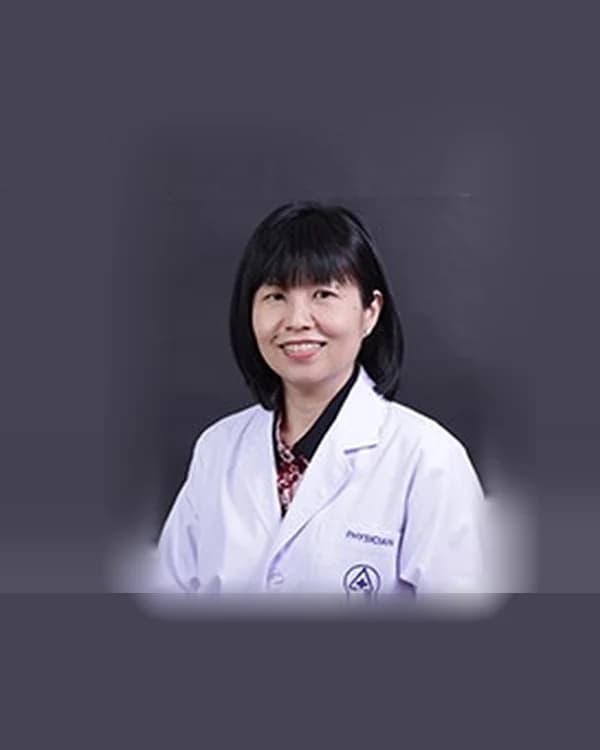
Dr. Rutchada Siriwanasan: orbit and oculoplastic ophthalmologist at Chiangmai Ram Hospital, Chiang Mai
Dr. Rutchada Siriwanasan (Thai: รัชดา ศิริวันสาณฑ์) is an eye specialist based in Chiang Mai, northern Thailand. Her profile at Chiangmai Ram Hospital, the private hospital where she runs her clinic, describes her as an Ophthalmologist Orbit & Oculoplastic Specialist. Put simply, she is an ophthalmologist whose further training centres on the orbit (the bony eye socket), the lids and the soft tissue packed around the eyeball. On the English version of that profile her name appears as M.D. Rutchada Siriwanasan; the Thai version introduces her with แพทย์หญิง, the prefix used for a female physician. A 2015 clinic timetable from the hospital, preserved in a web archive, spells her first name 'Ratchada', so either spelling may turn up if you search for her.
What the official sources confirm, in brief:
- Specialty: ophthalmology, backed by a Thai Board certificate in ophthalmology (1999) and a 1999 fellowship certificate in orbital diseases and oculoplastics from the University of British Columbia, Vancouver, Canada.
- Clinic: the Ophthalmology Department (แผนกจักษุ) of Chiangmai Ram Hospital, 8 Boonreungrit Road, Mueang Chiang Mai, with clinic days listed as Monday to Friday.
- Languages on her profile: Thai and English.
- Professional college: her name comes up in RCOPT's public find-an-ophthalmologist search (RCOPT is the Royal College of Ophthalmologists of Thailand); the listing records general ophthalmology as her area of interest and Chiang Mai as her location.
- Operations: none are named. Her specialty covers eyelid and orbital conditions, yet no official page we opened lists the individual procedures she carries out, so please confirm any specific operation with the hospital first.
It helps to know that Dr. Rutchada is an eye doctor rather than a plastic surgeon. In Thailand, eyelid surgery is performed both by plastic surgeons and by ophthalmologists who have trained in oculoplastics. Which route fits you depends on whether the main issue is how the lids look, how they work, the health of the eye itself, or a mixture of these. Chiang Mai has specialists of both kinds, and Chiangmai Ram Hospital itself lists doctors with a plastic surgery specialty alongside a second ophthalmologist with oculoplastic fellowship training.
If you would like to see her, send a consultation request for Dr. Rutchada, or reach our patient team through WhatsApp. We take the request to Chiangmai Ram Hospital, check whether she has a suitable slot and come back to you; nothing is booked until you hear from us that it is. Every statement here about her rests on a dated source, and our provider research methodology explains how those sources are checked.
Education and training
- Medical degree1994
MD (Honor)
Faculty of Medicine, Chiang Mai University, Thailand
Source (chiangmairam.com) (opens in a new tab) - Fellowship1999
Certificate for Orbital Diseases and Oculoplastics Fellowship
University of British Columbia, Vancouver, Canada
Source (chiangmairam.com) (opens in a new tab) - Board certification1999
Certificate Thai Board in Ophthalmology
The Medical Council of Thailand, Thailand
Source (chiangmairam.com) (opens in a new tab) - Certificate1995
Certificate of Clinical Science in Ophthalmology
Faculty of Medicine, Chiang Mai University, Thailand
Source (chiangmairam.com) (opens in a new tab)
Chiangmai Ram Hospital prints the same four qualification lines on the Thai and English versions of her profile. Taken in date order, they trace her path from medical school at Chiang Mai University to subspecialty training in Canada:
- 1994: medical degree, Faculty of Medicine, Chiang Mai University, shown on the profile as 'MD (Honor)'.
- 1995: Certificate of Clinical Science in Ophthalmology, awarded by the same Chiang Mai University medical faculty. The profile does not call this a residency, so we list it as the certificate it is published as.
- 1999: Certificate Thai Board in Ophthalmology. The issuing body is printed as the 'Thai Medicine Council', that is, the Medical Council of Thailand. In general, a Thai Board certificate is the national specialist qualification in one branch of medicine; for Dr. Rutchada that branch is ophthalmology.
- 1999: Certificate for Orbital Diseases and Oculoplastics Fellowship, University of British Columbia, Vancouver, Canada.
For anyone reading this site about eyelid surgery, the Vancouver fellowship is the line that matters most. Orbital diseases and oculoplastics is the corner of ophthalmology that looks after the eyelids, the bony socket around the eye and the tear drainage passages, and a fellowship is a period of concentrated training taken after specialist training. Her profile names the university, the certificate title and the year. It says nothing about how long the programme lasted or what it covered, and we do not fill in those details.
Three boxes on the hospital profile, headed 'Certificate', 'Fellowships' and 'Special Clinical Interests', are blank. Some unofficial biographies online add further items, but none of them could be matched to an official page, so we have left them out rather than use them to fill the gaps.
Licence check. On 27 September 2026 we tried to find Dr. Rutchada through checkmd.tmc.or.th, the lookup service that the Medical Council of Thailand operates for the public. No licence number is shown on this profile; the licence can be looked up on the Medical Council of Thailand's public register at checkmd.tmc.or.th. Anyone can run the same name search before a consultation, and it remains the most direct confirmation of a Thai doctor's licence.
Professional experience
- Current
Ophthalmologist, Orbit & Oculoplastic Specialist, Ophthalmology Department (clinic Monday to Friday)
Chiangmai Ram Hospital, Chiang Mai
Source (chiangmairam.com) (opens in a new tab) Author affiliation on a 2004 paper (role not stated)
Department of Ophthalmology, Faculty of Medicine, Chiang Mai University
Source (pubmed.ncbi.nlm.nih.gov) (opens in a new tab)
At Chiangmai Ram Hospital now. The hospital places Dr. Rutchada Siriwanasan in its Ophthalmology Department, describing her as an ophthalmologist and orbit and oculoplastic specialist who sees patients Monday to Friday. An archived copy of the hospital's 2015 ophthalmology clinic timetable already carried her name, written 'Ratchada Siriwanasan, M.D.', which shows she has been linked with the hospital since at least that year. Her current profile does not give a start date, and we have not guessed one.
Earlier, at Chiang Mai University. PubMed gives her affiliation on a 2004 first-author paper as the Department of Ophthalmology, Faculty of Medicine, Chiang Mai University; her position in the department is not stated. The same department appears beside her name on a 1998 abstract in the Thai Journal of Ophthalmology that the RCOPT website hosts. Third-party biography sites credit her with teaching posts and academic ranks at the university, but we could not find any of them on an official university or hospital page. For that reason we do not list them and do not use an academic title for her.
Her papers. Searching PubMed for the surname Siriwanasan brings up three articles, all of them in J Med Assoc Thai, the journal published by the Medical Association of Thailand:
- 2004, first author: 'Squamous cell carcinoma of the lacrimal sac: a case report'. The lacrimal sac collects tears from the inner corner of the eye before they drain into the nose.
- 2005, co-author: 'Spontaneous resorption of an insect hair in the corneal stroma: a case report'.
- 2007, co-author: 'Extra-medullary hematopoiesis causing bilateral optic atrophy in beta thalassemia/Hb E disease'. One of the co-authors on this paper was based at the University of British Columbia, the institution that awarded her fellowship certificate.
Separately, the 1998 Thai Journal of Ophthalmology abstract (volume 12, issue 1) compared vitamin A supplementation with nutrition education for preschool children. PubMed does not index it.
None of this is cosmetic surgery research. The papers deal with tear drainage, the cornea and the optic nerve, which gives a sense of the eye conditions she has written about, but they reveal nothing about how often she operates or on what. No official source gives a caseload or a count of years in practice for her, so neither appears here.
Selected publications
- Extra-medullary hematopoiesis causing bilateral optic atrophy in beta thalassemia/Hb E disease. (opens in a new tab) · Journal of the Medical Association of Thailand, 2007
- Spontaneous resorption of an insect hair in the corneal stroma: a case report. (opens in a new tab) · Journal of the Medical Association of Thailand, 2005
- Squamous cell carcinoma of the lacrimal sac: a case report. (opens in a new tab) · Journal of the Medical Association of Thailand, 2004
Eyelids, orbit and general eye care: Dr. Rutchada's documented field and what to confirm first
What her profile and fellowship document is a field of practice, not a list of operations. The notes below take each part of that field in turn, link it to the relevant guides on this site where there are any, and say what to check before you rely on it.
Orbit and oculoplastic ophthalmology, her listed specialty. In general terms, oculoplastics covers the eyelids, the orbit and the tear ducts. Specialists in this field judge the lids by how they function as well as how they look: whether they shut completely, shield the front of the eye and stay clear of the upper field of vision. In Dr. Rutchada's case the specialty title and the University of British Columbia fellowship are on record; the operations she offers at Chiangmai Ram Hospital are not. Before paying for flights, have our team confirm with Chiangmai Ram Hospital that she offers the specific procedure you want.
Eyelid surgery (blepharoplasty). Our blepharoplasty guide covers the main cosmetic eyelid operations: upper eyelid surgery for hooding and surplus skin, lower eyelid surgery for puffiness beneath the eyes and lax lower lid skin, and double eyelid surgery for creating or reshaping an upper lid crease. None of these is listed for Dr. Rutchada on an official page, and we found no eyelid surgery page on Chiangmai Ram Hospital's website that names her. If you are writing to her about one of them, name it in your request; the first thing we ask the hospital will be whether she performs it.
A drooping upper lid (ptosis). If the edge of the upper lid rests lower over the eye than it should, the issue is ptosis rather than surplus skin. Our guide explains that ptosis generally calls for repair of the muscle that raises the lid, not for skin removal, and a careful eyelid assessment normally includes checking for it. Our ptosis correction page sets out the basics. As with blepharoplasty, no official page lists ptosis surgery among her services, so it stays an open question for the hospital, not a confirmed service.
Tear drainage and orbital conditions. Her first-author paper described a tumour of the lacrimal sac, and the title of her fellowship names orbital diseases. These are medical conditions rather than cosmetic ones, and our procedure guides do not cover them. An eye that waters constantly, a swelling beside the eye or a diagnosed orbital problem calls for a full eye examination before anything else; we can still pass a consultation request to her clinic for you.
General ophthalmology. RCOPT's directory gives general ophthalmology as her area of interest. Routine eye care sits outside our procedure pages, but it may matter to you if you would prefer one specialist to assess both the eyelids and the eyes behind them.
Other doctors at Chiangmai Ram Hospital. The hospital lists a second ophthalmologist whose profile records orbit and oculoplastic fellowship training at the University of British Columbia, Dr. Damrong Wiwatwongwana, who has a Saturday clinic in the same department. Three doctors in the hospital's Plastic Surgery directory hold sessions at the Dermatology & Laser clinic of the Chiangmai Ram Health Center, which the hospital's map places on Boonruangrit Road about 50 metres before the main hospital, and a fourth doctor with a plastic surgery specialty sees patients in the Surgical Department. They are listed on our Chiangmai Ram Hospital page. If you cannot tell whether your concern belongs with an eye specialist or a plastic surgeon, describe it when you write and we will help you work out which clinic to approach first.
What to ask at a consultation with Dr. Rutchada Siriwanasan about an eyelid or orbital concern
Her list of procedures is not published, so the first task of a consultation with Dr. Rutchada, or of the request that sets one up, is to establish what she does and does not offer. After that come the questions any careful patient would put to an eyelid specialist. The general figures quoted below come from our procedure guides; your own plan depends on her assessment of you, and suitability for any operation can only be judged at an examination.
What she offers and where
- Do you carry out the specific operation I have in mind at Chiangmai Ram Hospital, and in which part of the hospital would it take place?
- What kind of anaesthetic do you plan for my case? According to our blepharoplasty guide, the usual choices are sedation combined with a local anaesthetic, or a general anaesthetic; which one applies depends on the operation and on your health.
- Would I go home on the day of surgery? Our guide describes eyelid surgery as usually a day case, with an operating time of about 1–2 hours, but ask what she would plan for you.
Getting the diagnosis right
- Is the problem surplus skin, fat bags, a low-sitting lid edge (ptosis), a sagging brow, or several of these together? If the brow has come down, lifting the eyelid skin alone may not solve it, and our brow lift guide explains when that operation is considered instead.
- Would dry eye, glaucoma, thyroid eye disease or my present eyesight change your advice? Eye specialists routinely check for these before eyelid surgery because each can affect safety.
- For a watering eye, a lump or a swelling around the eye: what tests come first, and can Chiangmai Ram Hospital do them?
Recovery and risk
- How many days should I allow in Chiang Mai? As general guidance, our blepharoplasty guide says international patients commonly stay 5–7 days, with stitch removal typically falling around days 5–7. Ask Dr. Rutchada what she would expect in your case.
- What could go wrong for me? The complications our guide names include eye dryness or irritation, blurred vision that is usually temporary, trouble shutting the eyes completely, uneven results, noticeable scars, a lower lid that is drawn downward, infection and, very rarely, a haemorrhage behind the eyeball that can damage sight. Any drop in vision or severe pain once the operation is over needs urgent medical attention.
- After I return home, which person at the hospital is my point of contact, and what happens if a complication shows up when I am abroad?
Cost and practical details
- Can the hospital put an estimate in writing, and what would it include? We do not publish prices for Dr. Rutchada; any figure given before her examination is only provisional.
- Should I book an interpreter? Chiangmai Ram Hospital runs an interpreter service and wants interpreters arranged ahead of time, when you make the appointment.
You are also entitled to ask how often she performs the operation you are considering and to ask to see photos from her own earlier cases. Only she and the hospital can answer that; we do not hold such information.
Hospitals and clinics where M.D. Rutchada Siriwanasan practises
Mueang Chiang Mai, Chiang Mai
Chiangmai Ram Hospital
โรงพยาบาลเชียงใหม่ ราม
- Private hospital
- International patient service
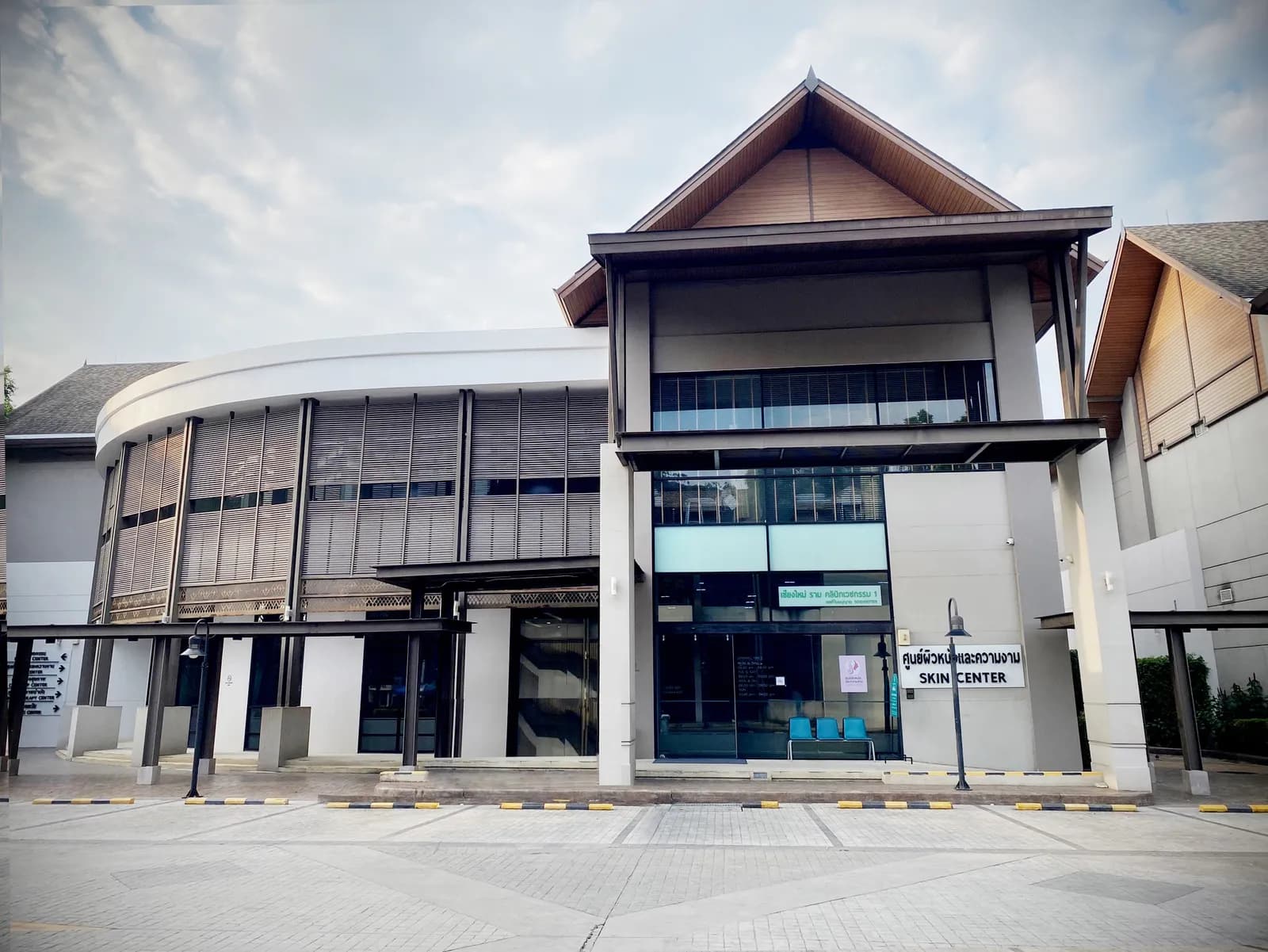
Chiangmai Ram Hospital (โรงพยาบาลเชียงใหม่ ราม) is a private hospital on Boonreungrit Road in Chiang Mai, opened in 1993 and listed as JCI-accredited. Four plastic surgeons and two oculoplastic-trained ophthalmologists hold clinics there.
Accreditation
- JCI
- Surgeons
- 5
- Established
- 1993
- Languages
- Thai, English, French, German, Chinese, Japanese, Burmese, Korean
Surgeons here
International patients
The hospital. Chiangmai Ram Hospital (โรงพยาบาลเชียงใหม่ ราม; you may also see Chiang Mai Ram) is a private hospital on Boonreungrit Road (number 8) in Mueang Chiang Mai, the district at the centre of the province. It was officially opened in 1993, founded by a group of local doctors together with Bangkok's Ramkhamhaeng Hospital. In the directory of Joint Commission International, the hospital's Hospital Program appears as accredited, effective 7 November 2009, with no expiry date given. Its Thai national accreditation has lapsed: according to the HA Thailand database, the most recent re-accreditation was valid until August 2021.
Language. Thai and English are the languages on Dr. Rutchada's profile. Beyond those, the hospital's International Patients Services offer medical interpreters in seven languages: Japanese, Chinese, Korean, Burmese, English, French and German. The hospital asks for interpreters to be arranged in advance, at the time of booking, so mention the language you need in your request to us and we will pass it on with the appointment request.
Emergencies and transport. Chiangmai Ram lists a round-the-clock emergency department. It also runs an ambulance and patient transfer service, available 24 hours a day, for journeys inside Chiang Mai and transfers in from other provinces.
What we did not find. Her profile and the hospital pages we read say nothing about airport transfers, hotel bookings, surgical packages or published prices for eyelid or orbital care. Treat all of these as unknown until you have asked, and get the answers in writing.
Timing a trip. Should the consultation lead to eyelid surgery, our blepharoplasty guide suggests, as general guidance, that a stay of about 5–7 days in Thailand covers the period up to stitch removal and that most bruising fades within 1–2 weeks. Pack sunglasses; the guide also advises skipping swimming and not wearing eye make-up until you have been given the all-clear, and asking about eye drops for the journey home. Book a return flight you can change, since your flying date depends on the doctor's check after surgery. For a tear-duct or orbital problem, the length of stay depends on the investigations, so hold off on fixing dates until the hospital has explained what the first appointment involves.
Weekday clinics. Her clinic days are listed as Monday to Friday, so on a short visit plan to arrive in time for a weekday appointment. Our Chiang Mai guide covers the other surgeons and hospitals in the city that appear on this site.
Published by the hospitals and clinics
These services are offered and provided by each facility itself, as listed on its official site.
Chiangmai Ram Hospital
- International patient desk
- International Patients Services: professional medical interpreter service covering 7 languages (English, French, German, Chinese, Japanese, Burmese, Korean); interpreters should be requested in advance when booking the appointment Source (chiangmairam.com) (opens in a new tab)
- Medical examinations for visa applications, certified by embassies including Australia, Canada and New Zealand (Health Check-up Center) Source (chiangmairam.com) (opens in a new tab)
- 24-hour patient transfer and ambulance service within Chiang Mai and from other provinces (tel. 052-004601) Source (chiangmairam.com) (opens in a new tab)
Languages listed: Thai, English, French, German, Chinese, Japanese, Burmese, Korean
How our patient team helps
- We pass your request to the surgeon's hospital or clinic and confirm availability, usually within one working day.
- You receive a booking reference to track your request.
- We answer practical questions on WhatsApp and by email.
ThaiCosmeticSurgery.com does not provide medical care. Treatment, prices and patient services are the responsibility of the hospital or clinic.
How to request a consultation with Dr. Rutchada Siriwanasan
There is no fee for asking our patient team to set up a consultation with Dr. Rutchada Siriwanasan, and making the request does not oblige you to have any treatment.
- Start with the consultation request form for Dr. Rutchada, or message us on WhatsApp with Dr. Rutchada's name in the first line.
- Describe what you want to discuss: heavy upper lids, a lid that droops, bags under the eyes, a watering eye or a known orbital condition. Her procedures are not published, so the clearer your description, the more precisely we can put the question to the hospital.
- Suggest the dates that suit you. She holds clinics Monday to Friday, so we will aim for a weekday.
- Let us know whether you would prefer to see her in person in Chiang Mai or remotely. Her profile does not mention video consultations, so we will find out whether she offers them.
- Tell us if you need an interpreter, and for which language.
Next, we get in touch with Chiangmai Ram Hospital and, normally within one working day, tell you which weekday slots Dr. Rutchada can offer. Until our written confirmation reaches you, treat any slot as provisional rather than booked. Anything the hospital prepares, such as a treatment outline or a quote, we forward unchanged; she still has to examine you before anything in it is settled, and whether and when you go ahead stays your decision.
Chiangmai Ram Hospital also runs its own online appointment booking for her. Whichever route you use, try to keep your medical details in a single conversation so that nothing goes missing between messages.
A request is not a confirmed appointment until our patient team confirms it with you.
Documents, history and photos to gather before seeing Dr. Rutchada
Keep medical information and photos to the channels on this site, meaning our booking form or our WhatsApp line, and send only what the clinic needs for a first look at your concern.
In the first message
- A brief account of the problem: which eye or lid is involved, when you first noticed it, and what it does to your sight, comfort or appearance.
- Travel dates you are considering, plus a note on whether you would rather be seen in person or remotely.
- Any language for which you would need an interpreter.
Eye and general health
- Whether you wear glasses or contact lenses, and any diagnosed eye condition, for example glaucoma, dry eye or thyroid eye disease.
- Earlier eye or eyelid operations, laser vision correction included, with rough dates and, if you know it, where they were done.
- Other health conditions, current medication (blood thinners in particular) and any allergies.
Reports worth having to hand
- Recent letters or results from your usual eye doctor.
- For a watering eye, a lump or an orbital problem: CT or MRI reports and any biopsy findings.
- If a drooping lid is affecting your vision: visual field test results, if you have had the test.
- After previous eyelid surgery: the operation note, which shows a new surgeon exactly what was done.
Photos, only if the clinic requests them
- Taken in natural daylight at the level of your eyes, with no make-up and no glasses.
- A front view with the eyes open, a front view with the eyes lightly shut, a view while you look upward, and a view from each side.
- A close-up of each eye separately, which helps when the question concerns lid height.
Take the original reports with you to the appointment, along with your questions written down.
Credential research
Every fact on this profile comes from a source we opened and dated. Where a source only states something, we say so.
- Medical Council of Thailand licence
- Check the Medical Council's public register (opens in a new tab)
- Profile last reviewed
Hospital and clinic affiliation
Education and training
Positions
Society memberships
Special interests
Medical information
This profile is for information only and is not medical advice. Whether a procedure is suitable for you can only be decided after an assessment by a qualified surgeon. Every operation carries risks, and results vary from person to person. Before you commit to treatment, check the surgeon's credentials yourself, for example on the Medical Council of Thailand register. We do not accept payment for placement or rankings.
Frequently asked questions
Who is Dr. Rutchada Siriwanasan?
She is an ophthalmologist in Chiang Mai (Thai name รัชดา ศิริวันสาณฑ์) whom Chiangmai Ram Hospital lists as an orbit and oculoplastic specialist. Her published qualifications are a Chiang Mai University medical degree (1994), the Thai Board certificate in ophthalmology (1999) and a 1999 fellowship certificate in orbital diseases and oculoplastics from the University of British Columbia in Vancouver.
Where does Dr. Rutchada Siriwanasan see patients, and on which days?
Her clinic is in the Ophthalmology Department of Chiangmai Ram Hospital at 8 Boonreungrit Road, Mueang Chiang Mai, and her profile gives Monday to Friday as her clinic days. No official page we checked lists her at another hospital or clinic.
Is Dr. Rutchada Siriwanasan a plastic surgeon?
No. She is an ophthalmologist: her specialist qualification is the Thai Board in ophthalmology, and her fellowship was in orbital diseases and oculoplastics, which deals with the eyelids, the eye socket and the tear ducts. The Royal College of Ophthalmologists of Thailand lists her in its directory. We did not find her in the Thai plastic surgery society listings we searched, which is what you would expect for an eye specialist.
Does Dr. Rutchada Siriwanasan perform blepharoplasty, double eyelid surgery or ptosis correction?
Nothing we have found on an official page says so. Her specialty includes the eyelids, but neither her Chiangmai Ram Hospital profile nor the hospital's website names blepharoplasty, double eyelid surgery, ptosis correction or any other operation for her. Name the procedure you have in mind in your request; our team raises it with Chiangmai Ram Hospital, and it is worth waiting for that answer before booking any travel.
Where did Dr. Rutchada Siriwanasan train?
Her medical degree (1994) and her 1995 Certificate of Clinical Science in Ophthalmology came from the medical faculty at Chiang Mai University. In 1999 she received the Certificate Thai Board in Ophthalmology (the issuing body is the Medical Council of Thailand) together with a Certificate for Orbital Diseases and Oculoplastics Fellowship from the University of British Columbia, Vancouver, Canada.
Is Dr. Rutchada Siriwanasan's licence on the Medical Council register?
We cannot say yet. Our 27 September 2026 attempt to look her up with the Medical Council of Thailand ran into a bot check and showed no record, so this profile has no licence entry for her. Her qualifications are taken from her official hospital profile, and her listing in the RCOPT directory is confirmed. Before travelling, you can type her name into checkmd.tmc.or.th yourself; the lookup is free to use.
What languages can I use with Dr. Rutchada Siriwanasan?
Thai and English are listed on her Chiangmai Ram Hospital profile. Beyond those two, the hospital's interpreter service covers Korean, Japanese, Chinese, Burmese, German, French and English. Interpreters have to be booked ahead, so include your language when you write to us.
Has Dr. Rutchada Siriwanasan published research?
Three papers under her surname are indexed in PubMed, all in J Med Assoc Thai: a 2004 case report on a squamous cell carcinoma of the lacrimal sac, on which she is first author; a 2005 case report on an insect hair in the cornea; and a 2007 paper on extramedullary haematopoiesis causing optic atrophy in thalassaemia. She is also named on a 1998 Thai Journal of Ophthalmology abstract about vitamin A in preschool children.
Is Chiangmai Ram Hospital accredited?
Joint Commission International's directory shows the hospital's Hospital Program as accredited from 7 November 2009, without an expiry date. Its Thai national accreditation from HA Thailand is not current; the most recent re-accreditation was valid until August 2021.
Is a remote consultation with Dr. Rutchada Siriwanasan possible?
Her profile does not mention video or remote consultations. If you would like one, say so when you write; our team checks with Chiangmai Ram Hospital whether she offers it, and if she does not, we can request an in-person weekday appointment for you in Chiang Mai.
What is the process for seeing Dr. Rutchada Siriwanasan through this site?
Use the booking form here, or a WhatsApp chat with us, giving her name, the concern you want to discuss and the dates that suit you. We then check with Chiangmai Ram Hospital and reply, normally within one working day, with the options she has. No fee applies, and the appointment is only fixed once our written confirmation for Dr. Rutchada reaches you.
What information helps before seeing Dr. Rutchada Siriwanasan?
Explain the problem and which eye or lid it affects, and list any diagnosed eye problem, particularly thyroid eye disease, glaucoma or dry eye, past eye or eyelid surgery, medicines and allergies. Keep recent eye reports or scan results to hand. Send photos only when the clinic asks, taken in daylight with no make-up or glasses.